

Zao Snow Monsters 2027: Best Time, Light-Up Dates and Access
November 13, 2026
1. Quick Answer
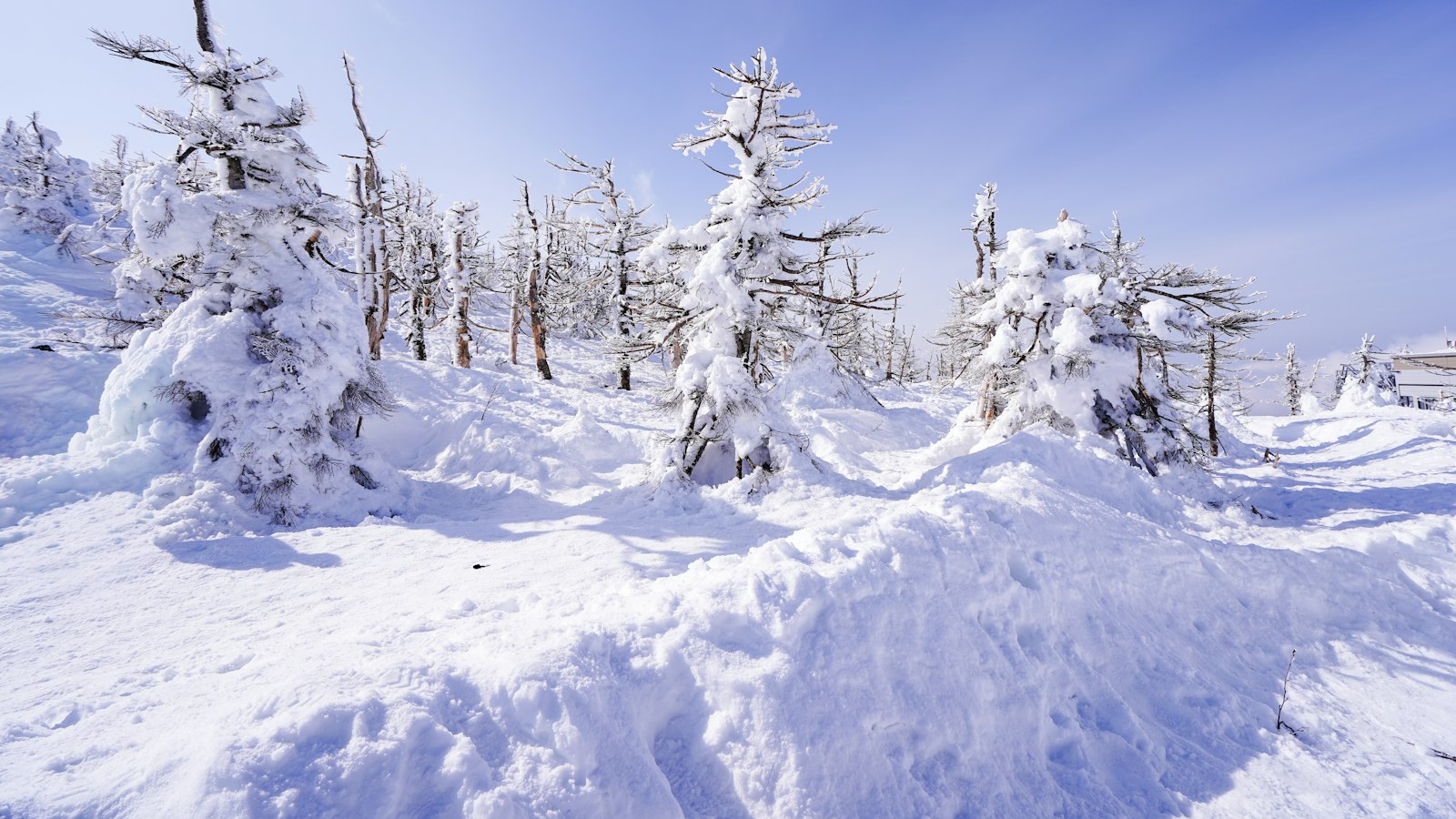
The Zao “snow monsters” (juhyo) are rows of fir trees on Mount Zao (Yamagata Prefecture) coated in thick ice and snow until they take on strange shapes. They're at their best from late January to late February.
- How to reach them: the Zao Ropeway from Zao Sanroku Station, via Juhyo Kogen Station, up to Jizo Sancho Station (about 1,661 m).
- Daytime fare: ¥4,400 round trip for the full route (adults), ¥2,200 for children.
- 2026–2027 night light-up: 31 nights from December 26, 2026, to February 23, 2027 (mostly weekends and holidays), 17:00–21:00; ¥4,600 round trip for adults.
- Access: the Yamagata Shinkansen “Tsubasa” from Tokyo to Yamagata takes about 2 hours 45 minutes, then a bus of about 40 minutes to Zao Onsen.
We checked these details on November 13, 2026, against the sources listed at the end. Light-up dates, ropeway fares and bus schedules can change, and the ropeway may stop in strong wind or heavy snow. Check the Zao Ropeway's official site before you go.
2. What Are the Snow Monsters?
In winter, cold Siberian winds pick up moisture over the Sea of Japan. When they hit the Aomori fir trees high on the mountain, supercooled droplets freeze instantly on the branches, and snow builds up layer after layer. The result is giant white “statues” the Japanese call juhyo (ice trees), or “snow monsters.” They form in only a few places in the world with the right climate.
Note that in December the juhyo are still forming, and by March they start to melt. A mild or low-snow winter can leave them smaller.
3. When to Go
| Period | Juhyo condition |
|---|---|
| December | Still forming, small |
| Late January – late February | At their best, large and well defined |
| March | Starting to melt, shapes less clear |
Clear days are rare but give the best views; on heavy-snow days, visibility at the top can be very poor. Build in a spare day if you can.
4. The Zao Ropeway: Route, Hours and Fares
| Item | Details |
|---|---|
| Route | Zao Sanroku Station → Juhyo Kogen Station (Sanroku Line) → Jizo Sancho Station, about 1,661 m (Sancho Line) |
| Hours | Sanroku Line 8:30–17:00; Sancho Line 8:45–16:45; last uphill departure around 16:00 (subject to change) |
| Full round trip (day) | ¥4,400 adults, ¥2,200 children |
| Sanroku Line only | ¥2,200 adults, ¥1,100 children |
The best snow monsters are around Jizo Sancho Station. The ropeway stops in strong wind or heavy snow; check same-day status on the operator's site.
5. The 2026–2027 Night Light-Up
- Period: 31 nights, from December 26, 2026, to February 23, 2027.
- December: 26, 27, 30, 31.
- January: 1, 2, 3, 9, 10, 11, 16, 17, 22, 23, 24, 29, 30, 31.
- February: 5, 6, 7, 10, 11, 12, 13, 14, 19, 20, 21, 22, 23.
- Hours: 17:00–21:00; the last uphill car leaves Zao Sanroku Station at 19:45.
- Fare: ¥4,600 round trip to Jizo Sancho for adults, ¥2,300 for children aged 6–11; buy on the spot, no reservation needed.
The light-up may be cancelled in bad weather or if the snow monsters collapse. Nights at the top are extremely cold; dress as if you're going skiing.
6. The Night Snow-Cat Tour (Juhyo Genso Kairo)
- Runs on the same 31 light-up nights, departing at 17:00, 18:00, 19:00 and 20:00 from Zao Sanroku Station.
- About 70–80 minutes in total (around 30 minutes on the snow cat), 36 seats per departure.
- ¥8,000 for adults, ¥7,000 for children (age 1 through elementary school), including the Sanroku Line round trip.
- It goes to an area near tower No. 4 of the Sancho Line, not to Jizo Sancho Station.
- Online booking only on the official site; each date opens at 14:00, seven days ahead.
7. Zao Onsen: Acidic Sulfur Springs
The town of Zao Onsen at the foot of the mountain has a long hot-spring history, with strongly acidic, sulfur-scented water. Its three historic public bathhouses, Kamiyu, Shimoyu and Kawarayu, are cheap to enter (current prices NEED VERIFICATION). A soak here after seeing the juhyo is the best way to warm up.
- The acidic water can tarnish silver jewelry; take it off before bathing.
- Rinse with fresh water afterwards if you have sensitive skin.
- Usual onsen etiquette applies: wash first, no swimwear, no photos.
The famous Ginzan Onsen is also in Yamagata; see our guide to Ginzan Onsen in the snow.
8. Getting to Zao
| Leg | How | Time (approx.) |
|---|---|---|
| Tokyo – Yamagata | Yamagata Shinkansen “Tsubasa” (direct) | about 2 hr 45 min |
| Yamagata Station – Zao Onsen | Yamako bus | about 40 min (fare NEEDS VERIFICATION) |
| Zao Onsen bus terminal – Zao Sanroku Station | Walk or taxi | a few minutes to about 15 minutes depending on where you start |
The last bus from Zao Onsen to Yamagata leaves around 19:50, so check carefully if you plan to see the light-up without staying overnight. This bus isn't covered by the JR Pass. Also note that, according to our source, a Tohoku-area JR pass was withdrawn on March 13, 2026; see our guide to choosing a JR regional pass in 2026 to compare the remaining options.
9. Suggested Itineraries
Two Days, One Night from Tokyo
- Day 1: morning Shinkansen to Yamagata, bus to Zao Onsen, check in and soak in a public bathhouse. On a light-up night, ride the ropeway between 17:00 and 19:45.
- Day 2: go up to the juhyo in the morning when it may be clearer, ski or explore the town, and return to Tokyo in the afternoon.
Combine with More of Tohoku
Add Ginzan Onsen (Yamagata) or Yamadera temple, then continue to Sendai. Winter buses are infrequent, so plan ahead.
10. Skiing at Zao
Zao Onsen is a major ski resort, with runs that pass through the juhyo forest. The season is scheduled to run until May 5, 2027, but may close early if the snow melts (last season it closed on April 24). If you're a beginner, see our guide to skiing in Japan for the first time.
11. Weather and What to Wear
- The summit of Zao is very cold and windy, with temperatures well below 0°C; wind chill makes it feel much colder.
- Dress like a skier: waterproof jacket and trousers, thermal base layers, waterproof gloves, a warm hat and a neck gaiter.
- Snow boots with good grip and disposable heat packs (kairo).
- Sunglasses or goggles on sunny days, as the snow glare is strong.
See also our guide to staying warm in winter in Japan.
12. Common Mistakes to Avoid
- Going in December expecting full-size juhyo: they're usually still small.
- Wearing a thin fashion coat: the summit is far colder and windier than the base.
- Not checking ropeway status: it may stop because of wind.
- Missing the last bus to Yamagata after the light-up.
- Booking accommodation late for February weekends.
13. Your Phone and Mobile Data
You'll need data to check same-day ropeway status, book the snow-cat tour (sales open at exactly 14:00, seven days ahead), look up Yamako bus times and follow the weather forecast. Phone batteries drain very fast at the cold summit; keep your phone in an inside pocket and carry a power bank. Free Wi-Fi at ropeway stations may be unreliable (see our guide to free Wi-Fi in Japan).
Need mobile data during your Japan trip? Compare HD Telecom's available eSIM and Wi-Fi options, and check device compatibility before choosing a plan. Visitors can read our guide to travel eSIMs for 5–14 day trips. For longer stays, see HD Telecom's Monthly Data eSIMs (your phone must support eSIM) and Monthly Pocket WiFi rentals, and check each plan's data allowance, the speed after the allowance runs out, coverage and the terms on the product page.
14. Estimated Costs for Two Days
| Item | Estimate |
|---|---|
| Yamagata Shinkansen Tokyo–Yamagata round trip | roughly ¥22,000–24,000 (reserved seat) – NEEDS VERIFICATION |
| Yamako bus Yamagata–Zao Onsen round trip | NEEDS VERIFICATION |
| Ropeway round trip (day / light-up) | ¥4,400 / ¥4,600 |
| Snow-cat tour (optional) | ¥8,000 |
| Public bathhouse | small fee – NEEDS VERIFICATION |
| Food | about ¥4,000–8,000 |
These are rough figures to help you budget; accommodation in Zao Onsen ranges from simple pensions to ryokan with dinner.
15. Photography Tips
- Clear mornings: blue sky behind white juhyo gives the most striking contrast.
- Light-up nights: the colored lights change the mood; a phone with night mode works, but hold it steady and protect it from wind and snow.
- Exposure: increase exposure a little so the snow stays white.
- Stay on marked paths: deep snow around the trees can hide holes, and stepping off the path can damage the juhyo.
- Gloves: touchscreen gloves let you use your phone without exposing your hands.
16. Where to Stay
- Zao Onsen: the most convenient, with walking access to public baths and the ropeway area; lets you see a light-up without worrying about the last bus.
- Yamagata city: cheaper business hotels near the station and Shinkansen, but you depend on bus times.
February weekends and light-up nights fill quickly, so book early.
17. Zao in Other Seasons
- Spring: spring skiing until the snow melts; the Sancho Line usually closes for a few weeks of maintenance in early to mid-May.
- Summer and autumn: hiking and the Okama crater lake via the Zao Echo Line, which is closed in winter (roughly late April to early November).
- Autumn foliage: the ropeway offers colorful views in October.
The juhyo only exist in winter, so plan between late January and late February for the full experience.
18. Safety at the Summit
Weather at the top of Zao can change quickly, with whiteouts that make it hard to see a few meters ahead. Stay on marked paths, keep together with your group, and head back to the station if visibility drops. Watch for frostbite on fingers, ears and cheeks, and go indoors to warm up regularly. Skiers should only ski on open courses and follow patrol instructions.
19. FAQ
Can I see the juhyo without skiing?
Yes. The ropeway carries foot passengers, and the viewing area near Jizo Sancho Station is walkable in snow boots.
Do I need to book the light-up?
According to our source, light-up ropeway tickets are sold on the spot with no reservation. The snow-cat tour must be booked online.
Is a day trip from Tokyo possible?
Yes, but it's rushed: about 3.5 hours each way. Staying one night is more relaxed and gives you a better chance of a clear day.
Can young children come?
Yes, children have their own fares. Keep them very warm, as the summit is extremely cold.
Is there anywhere to warm up at the top?
The ropeway stations have indoor areas; go inside whenever you feel cold.
What should I eat in Zao?
Try local dishes such as Yamagata beef, imoni (a hearty taro and meat stew) and hot soba after your onsen soak. For more ideas, see our guide to winter food in Japan.
Can I visit Zao on a weekday to avoid crowds?
Yes. Weekdays outside the light-up dates are generally quieter at the ropeway, though ski groups and tours still visit. Arrive at opening for the shortest queues.
Is there a dress code for the light-up?
No dress code, but you'll be standing in the snow at night at around 1,600 m. Full winter gear, including waterproof boots and gloves, is strongly recommended.
Can I bring a drone?
Drone use is restricted in many areas of Japan; don't fly one without checking the rules and obtaining permission.
Is Zao crowded?
Light-up nights and February weekends are the busiest, with queues at the ropeway. Weekday mornings are quieter.
20. Conclusion
The Zao snow monsters are one of Japan's most unusual winter sights. Go between late January and late February, dress like a skier, check ropeway status on the day, choose a light-up night if you can, soak in Zao Onsen afterwards, and keep your phone charged and connected to follow the weather and bus times.
Sources (checked November 13, 2026)
Related products
Find your plan with HD TELECOM
SIM, eSIM and Pocket WiFi — genuine quality, clear pricing, 24/7 support.
Takayama in Winter: Snowy Old Town, Morning Markets, Hida Beef and Shirakawa-go
Hakodate in Winter: Mount Hakodate Night View, Christmas Fantasy 2026 and the Morning Market
Jigokudani Snow Monkeys: Watching Monkeys Bathe in the Snow, Prices and Access
Kinosaki Onsen in Winter: Seven Public Baths, the Yumepa Pass and Snow Crab