
Ginzan Onsen Winter 2026–2027: How to Get There, New Regulations & Travel Tips
November 9, 2026
1. Quick Answer
To travel to Ginzan Onsen (Yamagata Prefecture) during the snowy season from Tokyo, take the Yamagata Shinkansen (Tsubasa train) from Tokyo Station to Oishida Station (approx. 3 hours and 15 minutes), then transfer to a local route bus or hotel shuttle bus to reach the historic village (approx. 40 minutes). Starting from the 2024–2025 winter season, the local government of Obanazawa City has implemented a cap on the number of day-trip visitors during the late afternoon and evening hours (17:00 – 20:00) to prevent overcrowding. Day-trippers are required to purchase an entry ticket and reserve a Park & Ride shuttle bus ticket online in advance. If you book an overnight stay at a ryokan inside the village, you will be issued a priority pass and will not be subject to this restriction. Due to extremely high demand, room reservations and bus tickets must be booked 3 to 6 months in advance.
2. Who This Article Is For
This guide is compiled specifically for:
- Vietnamese residents living, studying, and working in Japan who want to organize an independent snow-viewing trip to Ginzan Onsen with family or friends.
- Vietnamese tourists traveling to Japan in winter (around December to March) seeking accurate transportation information and the latest updates on visitor regulations.
- Those weighing the choice between staying overnight at a traditional ryokan or taking a day trip to optimize their budget.
- Photographers or photography enthusiasts looking to prepare their gear and capture the golden hour for the most romantic winter landscape shots.
3. Excluded Cases
The information and instructions in this article are NOT applicable to the following cases:
- Visiting Ginzan Onsen in spring, summer, or autumn: Other seasons of the year do not apply strict evening bus restrictions like the peak snowy season.
- Travelers on all-inclusive tours by major travel agencies: Tour companies arrange their own private transportation and entry permits for groups, so travelers do not need to book individual bus tickets.
- People planning to drive a private car directly into the historic village center: Central Ginzan Onsen prohibits all private motorized vehicles year-round to preserve the landscape and pedestrian zone. Private cars must park at suburban parking lots and take a shuttle bus.
4. Step-by-Step Guide: Traveling from Tokyo to Ginzan Onsen
The journey from Tokyo to the historic village of Ginzan Onsen consists of the following steps:
- Step 1: Book Shinkansen tickets from Tokyo to Oishida Station
Departing from Tokyo Station or Ueno Station, board the JR Yamagata Shinkansen (Tsubasa train). The direct ride takes about 3 hours 15 minutes to 3 hours 30 minutes to arrive at Oishida Station (大石田駅). You should reserve your seat in advance via the JR-EAST Train Reservation website or purchase directly at Midori-no-Madoguchi ticket offices at the station.
- Step 2: Understand bus ticket regulations and register for shuttle tickets before departing
From Oishida Station to Ginzan Onsen, there is a local city bus service (Hanagasa Bus). However, during the peak snowy season (usually from mid-December to early March), Obanazawa City operates a Park & Ride system and timed-entry tickets for day-trip visitors (non-overnight guests).
Non-overnight visitors must reserve a special round-trip bus ticket combined with an entry ticket via the official Ginzan Onsen Tourist Association website. Without a bus reservation confirmation code, you will not be able to board the bus at Oishida Station or suburban parking lots during restricted hours (especially 17:00 - 20:00).
- Step 3: Travel from Oishida Station to Ginzan Onsen Village
Upon alighting at Oishida Station, head out the front exit to board the bus. The bus ride from Oishida Station to the village takes about 40 minutes. If you have booked a room at a ryokan inside the village, many hotels provide free shuttle bus service for overnight guests from Oishida Station at fixed times (prior reservation with the hotel when booking is required).
- Step 4: Get off at the bus stop and walk into the historic village center
The bus drops passengers off at the parking area outside the heritage zone. From the bus stop, you will walk downhill for about 5 to 10 minutes to reach the pedestrian street lining both sides of the Ginzan River. Winter walkways are often covered in slippery ice and snow, so please walk carefully.
5. Required Documents and Supplies
To ensure a smooth and safe snow-viewing trip, bring the following essential documents and items:
- Residence Card (Zairyu Card) or Passport: Personal identification documents must always be carried while traveling in Japan. Short-term tourists need a passport for hotel check-ins or using a JR Pass.
- Shinkansen Ticket / JR Pass: Physical ticket or electronic ticket integrated into a Suica/Pasmo card. If using a JR East Pass (Tohoku area), the Shinkansen segment to Oishida Station is fully covered.
- Bus / Hotel Booking Confirmation Code: A printed copy or screenshot showing the QR code/confirmation number for entering Ginzan Onsen (especially crucial for day-trippers).
- Specialized Cold-Weather Clothing: A thick waterproof/windproof jacket, Ultra Warm thermal innerwear, waterproof pants, a scarf, waterproof gloves, and a beanie covering your ears. Winter temperatures in Yamagata typically range from -5°C to 2°C.
- Snow Boots with Good Traction: High-cut waterproof boots with deep tread grooves. It is recommended to buy slip-on ice cleats/spikes (Kanjiki or Spikes) for shoe soles, which can easily be purchased at 100-yen shops or convenience stores in Japan.
- Internet Connectivity Devices: Mountainous areas in Yamagata Prefecture experience heavy snowfall, making real-time train schedule updates and online ticket retrieval crucial. You should prepare high-speed data or a personal WiFi device before setting off. You can check out monthly eSIM or monthly pocket WiFi packages to ensure uninterrupted connectivity.
- Body Warmers (Kairo) and Power Bank: Smartphones and cameras drain battery rapidly in sub-zero temperatures. Attach Kairo to your lower back, keep them in your coat pockets, and carry a high-capacity power bank.
6. Estimated Travel Costs for Ginzan Onsen
Costs for a trip to Ginzan Onsen vary significantly depending on whether you choose a day trip or an overnight stay. Below is an estimated cost breakdown per person departing from Tokyo (Currency: Japanese Yen - JPY):
| Expense Item | Day Trip Option | Overnight Ryokan Option |
|---|---|---|
| Round-trip Shinkansen (Tokyo ↔ Oishida) | ~ 24,000 – 26,000 JPY (or use JR Pass) | ~ 24,000 – 26,000 JPY (or use JR Pass) |
| Round-trip Bus (Oishida ↔ Ginzan Onsen) | ~ 1,500 – 3,000 JPY (incl. evening restricted pass) | Free (hotel shuttle) or ~ 1,500 JPY |
| Accommodation (1 night incl. dinner & breakfast) | 0 JPY | ~ 25,000 – 60,000 JPY / person |
| Hotel in Yamagata/Sendai (if staying outside village) | ~ 6,000 – 12,000 JPY / night | 0 JPY |
| Food & Personal Expenses | ~ 3,000 – 5,000 JPY | ~ 2,000 – 4,000 JPY (souvenirs, lunch) |
| Total Estimated Cost (per person) | ~ 34,500 – 46,000 JPY | ~ 52,500 – 91,500 JPY |
Note: The prices above are for reference at the time of compilation. Shuttle bus costs during the snow season and entry tickets are subject to change according to yearly regulations by the local Obanazawa government. Please check officially listed prices before traveling.
7. Processing Time, Best Time to Visit, and Suggested Itinerary
Golden Time for Snow Viewing at Ginzan Onsen
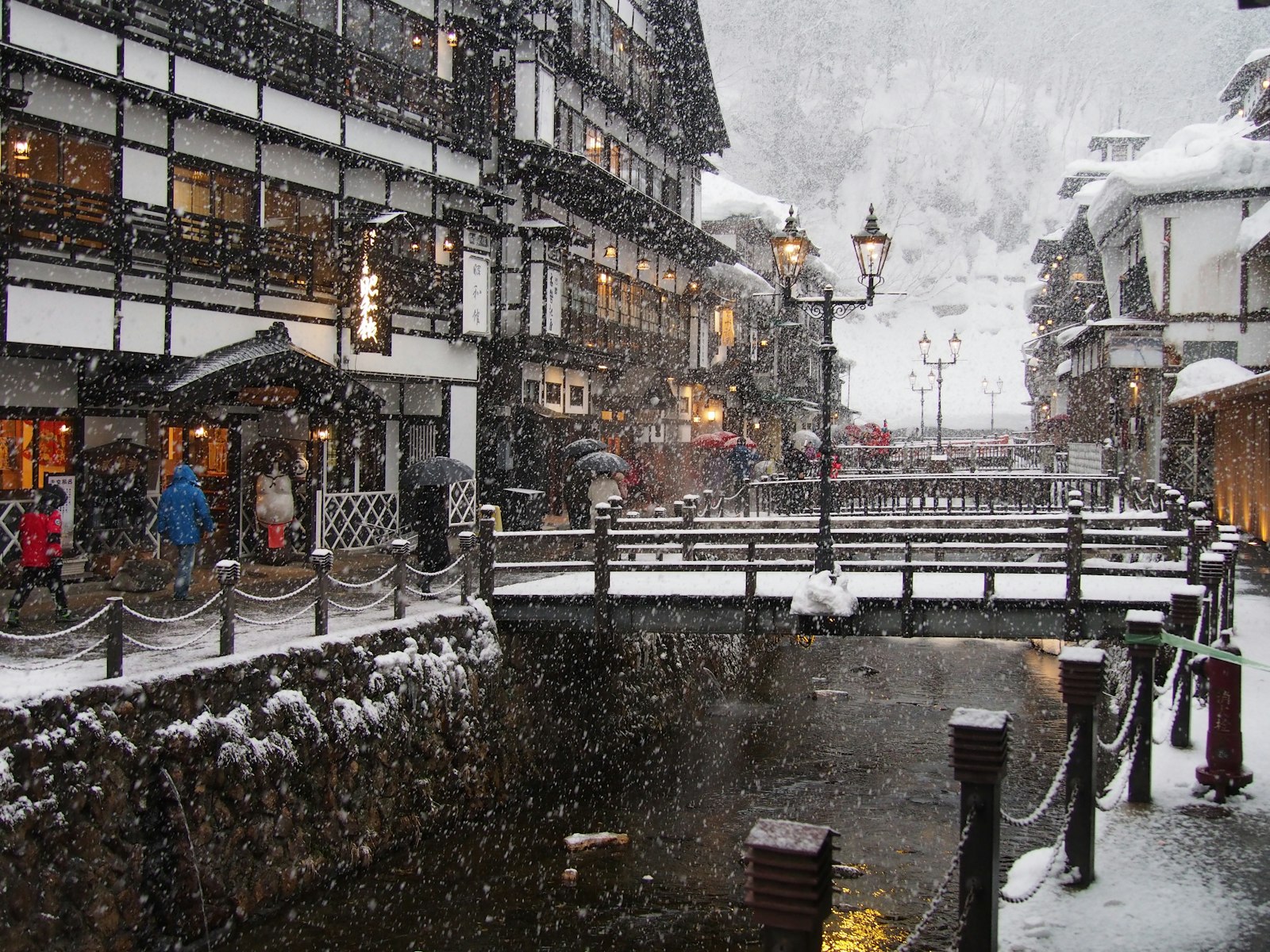
Although snow starts falling in December, the period with the thickest and most picturesque snow cover at Ginzan Onsen is from January to mid-February. This is when the 3 to 4-story Taisho-era wooden structures are blanketed in heavy white snow, combining with warm yellow lights in the evening to create a romantic fairytale atmosphere.
Golden Hour for Photography (Blue Hour)
The best hour of the day at Ginzan Onsen is around 16:30 to 17:30. At this time, the sky turns deep twilight blue (Blue Hour), contrasting beautifully with the warm orange glow of gas lanterns reflecting off the gently rippling river.
Booking Schedule for Rooms and Bus Tickets
- Booking a ryokan inside the village: Famous inns like Fujiya, Notoya Ryokan, or Kosekikan usually open booking windows 3 to 6 months in advance. Rooms for the 2026–2027 snow season often sell out within minutes of opening.
- Booking evening shuttle bus tickets: Online registration typically opens 1 to 2 months prior to the departure date on the Tourist Association homepage.
Suggested Day-Trip Itinerary from Tokyo
- 08:00: Board the Yamagata Shinkansen at Tokyo Station.
- 11:30: Arrive at Oishida Station. Enjoy a light lunch featuring famous local Soba noodles around the station.
- 12:45: Board the bus bound for Ginzan Onsen.
- 13:30 – 16:00: Stroll through the historic street, soak your feet in the outdoor footbath (Warashiyu), and sample hot red bean treats (Tofu/Manju).
- 16:30 – 17:45: Capture photos of the evening landscape and romantic light-up.
- 18:15: Board the evening return bus back to Oishida Station (advance booking required for this time slot).
- 19:30: Take the Shinkansen back to Tokyo or travel to Yamagata/Sendai City to check into a hotel.
8. Travel Locations and Key Transit Hubs
Throughout your journey from Tokyo to Ginzan Onsen, pay attention to these essential transit points:
- Tokyo Station / Ueno Station: Starting point of the JR Yamagata Shinkansen line.
- Oishida Station (大石田駅): The nearest railway station to Ginzan Onsen. Features a waiting room, tourist information center, and bus stop for Ginzan Onsen.
- Park & Ride Transfer Parking Lot (for drivers or special bus passengers): Located about 2–3 km outside the village center. Private vehicles must stop here and visitors transfer to city shuttle buses.
- Ginzan Onsen Entrance (Ginzan Onsen Bus Stop): The final bus stop. From here, visitors walk downhill along the path leading to the historic riverside district.
9. Common Pitfalls That Can Ruin Your Trip
Many travelers run into unfortunate mishaps when visiting Ginzan Onsen in winter due to a lack of preparation. Here are common mistakes to avoid:
- Failing to book evening bus tickets for day trips: Arriving at Oishida Station expecting to buy evening tickets on the spot, only to be turned away due to sold-out slots or lack of priority status. As a result, visitors have to turn back without seeing the illuminated village.
- Assuming Shinkansen seats will be available without booking: The Yamagata Shinkansen (Tsubasa) is frequently 100% full during snow season. Without a reserved seat ticket, you may have to stand for 3.5 hours or be unable to board.
- Wearing improper footwear and under-dressing: Village streets are icy and slick. Many tourists wearing smooth-soled sneakers or high heels slip and get injured. Additionally, standing outdoors in sub-zero weather for over 30 minutes without windproof layers poses a serious risk of catching a cold.
- Expecting to easily catch a taxi at Oishida Station: Taxis at Oishida Station are extremely limited. On heavy snow days or peak travel dates, you may wait 1 to 2 hours or fail to get a taxi entirely without prior reservation.
- Running out of battery or losing internet connectivity: Extreme cold causes phone batteries to drop from 80% to 0% in minutes. Losing internet access prevents retrieving bus booking QR codes or checking return train schedules. Ensure your devices stay connected by checking product options on the HD Telecom product catalog before your trip.
10. Frequently Asked Questions (FAQ)
Should I stay overnight at a ryokan or just take a day trip?
If you have a flexible budget and can secure a room early, staying overnight at a ryokan is the ultimate experience. You can enjoy outdoor hot springs while snow falls, savor a multi-course Kaiseki dinner, and freely photograph the village early in the morning or late at night without day-trip crowds. However, if rooms are unavailable or you want to save costs, a day trip is a practical choice—provided you book your evening bus pass in advance.
Where can I book bus tickets and check entry regulations for the 2026–2027 snow season?
Restrictions and online shuttle bus booking portals are managed by the Ginzan Onsen Tourist Association and Obanazawa City local government. Official details and booking links are published on the Ginzan Onsen Tourist Association official site (ginzanonsen.jp) about 1–2 months before winter. Monitor their official homepage for updated 2026–2027 rules.
Does the JR Pass cover the entire journey?
The JR Whole Japan Rail Pass or JR EAST Pass (Tohoku area) fully covers the Shinkansen ride from Tokyo to Oishida Station. However, the bus route from Oishida Station to Ginzan Onsen is operated by a private bus company (Hanagasa Bus) or local authorities, so it is NOT covered by the JR Pass. You must pay for this bus fare separately.
Can I use a tripod for photography at Ginzan Onsen?
During peak crowded seasons, using tripods on narrow wooden bridges or along tight pedestrian paths is restricted or entirely banned in certain areas to prevent foot traffic bottlenecks and ensure safety. Bring a camera with good image stabilization, a wide aperture lens, or bump up your ISO instead of relying on a tripod.
Can I travel to Ginzan Onsen on my own if I don't speak Japanese?
Yes, absolutely. Signage at Shinkansen stations and Oishida Station includes English text. However, staff at local bus stops or ticket booths may only speak Japanese. It is recommended to save written Japanese destination names (銀山温泉 - Ginzan Onsen, 大石田駅 - Oishida Station) and maintain a stable internet connection to use translation apps when needed.
11. Reference Sources
Information in this article was compiled and cross-checked from the following official sources:
- Official Tourism Information - Ginzan Onsen Tourist Association: ginzanonsen.jp
- Obanazawa City Tourism Portal, Yamagata Prefecture: city.obanazawa.yamagata.jp
- Timetable & Booking Portal - East Japan Railway Company (JR East): jreast.co.jp
12. Source Verification Date
Transportation information and sightseeing rules in this article were last verified and updated on May 20, 2024. Because ticketing rules and winter traffic management vary year by year, travelers should check the latest announcements on the official Ginzan Onsen Tourist Association website prior to departure.
13. Preparing Internet Connectivity for Your Ginzan Onsen Trip
Traveling to Yamagata's snow country and the historic village of Ginzan Onsen requires checking bus schedules continuously, showing online QR ticket codes, and navigating under harsh weather conditions. Losing connection mid-trip can cause unnecessary hassles.
To keep your trip seamless and share stunning snowy moments effortlessly on social media, prepare a high-speed mobile internet solution in Japan. Explore options such as prepaid SIM cards, high-capacity eSIMs, or monthly pocket WiFi rental from HD TELECOM featuring easy registration, dedicated Vietnamese support, and nationwide delivery across Japan.
Related products
Find your plan with HD TELECOM
SIM, eSIM and Pocket WiFi — genuine quality, clear pricing, 24/7 support.