
Autumn Food in Japan: What to Eat, Where and How Much
November 12, 2026
1. Quick Answer
In Japan, autumn is called “the season of appetite” (食欲の秋, shokuyoku no aki). From September to November, shops, restaurants and even convenience stores switch to seasonal menus. If you only have a short trip, these are the things to try:
- Salt-grilled Pacific saury (sanma no shioyaki): the classic autumn home meal, served with grated daikon and citrus.
- Matsutake mushrooms: fragrant and expensive, at their best in September and October, served in dobin-mushi broth or mushroom rice.
- Chestnuts (kuri): chestnut rice, Mont Blanc cakes and kuri kinton.
- Roasted sweet potatoes (yaki-imo): sold from trucks, in supermarkets and at convenience stores as the weather cools.
- Persimmons (kaki), Japanese pears (nashi) and grapes: seasonal fruit, also found in cakes and fruit sandwiches.
- New-crop rice (shinmai) and new-crop soba (shin-soba): noticeably more fragrant than at other times of year.
- Hiyaoroshi sake: sake aged over summer and released in early autumn, rounder and mellower.
The easiest way to try many of these is to visit department-store food halls (depachika), izakaya and local markets.
This guide was compiled on November 12, 2026, from the sources listed at the end. Seasons and prices vary by year and region; ask restaurants which seasonal dishes they currently serve.
2. Why Is Autumn All About Food in Japan?
Japanese cuisine places great importance on seasonality (旬, shun): eating ingredients at their peak. Autumn is harvest time for rice, chestnuts, sweet potatoes, mushrooms and fruit, and fish fatten up before winter. As a result, autumn menus are often the richest of the year. Look for the characters “秋” (autumn), “新” (new) and “旬” (in season) on signs, menus and packaging.
Food also goes hand in hand with autumn-leaf viewing: many restaurants in Kyoto, Nikko and onsen towns serve dishes decorated with maple leaves, or special leaf-viewing bento (momiji bento).
3. Savory Dishes to Try
Sanma no Shioyaki (Salt-Grilled Pacific Saury)
Pacific saury (sanma) is “the fish of autumn,” available from September. It's grilled whole with salt and served with grated daikon (daikon oroshi) and a wedge of lemon or sudachi citrus. You'll find it at set-meal restaurants (teishoku), charcoal-grill izakaya and coastal restaurants in Tohoku. Tip: Japanese diners often eat the slightly bitter innards too, but you can leave them if you prefer.
Matsutake Mushrooms
Matsutake are autumn's most famous mushroom, peaking in September and October. Popular preparations are dobin-mushi (mushrooms, shrimp and chicken steamed in a clay teapot with broth, finished with sudachi) and matsutake rice. Kyoto and the Kansai region are known for them in kaiseki meals. Domestic matsutake are very expensive; to save money, try mushroom rice or other seasonal mushrooms such as maitake and shiitake.
Salmon and Ikura (Salmon Roe)
Autumn brings salmon runs, especially in Hokkaido. A salmon and ikura rice bowl (sake-ikura don) at a seafood market is a famous breakfast.
New-Crop Rice (Shinmai)
Newly harvested rice is glossier, stickier and more fragrant. Many restaurants hang “新米” signs when it arrives. Enjoy it as plain rice, onigiri or a simple set meal. Niigata is a renowned rice region.
New-Crop Soba (Shin-Soba)
New buckwheat arrives from around late October through November. Order cold soba (mori or zaru) to taste the fragrance. Nagano (Shinshu soba) and soba festivals in Tohoku are great places to try it.
Seasonal Tempura
Kabocha squash, maitake mushrooms and river fish fried in a light batter. Ask for salt instead of dipping sauce to taste the ingredients.
Oden
As nights cool, oden (daikon, eggs, tofu and fish cakes simmered in light broth) returns to izakaya and convenience stores. Eat it with Japanese mustard (karashi). For more cold-weather dishes, see our guide to winter food in Japan.
4. Autumn Sweets and Fruit
Chestnuts (Kuri)
- Kuri gohan: rice cooked with chestnuts, gently sweet.
- Kuri kinton: a smooth chestnut confection, famous in Gifu.
- Mont Blanc: cake topped with strands of chestnut cream, sold at most bakeries and depachika in autumn.
Sweet Potatoes and Squash
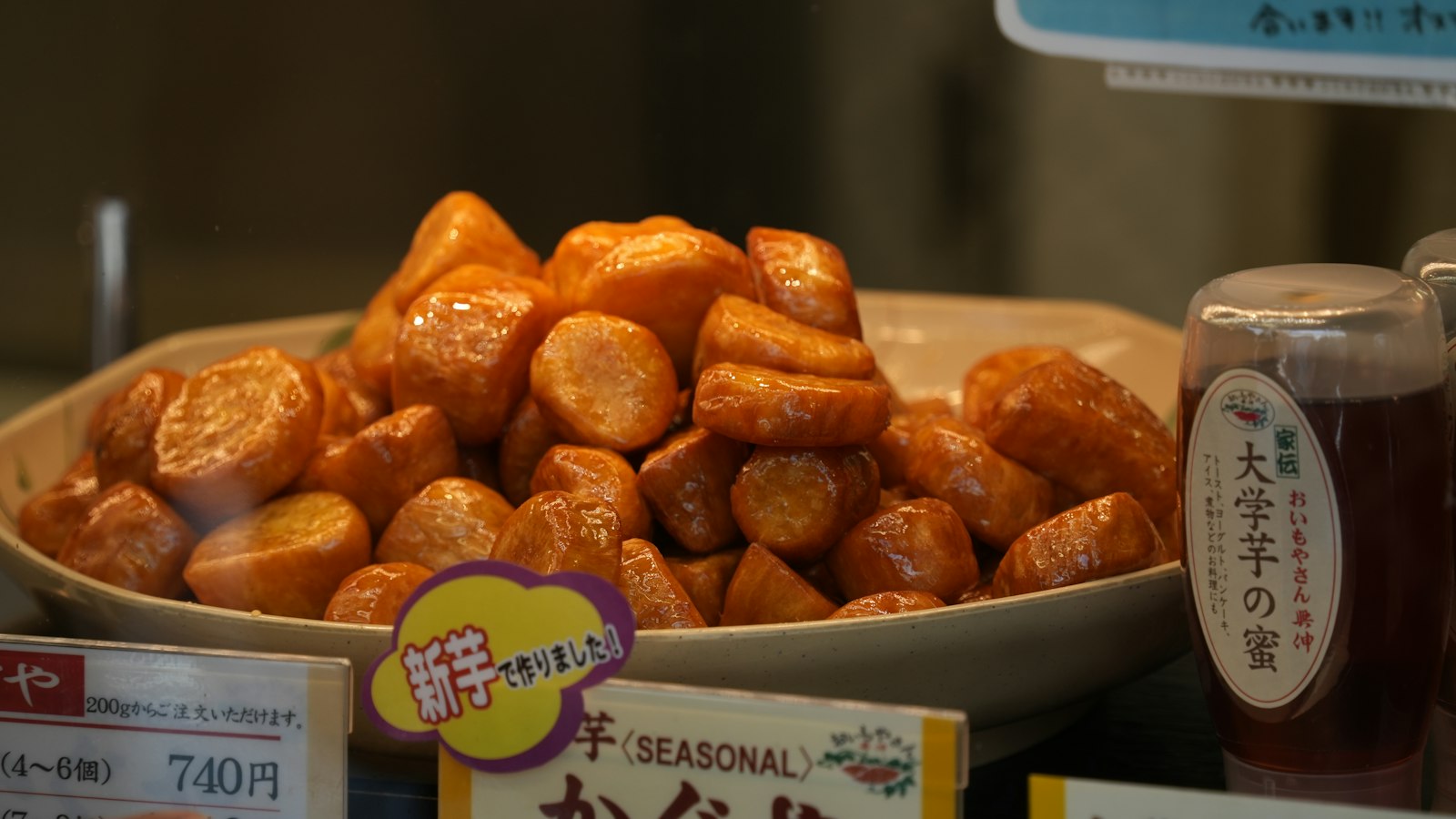
Roasted sweet potatoes (yaki-imo) are sold from trucks with loudspeakers, in supermarkets and at many convenience stores as it gets colder. Kagoshima in Kyushu is famous for sweet potatoes; daigaku-imo (fried potato glazed with syrup) is a popular snack. In Okinawa, try purple sweet potato (beni-imo) tarts.
Fruit
- Persimmons (kaki): from October, most common in November; also dried (hoshigaki) and as persimmon yokan.
- Japanese pears (nashi): crisp and juicy, late summer to autumn.
- Grapes: varieties such as Shine Muscat and Kyoho; Yamanashi and Nagano are famous growing areas.
- Apples: Aomori is Japan's apple capital, with harvests in late autumn.
Seasonal Wagashi
Maple-leaf cakes (momiji manju, a Miyajima specialty), persimmon yokan and chestnut sweets. Depachika are the easiest place to find them, and many are beautifully wrapped as gifts.
5. Autumn Drinks
- Hiyaoroshi sake: aged over summer and released in early autumn, with rounder, mellower flavors. Look for labels with “ひやおろし,” “秋” or “秋あがり.” It pairs well with matsutake, sanma, oden and chestnut rice.
- Sweet-potato shochu (imo-jochu): popular in Kyushu, often drunk with hot water (oyuwari) when it's cold.
- Hot drinks in vending machines: from around October, vending machines add red “あったか~い” (hot) buttons for tea, coffee, corn soup and sweet red-bean soup.
- Seasonal café drinks: chestnut, sweet potato and pumpkin flavors appear on limited-time menus.
Note: the legal drinking age in Japan is 20.
6. Regional Autumn Specialties
| Region | What to try |
|---|---|
| Hokkaido | Salmon and ikura bowls, butter-sautéed mushrooms, kabocha croquettes |
| Tohoku | Kiritanpo hot pot (Akita), new soba, grilled sanma, Aomori apples, wild mushrooms |
| Kanto (Tokyo) | Oden, grilled sanma, chestnut pastries, sweet potatoes |
| Chubu | Shinshu soba (Nagano), matsutake rice, kuri kinton (Gifu), Niigata new rice |
| Kansai (Kyoto, Osaka) | Matsutake dobin-mushi in Kyoto, persimmons, Lake Biwa fish, kabocha tempura |
| Chugoku and Shikoku | Sashimi with citrus (yuzu in Kochi and Tokushima), matsutake rice |
| Kyushu | Kagoshima sweet potatoes, yaki-imo, daigaku-imo, shochu |
| Okinawa | Purple sweet potato tarts, Okinawan-style tempura |
7. Where to Eat: Ideas by Budget
Budget
- Convenience stores: chestnut and sweet-potato sweets and drinks, chestnut-rice onigiri, oden. See our guide to what to buy at a Japanese konbini.
- Supermarkets: sushi packs, ready-grilled sanma and seasonal fruit, discounted in the evening.
- Set-meal restaurants (teishoku): a grilled sanma set is usually good value.
Mid-Range
- Depachika: seasonal bento, chestnut cakes and wagashi.
- Izakaya: sanma, oden, tempura and hiyaoroshi sake. Ask “旬のおすすめは?” (what's in season?).
- Soba shops: look for “新そば” signs.
Splurge
- Kaiseki: multi-course seasonal menus featuring matsutake and maple-leaf garnishes. Dinner at a ryokan is often a seasonal kaiseki too.
8. A Sample Food Day in Tokyo
- Morning: a chestnut pastry and a hot coffee from a vending machine; a walk in a park with golden ginkgo trees.
- Lunch: a grilled sanma set at a teishoku restaurant with new-crop rice.
- Afternoon: browse a depachika in Nihonbashi or Shinjuku for Mont Blanc and maple-leaf wagashi.
- Evening: an izakaya with oden, mushroom tempura and a glass of hiyaoroshi sake; pick up a roasted sweet potato on the way back.
If you're in Kyoto, swap lunch for matsutake rice or a small kaiseki meal, and combine it with our guide to autumn leaves in Kyoto.
9. Ordering Tips and Allergies
- Many seasonal menus are handwritten in Japanese on blackboards. Use a translation app with a camera function to read them.
- If you're allergic to nuts, seafood or mushrooms, carry a card written in Japanese. Chestnuts, mushrooms and fish appear in many autumn dishes, including broths.
- Kaiseki restaurants and small eateries often require reservations, and some accept cash only.
- “Limited-time” items (期間限定) usually disappear when the season ends, so don't wait for next time.
10. Your Phone and Mobile Data When Eating Out
Hunting for seasonal food, you'll use your phone constantly: translating handwritten menus, finding restaurants near the station, booking tables, reading reviews and paying by mobile wallet. Small restaurants rarely offer guest Wi-Fi, and free Wi-Fi on the street is unreliable (see our guide to free Wi-Fi in Japan). Our list of essential apps for traveling in Japan covers translation and restaurant apps.
Need mobile data during your Japan trip? Compare HD Telecom's available eSIM and Wi-Fi options, and check device compatibility before choosing a plan. Visitors can read our guide to travel eSIMs for 5–14 day trips. For longer stays, see HD Telecom's Monthly Data eSIMs (your phone must support eSIM) and Monthly Pocket WiFi rentals, and check each plan's data allowance, the speed after the allowance runs out and the terms on the product page.
11. Autumn Food Calendar by Month
| Month | What's at its best | Where to find it |
|---|---|---|
| September | Sanma, Japanese pears, grapes, early matsutake, moon-viewing dumplings (tsukimi dango) | Teishoku restaurants, supermarkets, wagashi shops |
| October | Matsutake, chestnuts, new-crop rice, hiyaoroshi sake, persimmons start | Kaiseki and izakaya, depachika, rice shops |
| November | Persimmons, new-crop soba, salmon and ikura, roasted sweet potatoes, oden | Soba shops, markets, convenience stores |
| Late November–December | Apples, yuzu, hot pots, snow crab on the Sea of Japan coast | Izakaya, coastal markets |
Seasons shift a little each year with the weather and the catch. Sanma catches in particular have been small in recent years, which can push prices up, so treat this as a guide rather than a guarantee.
12. Common Mistakes to Avoid
- Only eating at chain restaurants. Chains are convenient, but seasonal specials are often best at small set-meal shops, soba restaurants and izakaya. Look for handwritten menus and paper signs on the door.
- Ordering matsutake without checking the price. Some dishes are priced by market rate (時価, jika). Ask before you order, or choose a set meal with a fixed price.
- Skipping the depachika. Department-store food halls let you try many autumn sweets and bento in one place, and the presentation is part of the experience.
- Waiting until the end of your trip to buy food gifts. Limited-edition autumn sweets can sell out, and airport shops may not carry regional items. Buy them when you see them, and check expiry dates.
- Forgetting about cash. Many small restaurants and market stalls still prefer cash, even though card and mobile payments are spreading.
- Not making reservations for dinner. Popular izakaya and kaiseki restaurants fill up at weekends, especially in Kyoto during foliage season. Book a day or two ahead when you can.
13. Useful Menu Words for Autumn
| Japanese | Reading | Meaning |
|---|---|---|
| 秋刀魚 | sanma | Pacific saury |
| 松茸 | matsutake | matsutake mushroom |
| 栗 | kuri | chestnut |
| 焼き芋 | yaki-imo | roasted sweet potato |
| 柿 | kaki | persimmon |
| 新米 | shinmai | new-crop rice |
| 新そば | shin-soba | new-crop soba |
| 期間限定 | kikan gentei | limited time only |
| 時価 | jika | market price (ask before ordering) |
Save a screenshot of this table on your phone so you can match words on handwritten menus even without a signal.
14. FAQ
How long does the autumn food season last?
Autumn menus usually run from September to the end of November. Some foods, such as roasted sweet potatoes, oden and persimmons, carry on into winter.
Is matsutake expensive?
Yes, especially domestic matsutake. Mushroom rice or dobin-mushi as part of a set meal is a cheaper way to try it.
Are there autumn dishes for vegetarians?
Yes: chestnut rice, roasted sweet potatoes, vegetable and mushroom tempura, and cold soba. But Japanese broths often contain bonito flakes (katsuobushi), so ask carefully.
Where can I buy autumn food gifts?
Depachika, gift shops in major stations and airports. Choose packaged sweets with a long shelf life, and check your home country's rules on bringing in food.
Are there autumn food festivals?
Yes. Many regions hold new-soba festivals, new-rice festivals and farmers' markets in October and November. Check the tourism site of the prefecture you're visiting.
Can I find autumn food at the airport?
Yes, airport shops sell many packaged autumn sweets, but the selection is smaller than in city depachika, and regional or fresh items may be missing. If there's something specific you want, buy it in town.
15. Conclusion
Autumn is when Japanese food is at its richest: grilled sanma, matsutake, chestnuts, sweet potatoes, new rice and soba, seasonal fruit and hiyaoroshi sake. Watch for “秋,” “新” and “旬” on menus, explore depachika and izakaya, and keep your phone connected so you can translate menus and find good places to eat on the go.
Sources (checked November 12, 2026)
Related products
Find your plan with HD TELECOM
SIM, eSIM and Pocket WiFi — genuine quality, clear pricing, 24/7 support.