

Kyoto Autumn Foliage: 10 Must-Visit Spots and How to Avoid the Crowds
September 29, 2026
Quick Answer
Autumn foliage in central Kyoto usually reaches peak beauty between November 20 and December 5. Northern mountainous areas such as Kurama, Kibune, or Takao turn color about a week earlier. If you only have one day, focus on the eastern cluster: visit Tofuku-ji right at opening, head to Kiyomizu-dera around noon, walk from Nanzen-ji up to Eikan-do in the afternoon, and stay for the evening illuminations. Taking trains instead of buses will save you a substantial amount of time.
Who This Guide Is For
This guide is written for Vietnamese living in Japan (international students, technical interns, and workers) planning a 1–2 day weekend trip to Kyoto in November, as well as tourists visiting from Vietnam organizing their autumn itineraries. The content focuses on practical matters: where to go, what time to arrive, how much it costs, and the common mistakes that leave travelers stranded waiting for buses for half a day.
When This Guide May Not Be Right for You
- You are visiting Kyoto in October: the leaves are almost entirely green then, except for a few trees at high mountain elevations.
- You want to avoid crowds entirely: during the mid-to-late November weekends, nowhere in Kyoto is uncrowded—there are only places that are slightly less packed than others.
- You are traveling with seniors or young children who cannot handle steep inclines: Kurama, Takao, and parts of Arashiyama feature steep paths that you may want to skip.
Kyoto Autumn Foliage Forecast by Area
The Japan Meteorological Corporation and forecasting websites such as tenki.jp or Walker Plus release preliminary forecasts around September and update leaf conditions daily once the season begins. Generally speaking, Kyoto's leaves have been changing color later in recent years compared to two decades ago due to warmer autumns. You can refer to the following timeline:
| Area | Color Change Begins | Peak Viewing |
|---|---|---|
| Kurama, Kibune, Takao (Northern Mountains) | Early November | Around Nov 10 to Nov 20 |
| Ohara, Arashiyama | Mid-November | Around Nov 18 to Nov 30 |
| Higashiyama (Kiyomizu, Eikan-do, Nanzen-ji) | Mid-November | Around Nov 20 to Dec 5 |
| Southern Kyoto (Tofuku-ji, Daigo-ji) | Late November | Around Nov 25 to Dec 7 |
If you can only pick one weekend, the final weekend of November is usually the safest bet: the mountain areas may have started shedding leaves, but central Kyoto will be at its peak.
10 Must-Visit Autumn Foliage Spots in Kyoto
1. Tofuku-ji: Tsutenkyo Bridge Over a Sea of Maples
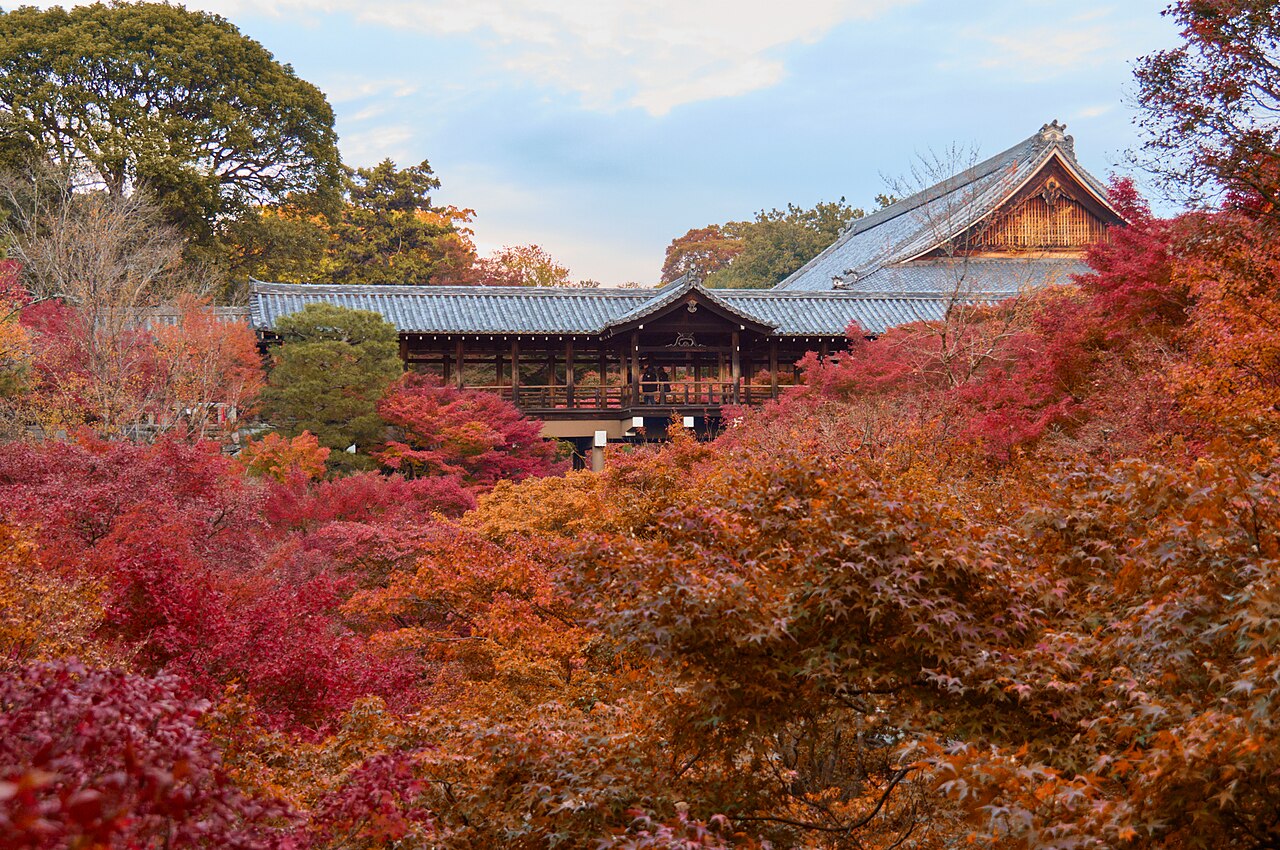
Photo: lumoplank / Wikimedia Commons (CC0)
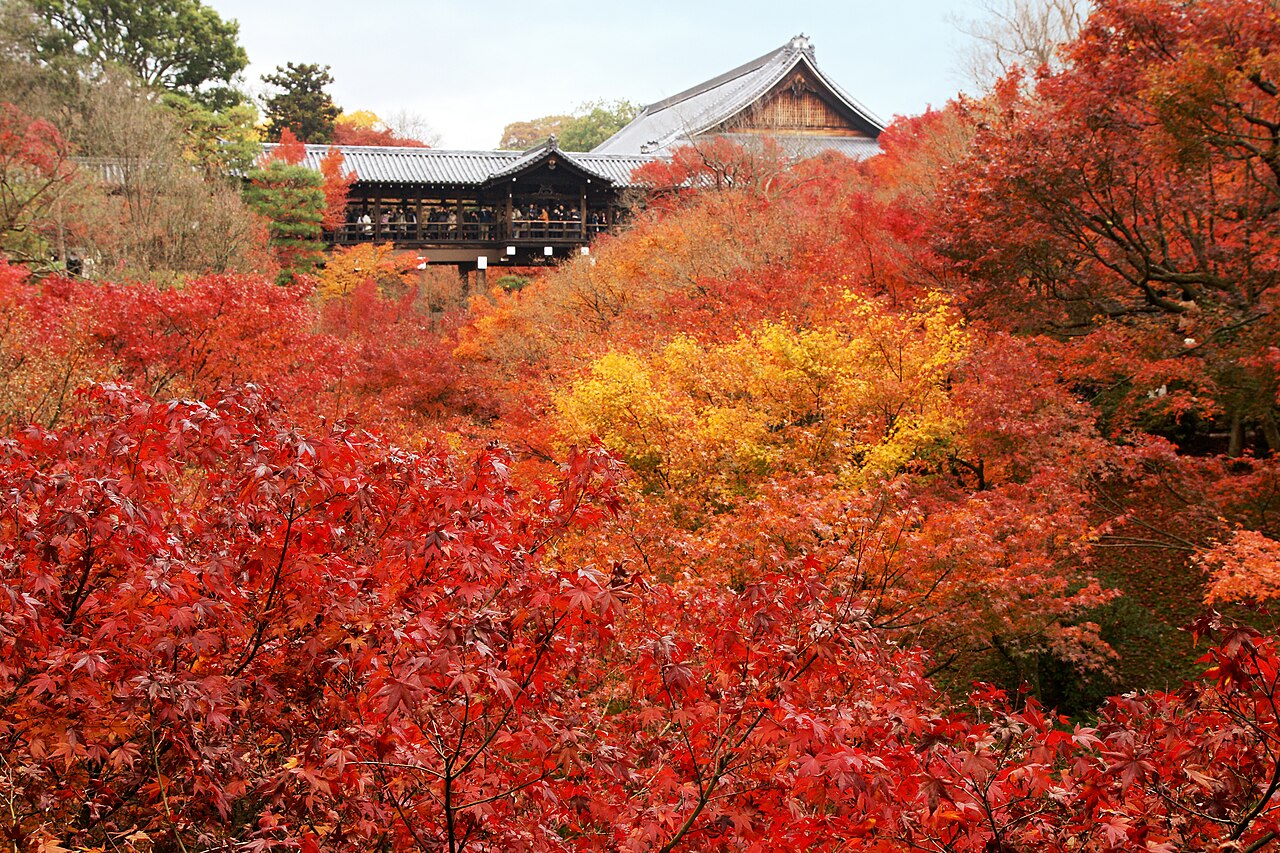
Tofuku-ji boasts around 2,000 maple trees filling a lush ravine; gazing down from the wooden Tsutenkyo Bridge reveals an unbroken sea of vibrant red and orange. This is Kyoto's most crowded spot during the season, so if you plan to visit, be there before opening time (usually 8:30 AM in autumn, though some years it opens earlier).
A detail many miss: during the peak foliage season, the temple prohibits photography on Tsutenkyo Bridge itself to keep foot traffic moving. The most scenic view is actually looking back at the bridge from the lower Gaunkyo Bridge or from within the Kaisando area. Admission to the Tsutenkyo and Kaisando areas in autumn is around 1,000 yen.
Access: Get off at Tofukuji Station (JR Nara Line or Keihan Line) and walk about 10 minutes.
2. Eikan-do (Zenrin-ji): The "Temple of Autumn Leaves"
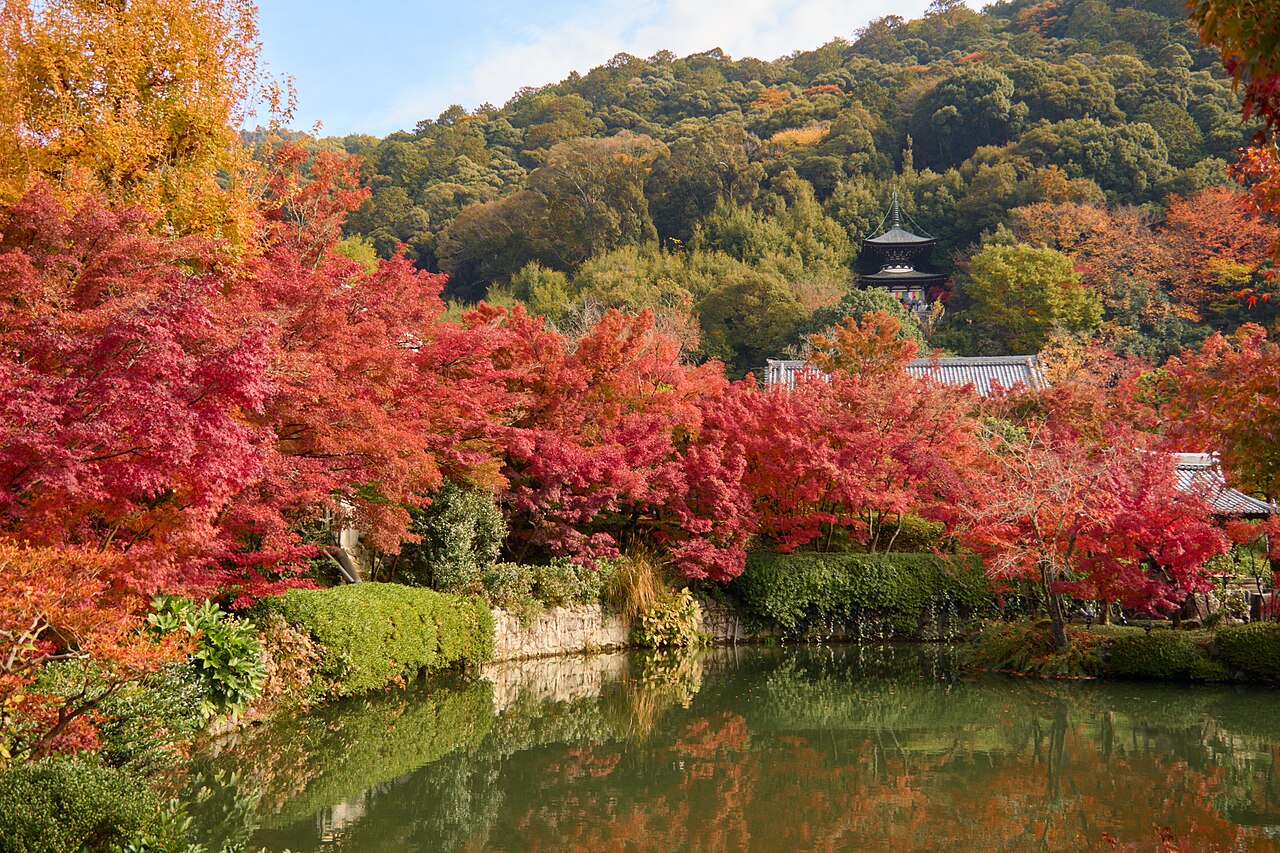
Photo: lumoplank / Wikimedia Commons (CC0)
Ever since the Heian period, Eikan-do has been celebrated as "Momiji no Eikan-do" (Eikan-do of the Red Maples). Around 3,000 maple trees encircle Hojo-ike Pond and climb the hillside toward the Tahoto Pagoda. Ascending to the pagoda rewards you with a panoramic view of western Kyoto.
Daytime special autumn admission is around 1,000 yen. In the evening, the temple hosts night illuminations requiring a separate ticket; in recent years, advance online reservations have sometimes been required. Be sure to check the temple's official website about a week before your visit. The sight of illuminated maples mirrored on the pond's surface is one of Kyoto's most iconic autumn vistas.
Access: Keage Subway Station (Tozai Line), then about a 15-minute walk through Nanzen-ji.
3. Kiyomizu-dera: Overlooking a Sea of Red from the Wooden Stage
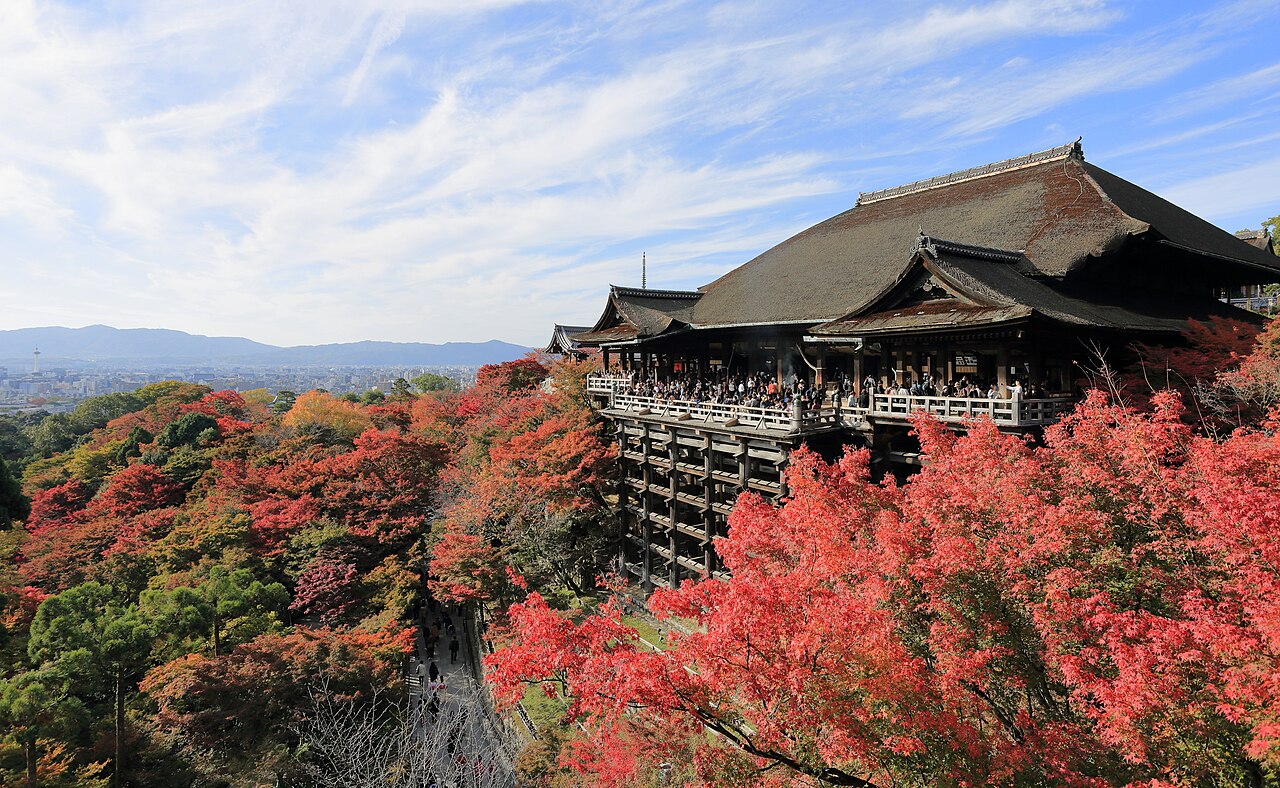
Photo: Martin Falbisoner / Wikimedia Commons (CC BY-SA 4.0)
Kiyomizu-dera's legendary wooden stage juts out over a cliff, hovering above a valley blanketed with roughly 1,000 maples. On clear mornings, the vibrant foliage and the temple’s vermilion architecture stand out sharply. In the evening, the temple opens for night viewings for several weeks each autumn, casting a radiant blue beam of light into the sky from the main hall grounds.
This area stays crowded all day. The best ways to dodge the crowds are to arrive before 7:00 AM (the temple opens at 6:00 AM) or after tour groups depart in the late afternoon, around 4:30 PM. Admission is around 500 yen. The sloping approaches of Kiyomizu-zaka and Sannenzaka get extremely congested; if you are pushing a stroller, entering from the Gojo-dori side is much easier.
4. Arashiyama: Hogon-in, Tenryu-ji, and Jojakko-ji
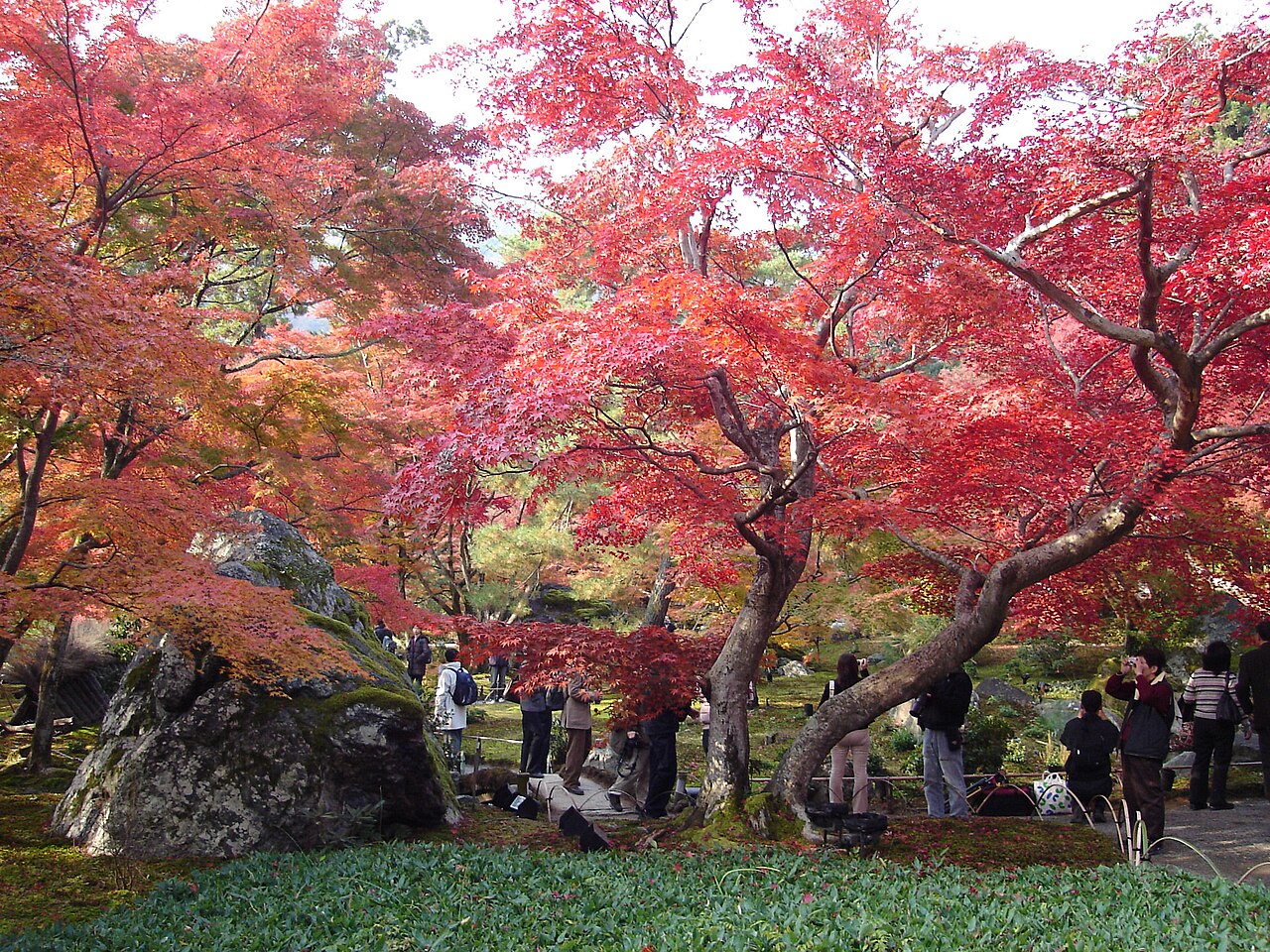
Photo: PlusMinus / Wikimedia Commons (CC BY-SA 3.0)
Arashiyama is far more expansive than most people expect. Beyond the Togetsukyo Bridge and the Bamboo Grove, there are three autumn gems worth your time. Hogon-in is a sub-temple open only in spring and autumn, famous for its moss-and-rock garden under a canopy of maples, complete with evening illuminations. Tenryu-ji features the World Heritage Sogenchi Garden framed against Mount Arashiyama in the background. Jojakko-ji sits slightly higher to the north, featuring a moss-thatched Niomon Gate nestled among maple trees—a less crowded hidden gem compared to the first two.
If you still have stamina, continue further north past Nison-in and Gio-ji toward Adashino Nenbutsu-ji. The crowds thin out considerably along this stretch, where plenty of traditional townhouses still line the streets.
Access: Take the JR Sagano Line to Saga-Arashiyama Station, the Randen tram to Arashiyama Station, or the Hankyu Line to Arashiyama Station (requires walking across the bridge).
5. Kitano Tenmangu: The Riverside Momiji-en Garden
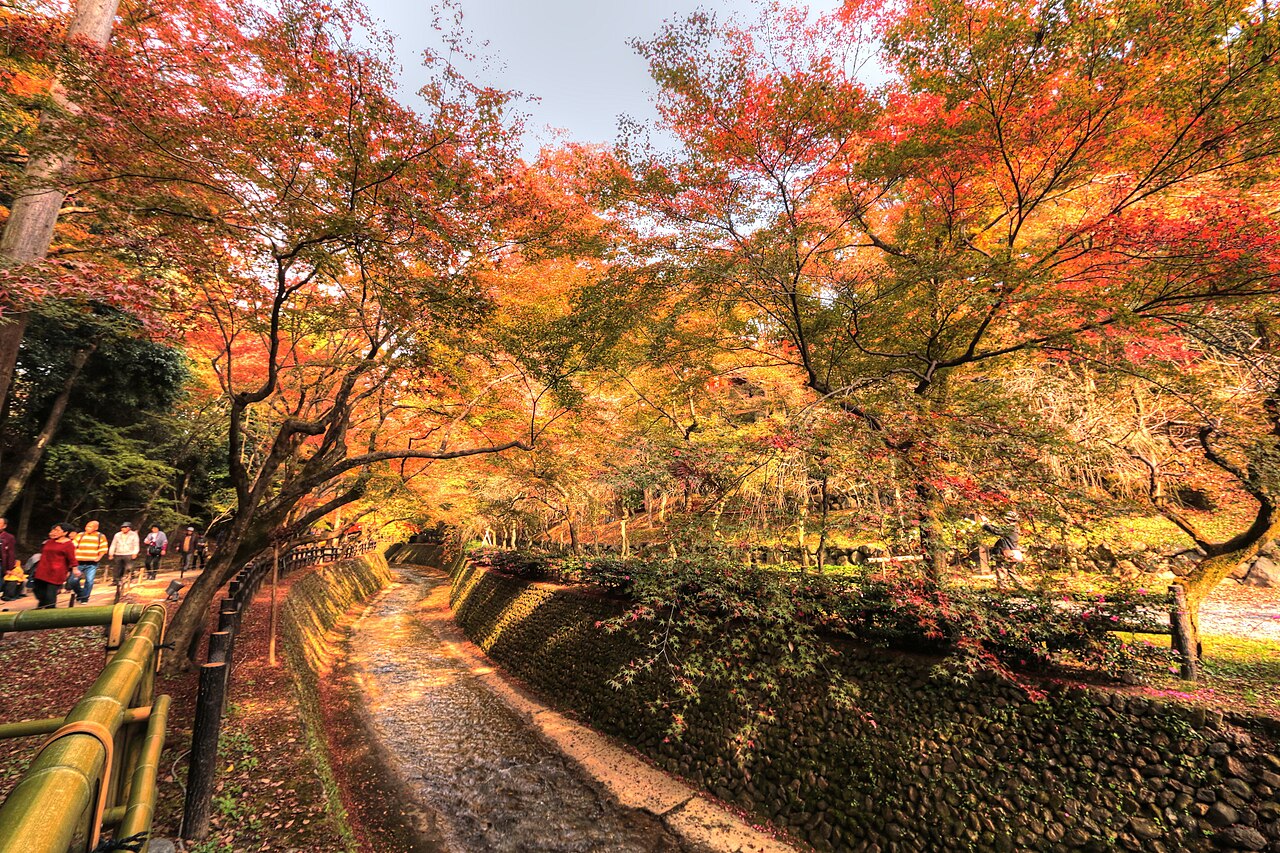
Photo: くろふね / Wikimedia Commons (CC BY-SA 4.0)
Dedicated to the deity of academics, this shrine features the Momiji-en Garden running along the Kamiya River, home to around 350 maple trees—some centuries old. Spanning the river in the center is the vermilion Uguisu-bashi Bridge; looking down along the stream from this bridge is the most popular photo angle.
Admission to the garden in autumn is about 1,000 to 1,200 yen and usually includes hot tea and a traditional sweet served at the tea house inside. Night illuminations are also held here. Less overwhelming than the major eastern temples, it is an ideal spot for a relaxing afternoon stroll.
6. Ruriko-in: Maple Reflections on Polished Lacquered Tables
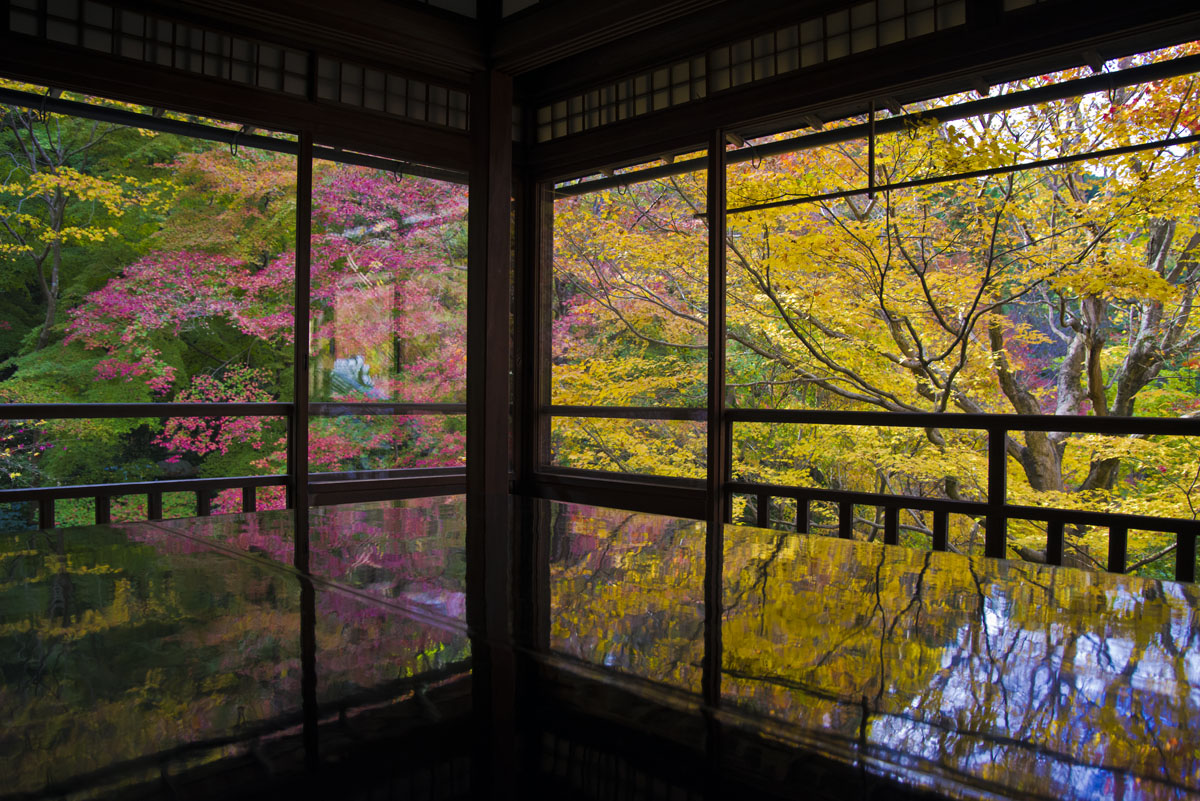
Photo: 山本海行 / Wikimedia Commons (CC BY-SA 4.0)
Located in Yase in the northern part of the city, Ruriko-in opens its doors for just a few weeks each spring and autumn. On the second floor sits a polished, mirror-like black lacquered table that reflects the vibrant maples outside the open windows, an effect known as "yuka-momiji" (maples on the floor).
In recent years, the temple has shifted to timed online reservations, with tickets priced around 2,000 yen. Without a prior booking, getting inside during peak season is virtually impossible. Note that resting your camera on the table surface and using tripods are strictly prohibited.
Access: Take the Eizan Railway from Demachiyanagi Station to Yase-Hieizanguchi Station, followed by roughly a 5-minute walk.
7. Kurama and Kibune: The Train Ride Through the "Maple Tunnel"
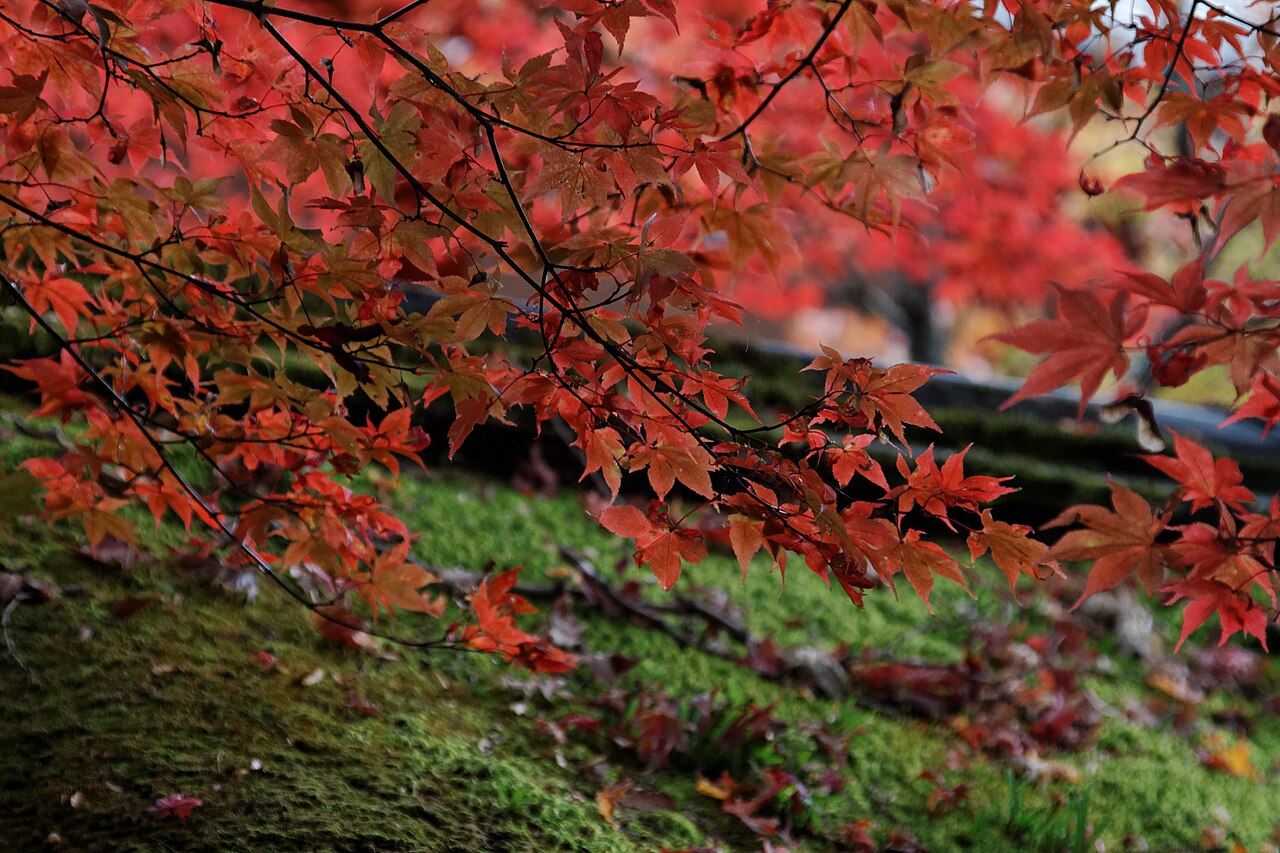
Photo: KimonBerlin / Wikimedia Commons (CC BY-SA 2.0)
The section of the Eizan Railway between Ichihara and Ninose stations cuts right through two dense rows of maples hugging the tracks, celebrated locally as the "Momiji no Tonneru" (Maple Tunnel). Trains slow down along this stretch; at night, trackside floodlights illuminate the foliage while train interior lights are dimmed so passengers can gaze out. Sit by the right-hand window when traveling outbound/up the mountain.
Kurama and Kibune are two mountain villages separated by a scenic pass. You can hike from Kurama-dera Temple across the mountain down to Kibune Shrine in about 1.5 to 2 hours; it is steep, but the path is well maintained. The foliage here turns early, typically peaking around mid-November, well before downtown Kyoto.
8. Daigo-ji: Bentendo Hall and the Vermilion Bridge
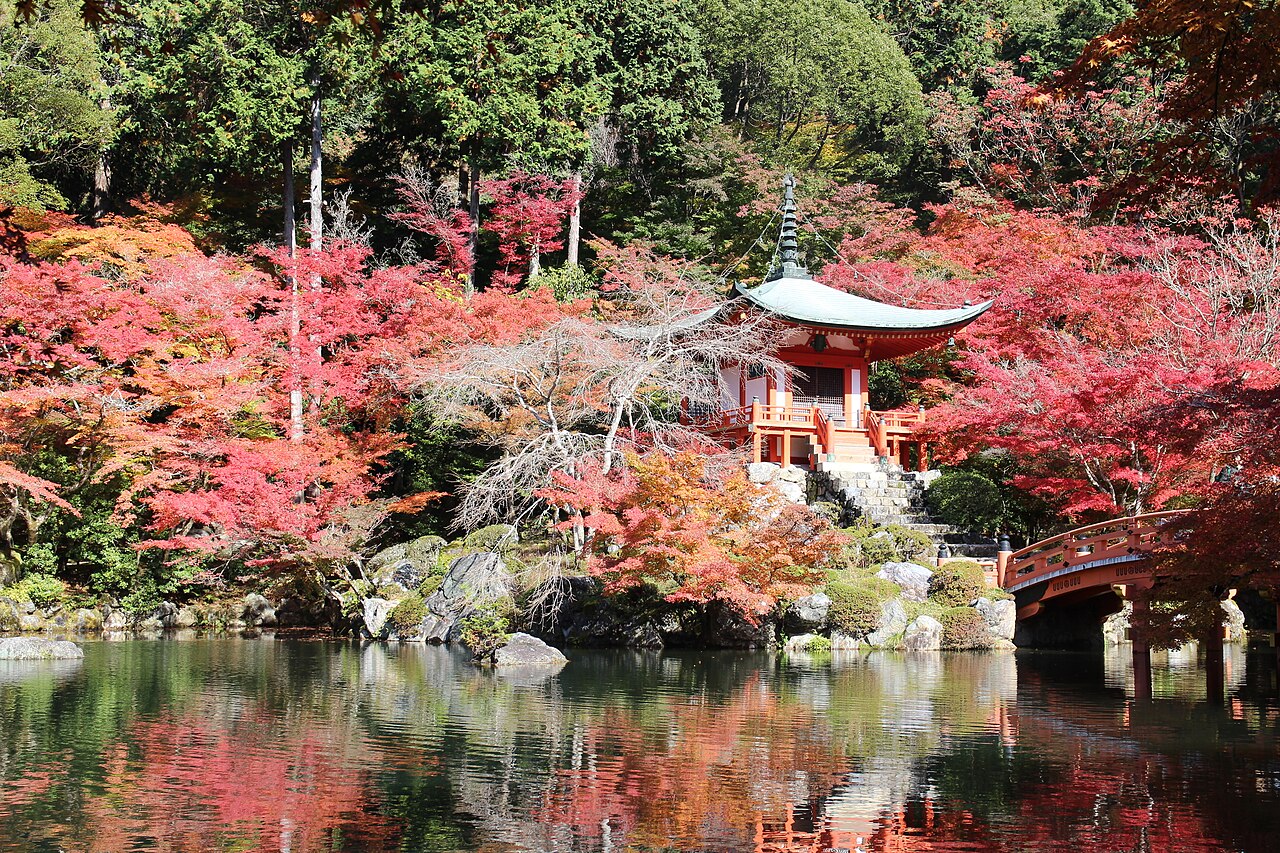
Photo: Suicasmo / Wikimedia Commons (CC BY-SA 4.0)
Daigo-ji is situated in southeastern Kyoto, far enough from the city center to remain markedly less crowded. Its signature postcard view is the vermilion Bentendo Hall beside a pond, spanned by an arched red bridge against a backdrop of blazing maples. On calm, windless mornings, the mirror reflection across the water is breathtaking.
The temple complex is massive and includes a five-story pagoda recognized as Kyoto's oldest surviving wooden structure. Combined autumn admission ranges from 1,000 to 1,500 yen depending on how many sub-areas you enter. Access: Take the Tozai Subway Line to Daigo Station, followed by about a 15-minute walk.
9. Shinnyo-do: A Tranquil Haven in Okazaki
Perched on Yoshida Hill, Shinnyo-do is just a short stroll from Eikan-do yet significantly quieter. The main grounds are free to enter; you only need to purchase a ticket if you wish to see the inner main hall and private garden. The three-story pagoda framed by flaming maples is a favorite composition for photographers wanting striking shots without wall-to-wall crowds.
This temple pairs effortlessly with Eikan-do and Nanzen-ji for an afternoon walking tour. Walking south from Shinnyo-do brings you to Okazaki in roughly 15 minutes.
10. Nanzen-ji: The Suirokaku Aqueduct and Tenju-an
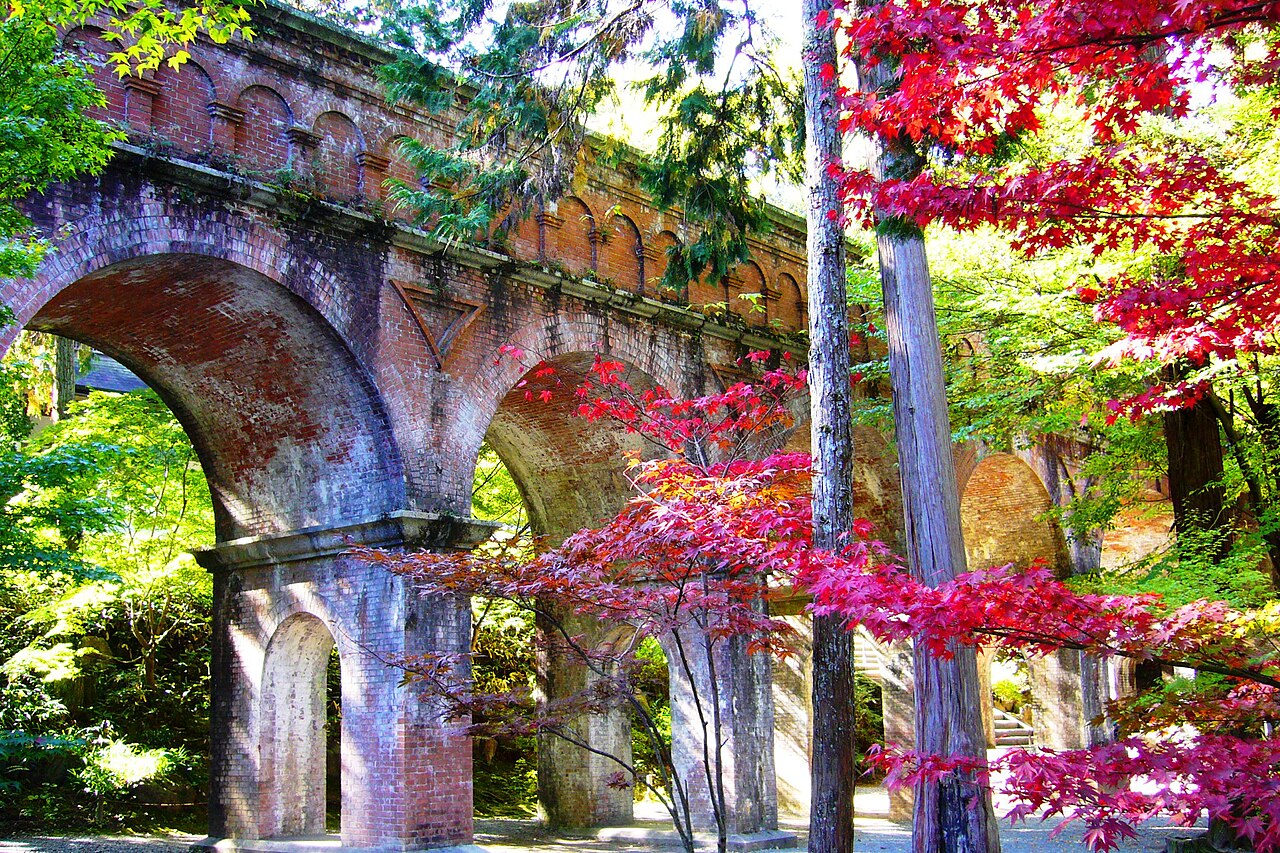
Photo: ttshr1970 / Wikimedia Commons (CC BY 3.0)
Nanzen-ji is famed for its red-brick Suirokaku aqueduct, built during the Meiji era, which cuts gracefully across the temple grounds surrounded by autumn leaves draping over its Roman-style arches. The main temple grounds and aqueduct area are free to access. If you want to tour a garden, head into the sub-temple Tenju-an; its rock garden and pond under the maple canopy are exquisite, with admission around 500 yen.
From Nanzen-ji, you can stroll north along the Philosopher's Path (Tetsugaku no Michi) to Ginkaku-ji—a scenic 2 km walk along a canal lined with colorful foliage.
Suggested 2-Day Itinerary
- Day 1, Morning: Arrive at Tofuku-ji by 8:00 AM. Finish around 10:00 AM, take the Keihan Line to Kiyomizu-Gojo Station, and walk up to Kiyomizu-dera.
- Day 1, Afternoon: Grab lunch around Gion, take the subway to Keage, visit Nanzen-ji, then head to Eikan-do. If you booked evening illumination tickets, unwind at a café near Okazaki before heading back for the night view.
- Day 2, Morning: Take the JR train to Saga-Arashiyama before 8:00 AM. Explore the Bamboo Grove while it is still quiet, visit Tenryu-ji (opens at 8:30 AM), then head up to Jojakko-ji.
- Day 2, Afternoon: Take the Randen tram to Kitano Hakubaicho and visit Kitano Tenmangu. If time permits, ride the Eizan Railway up to Kurama to experience the Maple Tunnel after dusk.
Estimated Costs (Per Person, 2 Days, Departing from Tokyo)
| Item | Estimated Cost |
|---|---|
| Round-trip Tokyo–Kyoto Shinkansen (Standard Reserved Seat) | Approx. 28,000 to 29,000 yen |
| Round-trip Highway Night Bus (Budget Alternative) | Approx. 8,000 to 16,000 yen |
| 1 Night Hotel (Peak Autumn Foliage Season) | Approx. 10,000 to 25,000 yen (substantially higher than regular rates) |
| Temple & Garden Admissions (5 to 6 spots) | Approx. 4,000 to 6,000 yen |
| Local Kyoto Transportation | Approx. 1,500 to 2,500 yen |
| Food & Dining | Approx. 4,000 to 7,000 yen |
The figures above are reference estimates and fluctuate depending on the year and booking timing. Hotel rooms for late-November weekends sell out very early, so make reservations at least one to two months ahead. If Kyoto accommodations are too steep, staying in Osaka and taking the Hankyu or Keihan lines into Kyoto (approx. 45 minutes) is a popular, cost-effective alternative.
What to Prepare
- IC Card (Suica, ICOCA, PASMO): Valid across trains, buses, and many convenience stores. Tokyo Suica cards work seamlessly across Kyoto.
- Comfortable Walking Shoes: You can easily clock 15,000 to 20,000 steps a day in Kyoto. Temple grounds feature plenty of loose gravel and stone steps.
- Light Layers/Jackets: Midday temperatures can sit comfortably around 15–18°C, but evening temperatures during illuminations often drop to 5–8°C.
- Cash: Several smaller temples and ticket booths accept cash only.
- Stable Internet Connection: Essential for checking transit routes, train schedules, live foliage updates, and booking evening illumination passes online.
- Portable Power Bank: Taking photos and navigating with maps all day will drain your phone battery well before nightfall.
Common Pitfalls to Avoid
- Relying exclusively on city buses. During peak foliage, popular routes like Bus 100 and 206 are frequently packed to capacity, sometimes forcing you to wait through 2 or 3 full buses. Taking the subway, Keihan, JR, or Randen lines combined with walking is almost always faster. Kyoto discontinued its Bus One-Day Pass in 2023; the current option is the Subway & Bus 1-Day Pass (approx. 1,100 yen).
- Packing too many spots into one day. Three to four destinations per day is the sweet spot. Buying tickets and queuing up at major temples can easily take 30 minutes per site.
- Skipping special opening dates. Temples like Hogon-in, Ruriko-in, and select private gardens open for only a few weeks each year, with dates shifting annually.
- Stopping in the middle of paths for photos. Temple staff are very strict about maintaining pedestrian flow. At Tofuku-ji, taking photos directly on Tsutenkyo Bridge during the foliage season is strictly forbidden.
- Wandering into Gion private alleys to photograph Geiko and Maiko. Several private streets in Gion are officially off-limits to tourists, with clear warning signage and fines enforced.
Frequently Asked Questions
What exact dates will Kyoto's leaves peak this year?
Nobody can predict exact peak dates months ahead. A safe window for central Kyoto is roughly November 20 to December 5. About 7 to 10 days before your trip, check the foliage trackers on tenki.jp or Walker Plus; they provide live updates per attraction rated as "Not Yet Changed," "Starting to Turn," "Peak," or "Scattered."
Can I do a day trip to see Kyoto's autumn leaves from Osaka?
Yes, absolutely, provided you stick to one geographic cluster. For example, spend the whole day in Higashiyama (Tofuku-ji, Kiyomizu, Nanzen-ji, Eikan-do) or in Arashiyama. Taking the Hankyu or Keihan lines from Osaka takes only 45 to 50 minutes and is cheaper than JR.
Do I need to buy tickets in advance?
Most temples sell tickets on-site at the gate. Advance bookings are primarily required for Ruriko-in, select night illuminations (such as Eikan-do in recent years), and a handful of capacity-limited gardens. Always check the official website of each venue prior to visiting.
Where are the best spots for evening illuminations?
Eikan-do, Kiyomizu-dera, Kodai-ji, and Hogon-in are four top-tier illumination picks. If you want a distinctive experience, riding the Eizan Railway through the illuminated Maple Tunnel after dark is equally worthwhile.
Can I rent a kimono to visit temples during foliage season?
Yes, many visitors do. Just keep in mind that gravel paths and stone stairs can be challenging in geta sandals, and evenings get chilly, so opt for an ensemble that includes a warm haori coat or shawl.
Reference Sources
- Kyoto City Official Travel Guide: kyoto.travel
- Japan National Tourism Organization (JNTO): japan.travel
- Autumn Foliage Forecasts & Live Trackers: tenki.jp, Walker Plus (koyo)
- Official websites of Tofuku-ji, Eikan-do, Kiyomizu-dera, and Ruriko-in
Cover photo: 663highland / Wikimedia Commons (CC BY 2.5)
Source Verification Date
The details in this guide were verified in September 2026. Admission fees, opening hours, and illumination dates vary from year to year; please double-check each location's official website prior to your visit.
Explore Kyoto This Autumn with Uninterrupted Connectivity from HD TELECOM
A full day hopping between Kyoto temples means constantly checking map routes, looking up train departures, tracking live leaf conditions, and booking illumination tickets from your phone. HD TELECOM offers data SIMs, eSIMs, and Pocket WiFi tailored for Vietnamese residents in Japan and incoming travelers, backed by native Vietnamese customer support. Explore our monthly eSIM plans, data SIM options, or contact our support team to get recommendations tailored to your travel plans.
Related products
Find your plan with HD TELECOM
SIM, eSIM and Pocket WiFi — genuine quality, clear pricing, 24/7 support.
Autumn Foliage in Osaka & Nara: 10 Best Spots for Red and Yellow Leaves (with Access Guide)
Japan Autumn Foliage Forecast by Region: Top 10 Spots from Hokkaido to Kyushu
Japan August 2026 Fireworks Schedule: Where to Watch, Dates, and How to Get There

Japan travel 5–14 days: Where to buy travel eSIM, how to use it, how much does it cost?