
Autumn Foliage in Osaka & Nara: 10 Best Spots for Red and Yellow Leaves (with Access Guide)
September 28, 2026
Quick Answer
Autumn foliage in Osaka and Nara usually peaks from mid-November to early December. In Osaka, the easiest spots to visit are Minoo Waterfall (red maples, mid- to late November) and Midosuji Avenue (ginkgo leaves, late November to early December). In Nara, Nara Park lets you enjoy deer, ancient temples, and fall foliage all in one morning or afternoon; if you prefer a quieter mountain setting, head toward Sakurai for Hase-dera Temple and Tanzan Shrine.
Who This Guide Is For
Vietnamese residents living in the Kansai region (Osaka, Kobe, Nara, Wakayama) who want to enjoy autumn leaves without the overwhelming crowds of Kyoto, as well as tourists staying in Osaka looking for a day trip or two nearby. This guide is divided into two sections, covering 5 top spots in Osaka and 5 in Nara.
When This Guide Might Not Be for You
- You are visiting in October: leaves in Osaka and Nara will still be almost entirely green.
- You only want to see Japan's most famous autumn foliage at temples: many of those iconic views are in Kyoto—check out our dedicated article on Kyoto's foliage instead.
- You are traveling with someone who has mobility issues and want to visit Minoo, Muro-ji, or Hase-dera: these locations feature steep inclines or numerous stone stairs.
Autumn Foliage Schedule in Osaka and Nara
| Spot | Foliage Type | Peak Season (Estimated) |
|---|---|---|
| Minoo Waterfall, Katsuo-ji Temple | Red Maple | Mid- to late November |
| Muro-ji, Hase-dera, Tanzan Shrine | Red Maple | Mid- to late November |
| Nara Park, Isuien Garden | Maple, Ginkgo | Mid-November to early December |
| Expo '70 Commemorative Park | Maple | Mid- to late November |
| Osaka Castle Park | Ginkgo, Maple | Late November to early December |
| Midosuji Avenue | Golden Ginkgo | Late November to early December |
5 Spots in Osaka & 5 Spots in Nara
1. Minoo Park (Osaka): Waterfalls and Maple Tempura
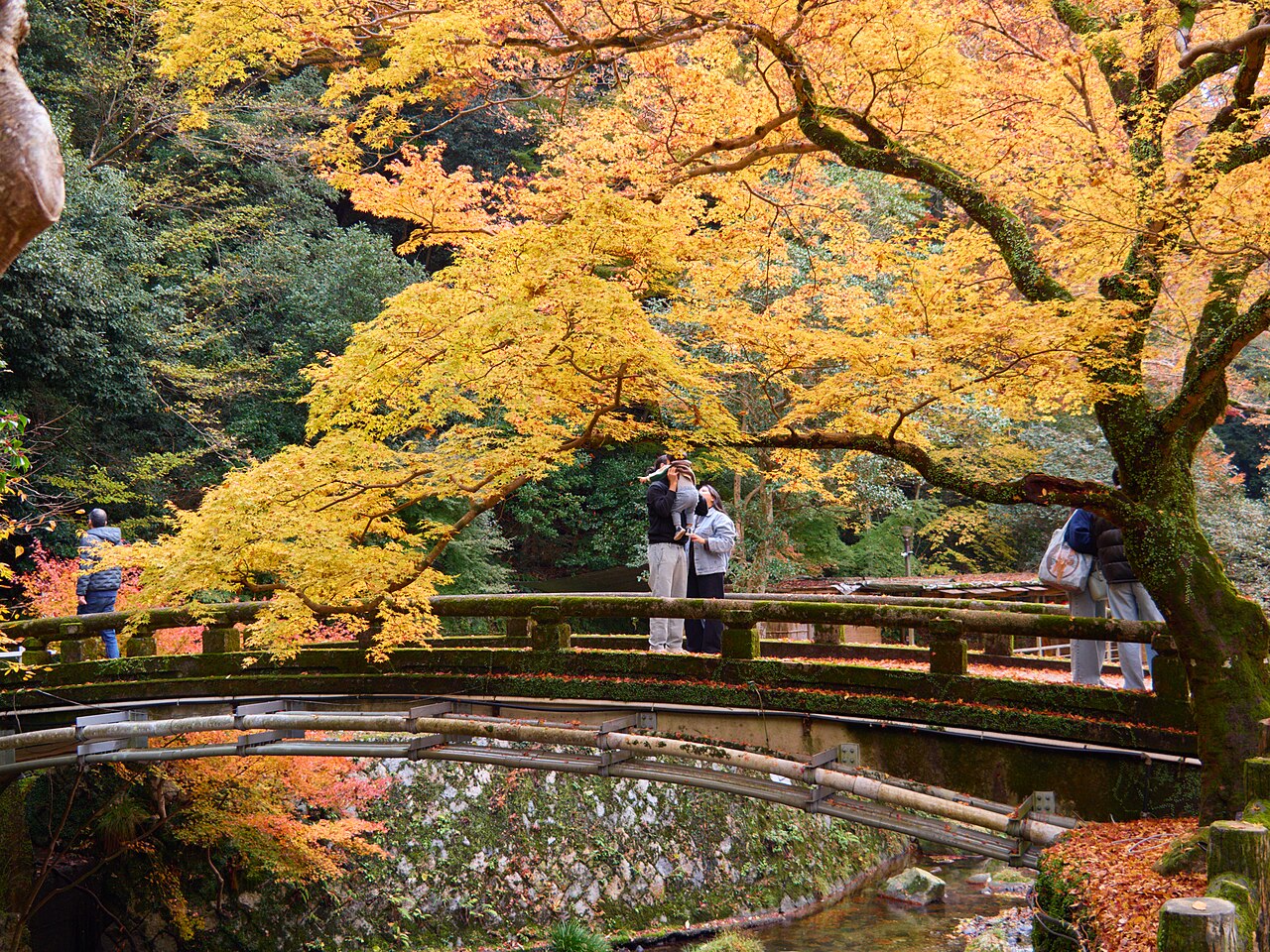
Photo: lumoplank / Wikimedia Commons (CC0)
Minoo Park is located on the northern edge of Osaka, just a 30-minute train ride on the Hankyu Line from Umeda to Minoo Station. From the station, a scenic 2.8 km paved path along the stream leads to the 33-meter Minoo Waterfall, taking about 40 to 50 minutes at a leisurely walk. From mid- to late November, the entire trail is lined with vibrant red maples.
A must-try treat here is "momiji tempura"—maple leaves salted for a year and then deep-fried in a sweet batter; sold at stalls along the path, they taste like sweet, crunchy biscuits. Beware of the wild monkeys in the area: keep food out of sight and do not feed them.
2. Midosuji Avenue (Osaka): 4 km of Golden Ginkgo Trees
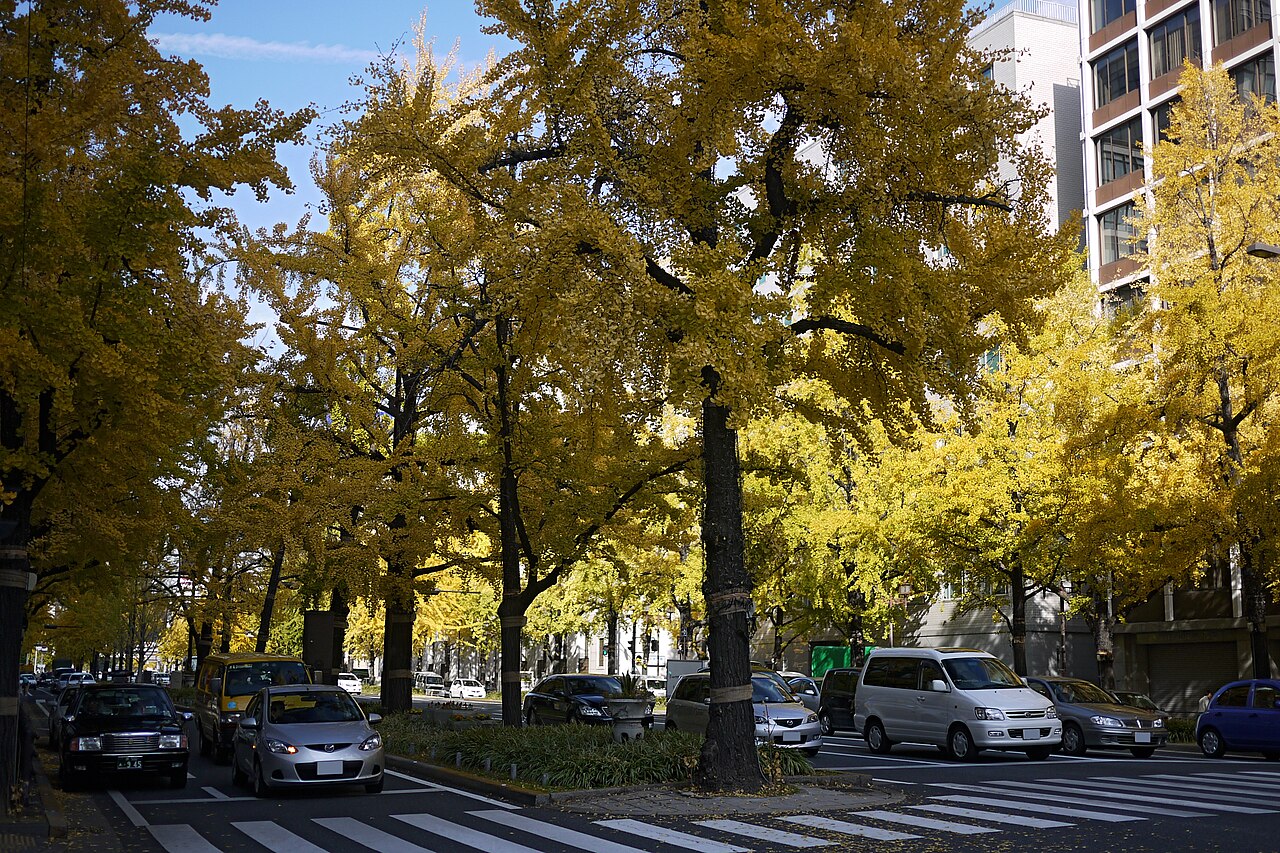
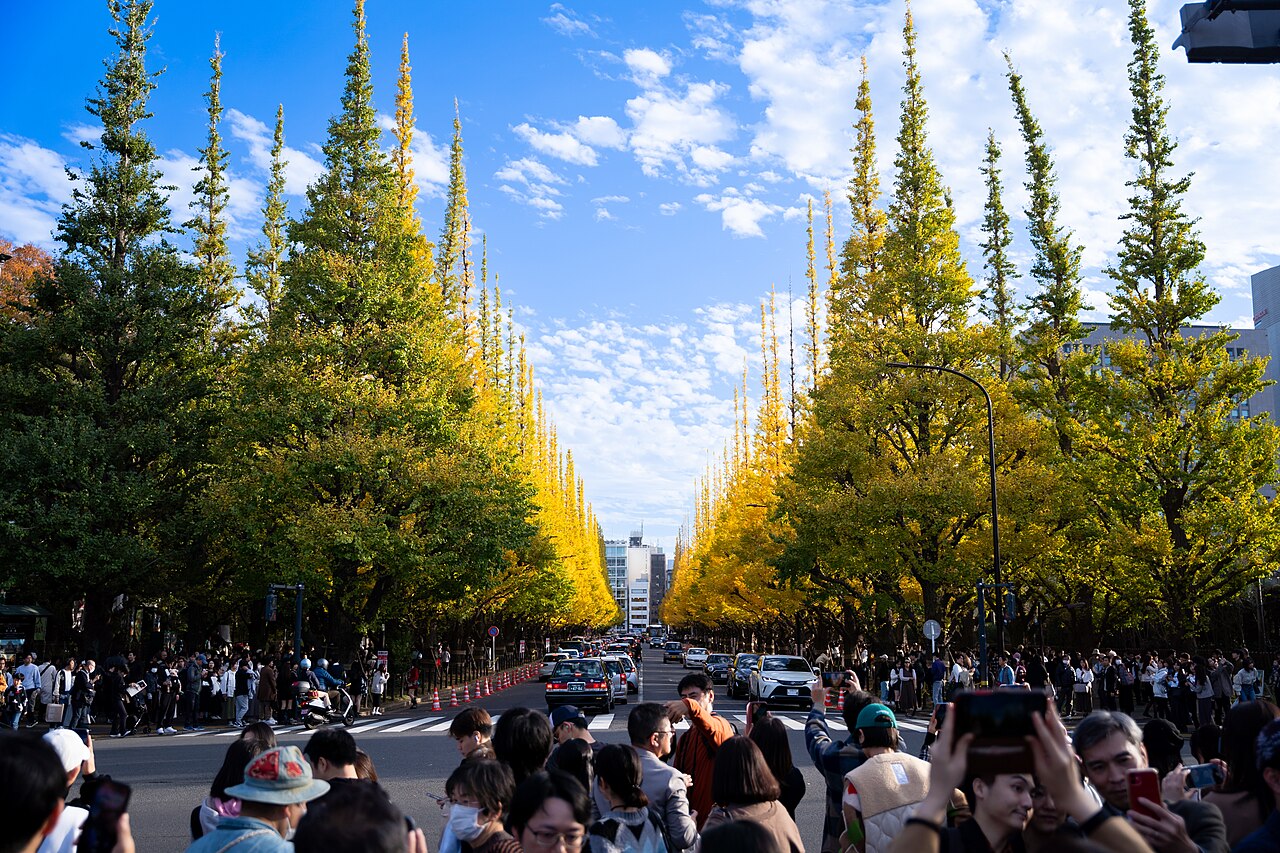
Photo: 663highland / Wikimedia Commons (CC BY 2.5)
Midosuji is the main boulevard connecting Umeda and Namba, lined with nearly 1,000 ginkgo trees. From late November to early December, the entire avenue transforms into a brilliant yellow, with the stretch between Yodoyabashi and Honmachi being the most stunning. There is no admission fee or planning required—you can simply stroll a section between shopping trips.
In recent years, this section of Midosuji also features evening light illuminations from around November through the end of the year. Note that fallen ginkgo nuts on the sidewalk can have a strong odor, so watch your step.
3. Osaka Castle Park: Stone Walls and Ginkgo Avenues
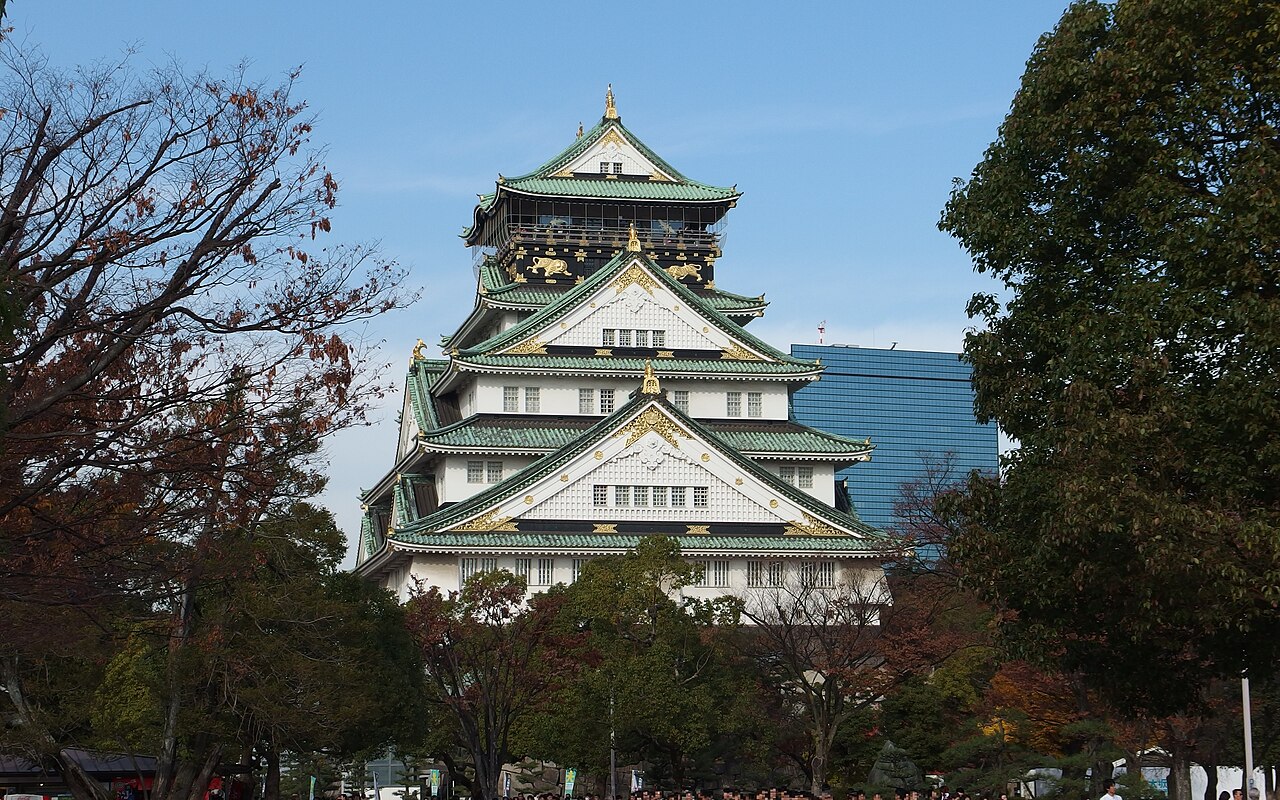
Photo: Mc681 / Wikimedia Commons (CC BY-SA 4.0)
The vast grounds around Osaka Castle feature numerous ginkgo trees along the massive stone walls and moats, along with scattered maple trees. The Nishinomaru Garden (paid entry, around 200 yen) offers a direct view of the main castle keep, making it the best spot to capture the castle tower framed by autumn foliage. The leaves peak around late November to early December.
Take the JR Osaka Loop Line to Osakajokoen Station or the subway to Tanimachi 4-chome Station. Entering the main castle tower requires a separate ticket, and lines can be long on weekend afternoons.
4. Expo '70 Commemorative Park (Suita): Japanese Garden and Autumn Festival
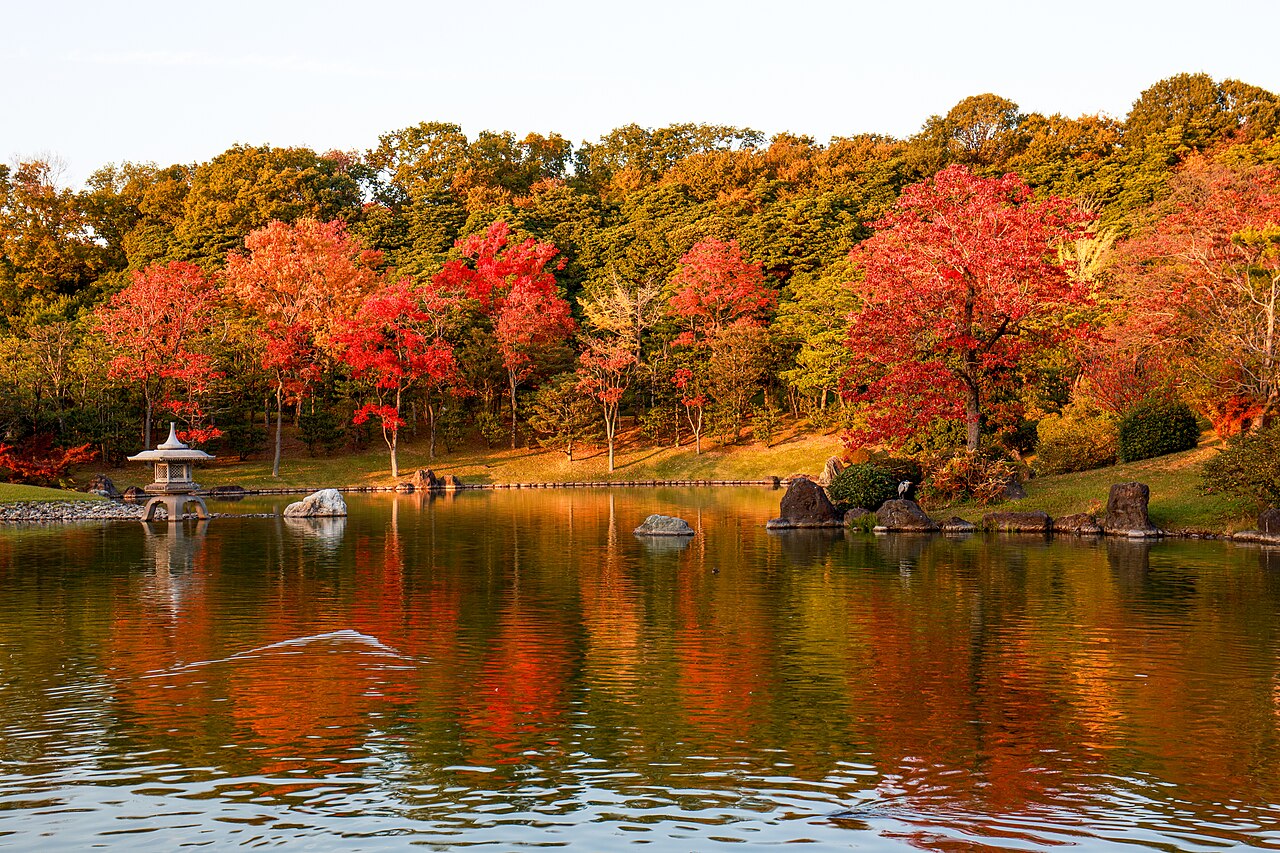
Photo: Laitche / Wikimedia Commons (CC BY-SA 4.0)
Built on the site of the 1970 World's Fair, this sprawling park features a spacious Japanese garden, streams, ponds, and a maple grove. Mid- to late November usually sees an autumn leaves festival, with evening illuminations on select years. Taro Okamoto's iconic Tower of the Sun (Taiyo no To) stands at the center of the park; you can enter inside if you book tickets in advance.
Take the Osaka Monorail to Banpaku-kinen-koen Station. Admission to the park and Japanese garden is about 260 yen. The grounds are spacious and flat, making it ideal for families with young children.
5. Katsuo-ji Temple (Minoo): Thousands of Daruma Dolls
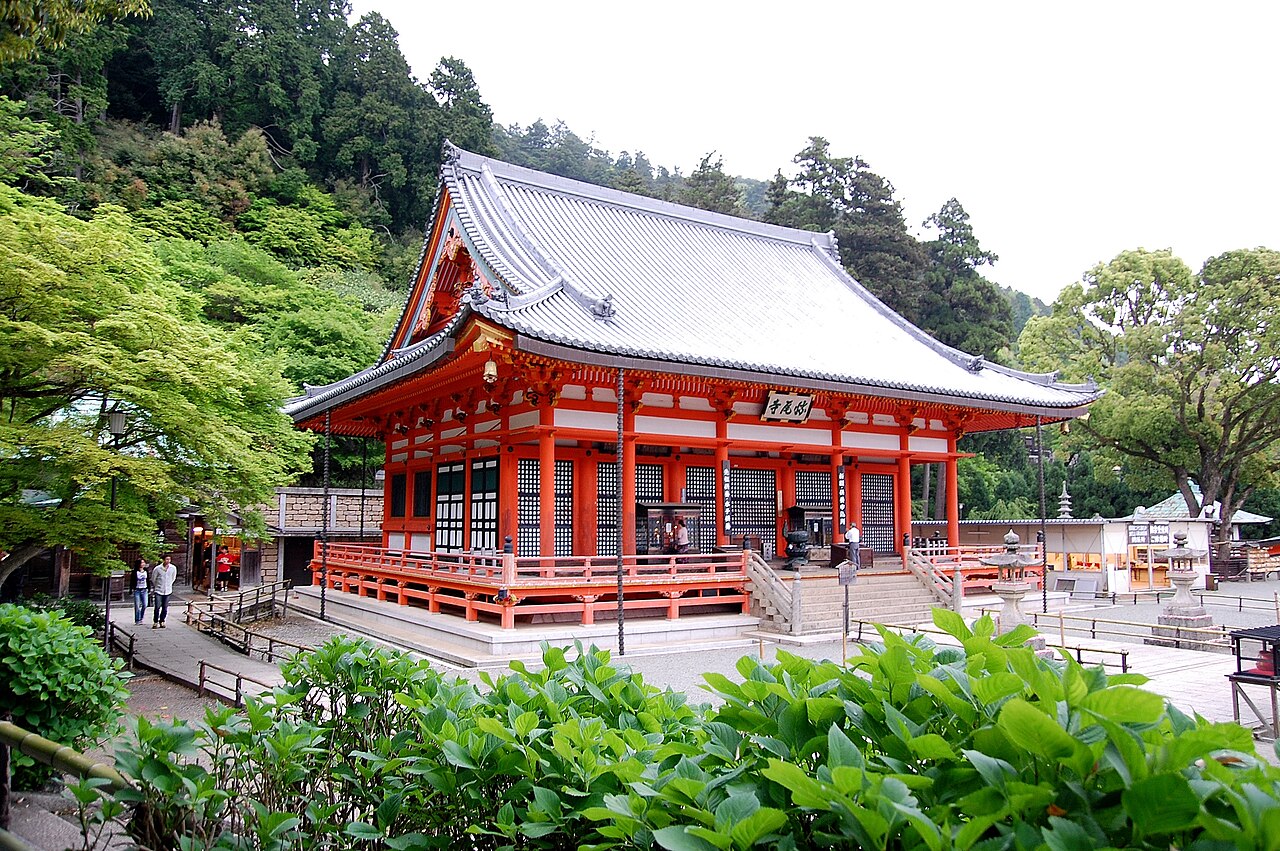
Photo: Jnn / Wikimedia Commons (CC BY 2.1 jp)
Situated in the mountains above Minoo Park, Katsuo-ji is known as the "Temple of Victory." Its grounds are dotted with thousands of small, red Daruma dolls placed on stone steps, lantern roofs, and tree hollows. From mid- to late November, the maples around the main gate and pond turn brilliant shades, creating a striking contrast where the red leaves meet the red Daruma dolls.
Catch a bus from Senri-Chuo Station or Kita-Senri Station (about 20–30 minutes), or take a taxi from Minoo Station. Admission is around 500 yen.
6. Nara Park: Deer, Ancient Temples, and Autumn Colors
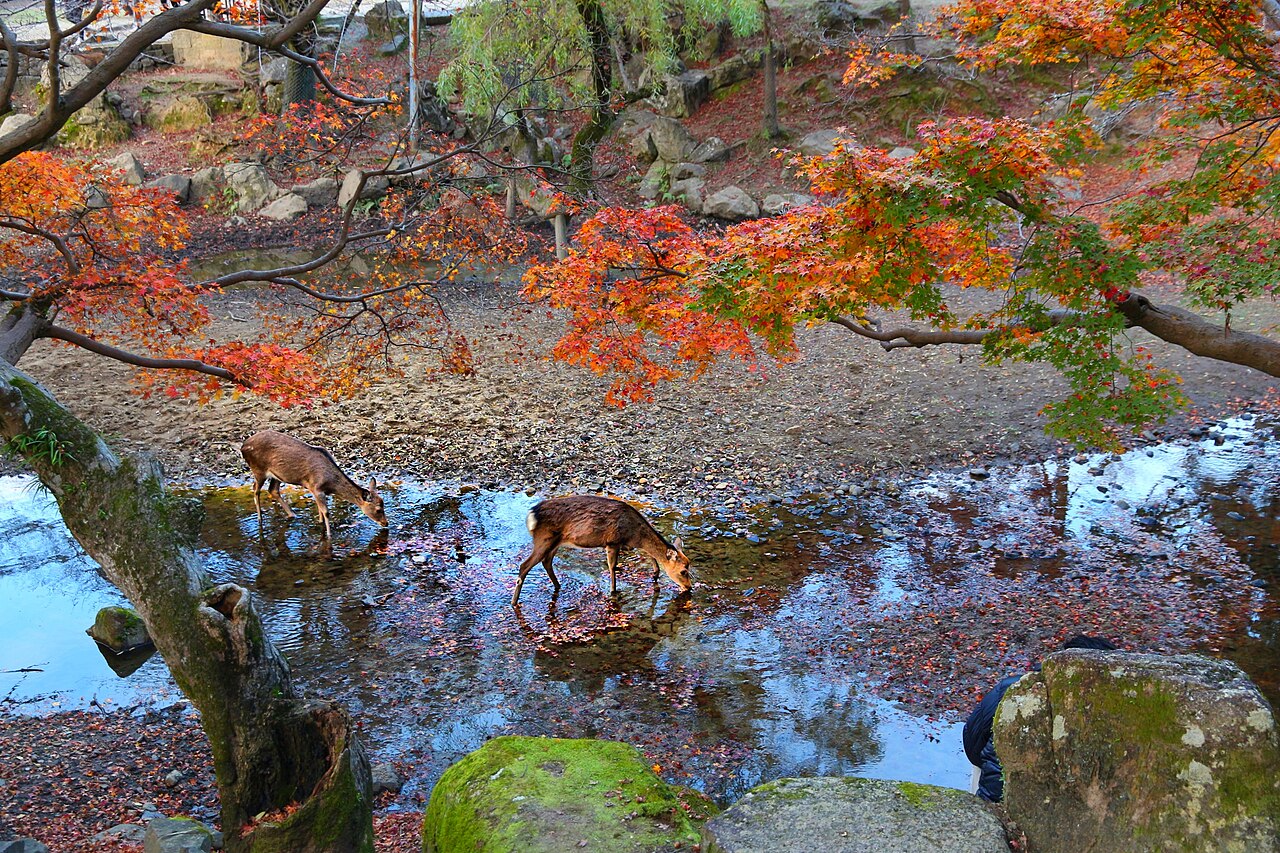
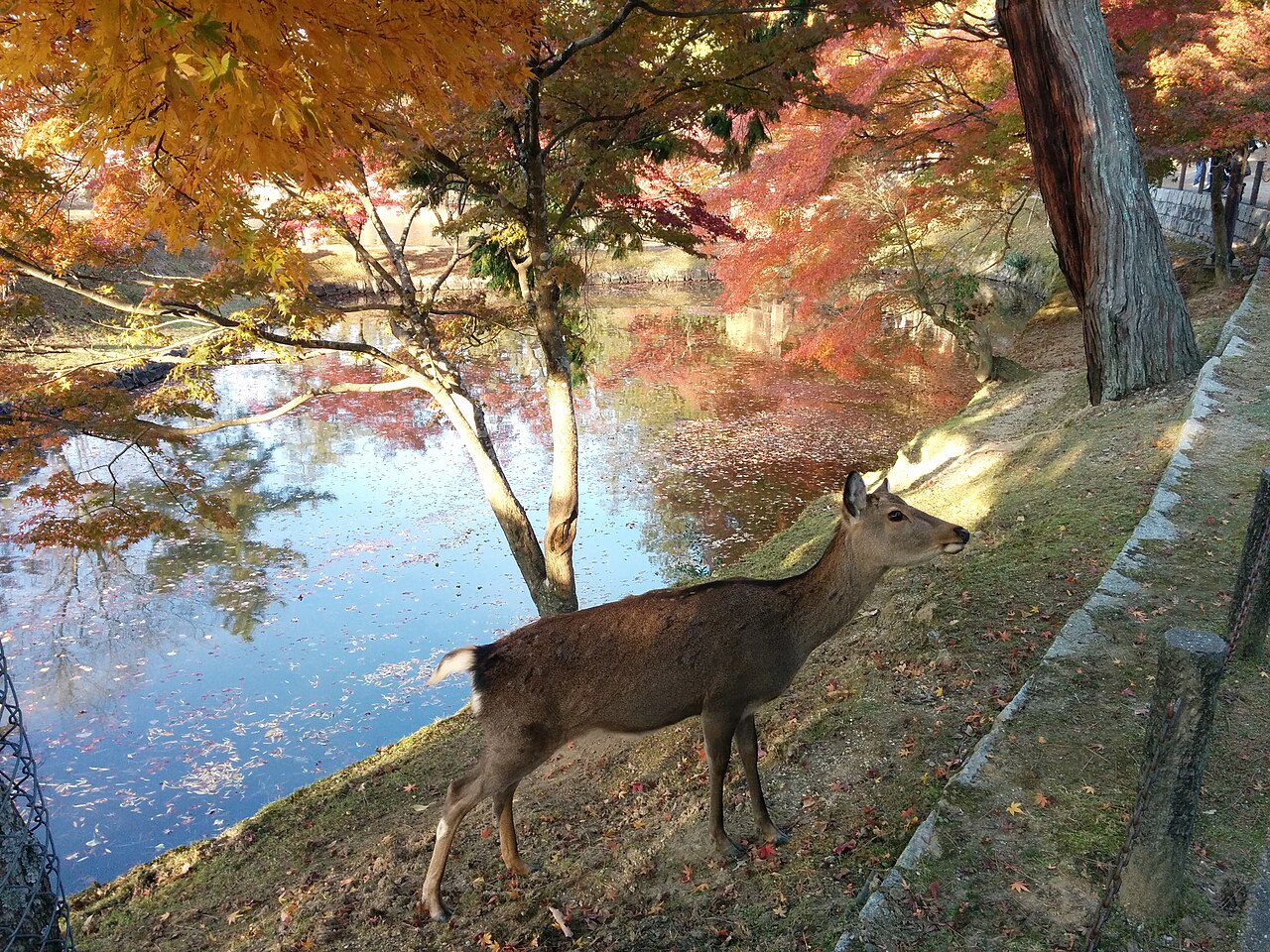
Photo: Marek Ślusarczyk (Tupungato) Photo portfolio / Wikimedia Commons (CC BY 3.0)
Nara Park encompasses the grounds of Todai-ji, Kofuku-ji, and Kasuga Taisha Shrine. From mid-November to early December, maple and ginkgo leaves brighten the park while deer wander across carpeted grounds of fallen leaves. The best photo spot is the stone path leading up to Nigatsu-do Hall: standing on its wooden balcony offers a sweeping view over the Daibutsu-den roof framed by fall foliage. Admission to Nigatsu-do is free.
Take the Kintetsu Train from Osaka-Namba to Kintetsu-Nara in about 40 minutes—it's cheaper and closer to the park than the JR Line. Deer crackers (shika senbei) can be bought at vendors throughout the park. When holding crackers, deer may nudge or gently nip at your clothes, so feed them quickly and hide any paper bags.
7. Isuien and Yoshikien Gardens (Nara): Two Adjacent Japanese Gardens
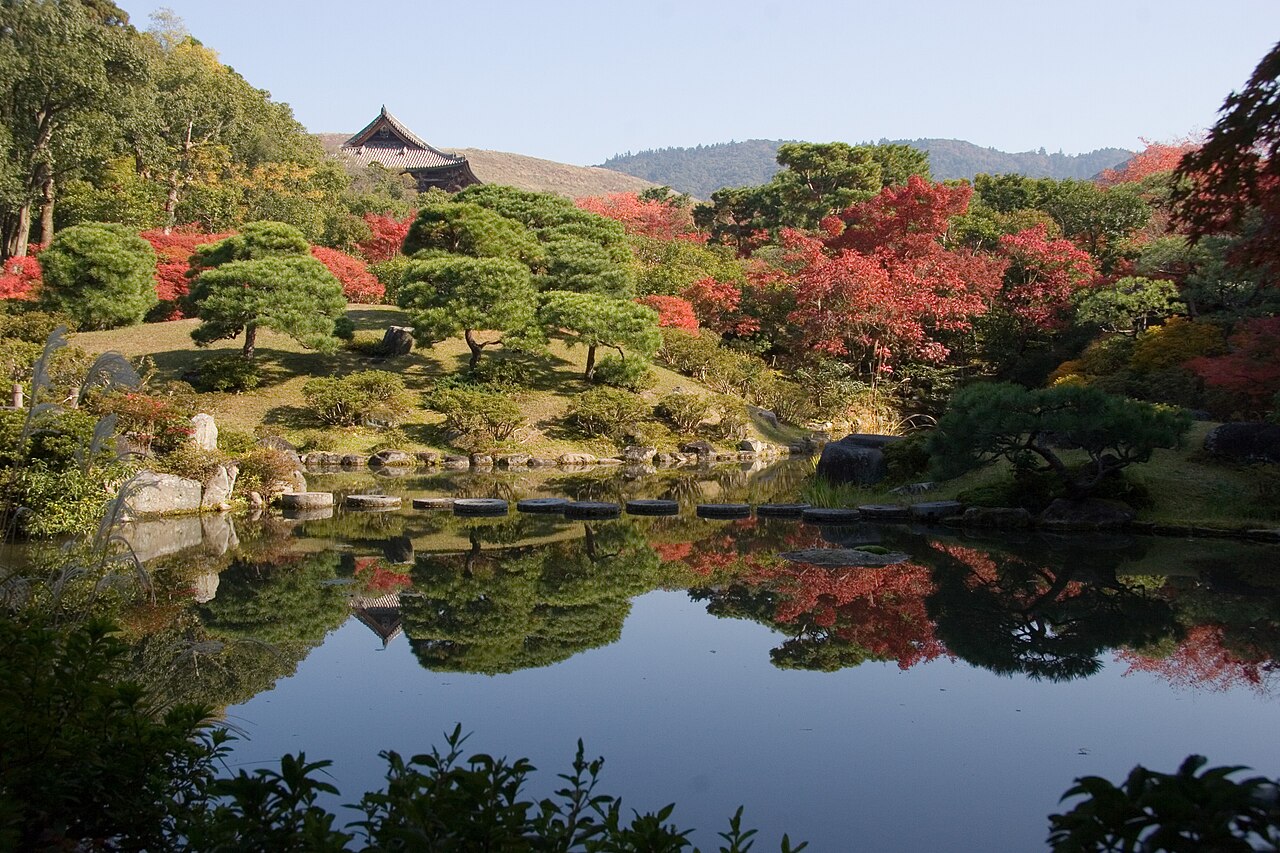
Photo: Kimon Berlin (Gribeco) / Wikimedia Commons (CC BY-SA 4.0)
Isuien is a refined Japanese garden from the Edo and Meiji eras that uses Todai-ji's Nandaimon Gate and Mount Wakakusa as background scenery—a technique known as "shakkei" (borrowed scenery). Right next door is Yoshikien, which features a moss garden and a tea ceremony garden. The foliage in both gardens peaks around mid- to late November, offering a much quieter experience than the crowded Todai-ji area.
Admission to Isuien is around 1,200 yen, which includes entry to its pottery museum. Yoshikien has a lower admission fee and has historically offered free entry to foreign passport holders, so be sure to inquire at the entrance counter.
8. Hase-dera Temple (Sakurai): A 399-Step Covered Wooden Stairway
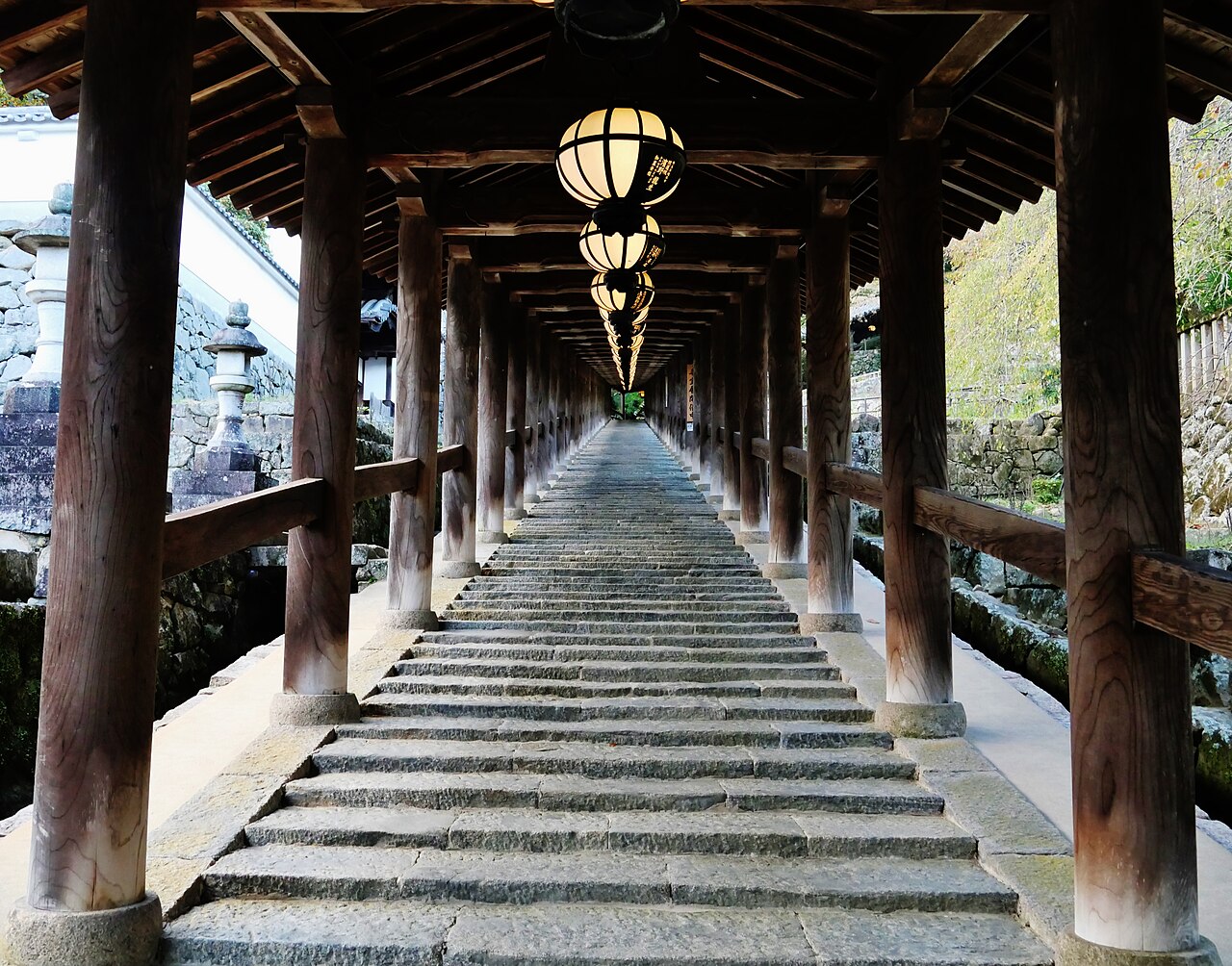
Photo: Zairon / Wikimedia Commons (CC BY 4.0)
Hase-dera nestles on a mountainside in southeastern Nara. Its famous covered wooden corridor, the Noborirō, features 399 steps leading up to the Main Hall, flanked by maple trees and peonies. The Main Hall boasts a massive wooden stage jutting out over the valley, similar to Kiyomizu-dera in Kyoto, but with far fewer crowds. Foliage is at its best from mid- to late November.
Take the Kintetsu Line to Hasedera Station, then walk about 20 minutes through a charming old-fashioned approach lined with shops. Admission is around 500 yen.
9. Muro-ji Temple: Japan's Smallest Outdoor Five-Story Pagoda in the Forest
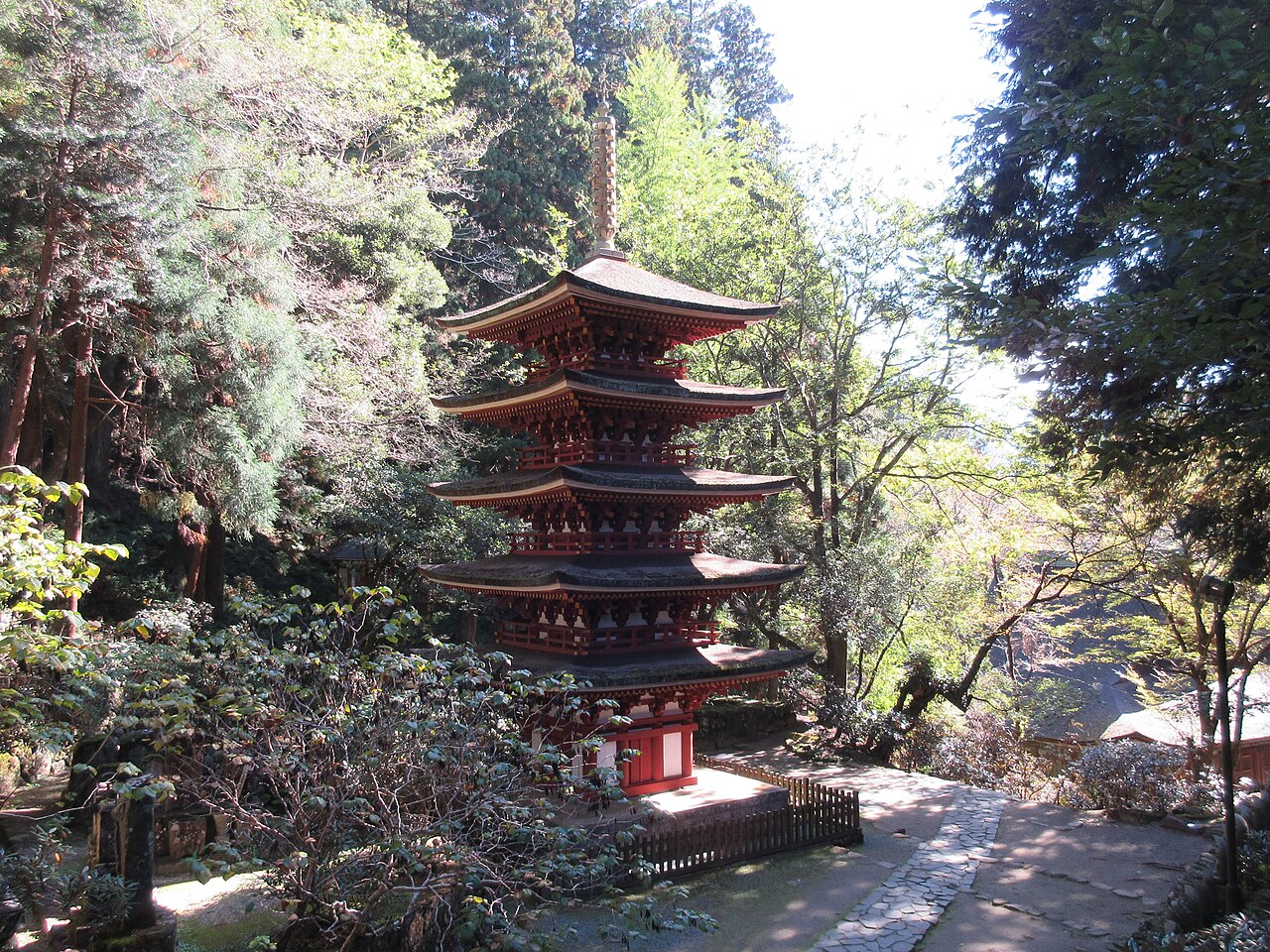
Photo: KishujiRapid / Wikimedia Commons (CC BY-SA 4.0)
Hidden deep in the mountains, Muro-ji historically welcomed female pilgrims at a time when many mountain temples banned women, earning it the nickname "Nyonin Koya" (Women's Koya). Standing roughly 16 meters tall, its five-story pagoda is the smallest outdoor five-story pagoda in Japan, surrounded by dense cedar trees and colorful maples. The leaves peak around mid- to late November.
Take the Kintetsu Line to Muroguchi-Ono Station, followed by a 15-minute bus ride. You can easily pair Muro-ji with Hase-dera on the same day since both stations are along the same train line.
10. Tanzan Shrine: A Thirteen-Story Wooden Pagoda in the Mountains
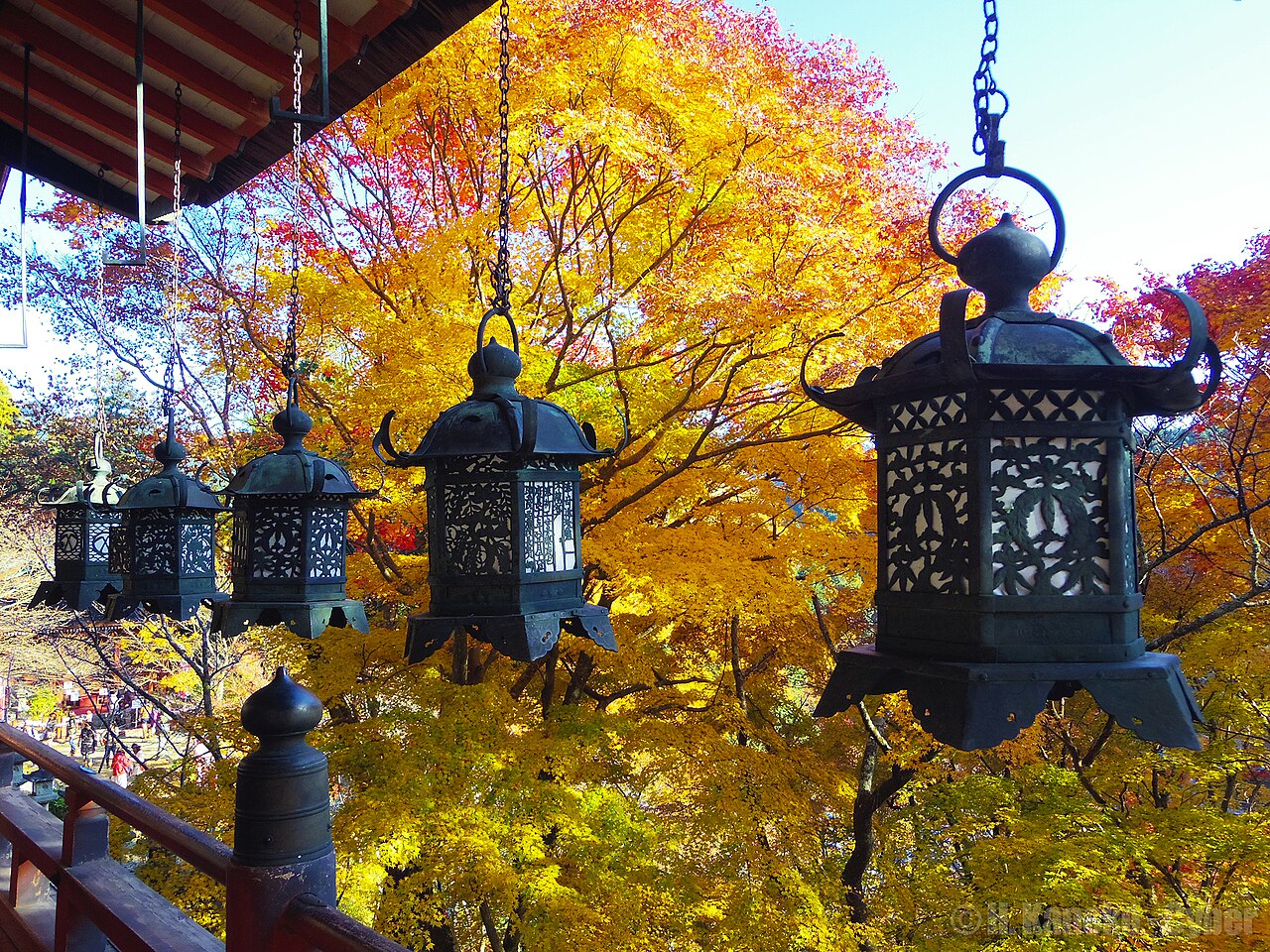
Photo: Hiroaki Kaneko / Wikimedia Commons (CC BY-SA 3.0)
Located on Mount Tonomine, Tanzan Shrine is home to a magnificent thirteen-story wooden pagoda—believed to be the only remaining thirteen-story wooden pagoda in Japan. Around mid- to late November, the surrounding mountain slope bursts into brilliant shades of red, centering around the vermilion roofs of the shrine. Because of its higher elevation, the leaves here usually turn color about a week earlier than in Nara Park.
Catch a bus from Sakurai Station (approx. 25 minutes). Admission is around 600 yen. Extra buses usually run during peak autumn season, but weekends remain very busy.
Suggested Itineraries
- Osaka Day Trip: Morning: Take the Hankyu Line to Minoo, hike up to the waterfall, and sample maple tempura. Afternoon: Return to Umeda, ride the Midosuji Subway Line to Yodoyabashi, and walk along the golden ginkgo boulevard down to Honmachi or Shinsaibashi. Evening: If you still have energy, visit Osaka Castle Park.
- Nara City Day Trip: Arrive at Kintetsu-Nara Station by 8:30 AM to explore Todai-ji before the tour buses arrive. Walk up to Nigatsu-do, enjoy lunch, visit Isuien Garden around midday, and spend the afternoon at Kasuga Taisha Shrine.
- Nara Mountain Day Trip: Take the Kintetsu Line to Hasedera Station first, then head to Muro-ji. If you prefer Tanzan Shrine instead, swap out Muro-ji for Tanzan (catch the bus from Sakurai Station).
Estimated Costs (Per Person, Starting from Central Osaka)
| Trip | Round-Trip Transit | Admission Fees |
|---|---|---|
| Minoo & Midosuji | Approx. 700 to 1,000 yen | Free (Katsuo-ji approx. 500 yen) |
| Osaka Castle | Approx. 400 yen | Nishinomaru Garden approx. 200 yen; Main Tower separate |
| Expo '70 Park | Approx. 1,000 to 1,400 yen | Approx. 260 yen |
| Nara Park Area | Approx. 1,400 yen | Todai-ji approx. 800 yen, Isuien approx. 1,200 yen |
| Hase-dera & Muro-ji | Approx. 2,000 to 2,600 yen | Approx. 500 yen and 600 yen |
Compared to Kyoto, hotels in Osaka are generally cheaper and easier to book during the peak foliage season. Many travelers choose to base themselves in Osaka and make easy day trips out to Nara and Kyoto.
What to Prepare
- An ICOCA or Suica Card for smooth travel on Hankyu, Kintetsu, Osaka Subway, and Nara local buses.
- A Kintetsu 1-Day Pass if you plan to visit multiple spots in Nara in one day. Discount tourist passes are available on Kintetsu's official website.
- Comfortable walking shoes for the trail up to Minoo Waterfall and the steep stone steps at Hase-dera.
- A small trash bag: trash cans are rare in Nara Park, and deer might accidentally swallow plastic litter.
- A mobile phone with internet access to check bus timetables in mountain areas and navigate maps seamlessly.
Common Mistakes to Avoid
- Taking the JR Line to Nara. JR Nara Station is about a 15-minute longer walk from the park compared to Kintetsu-Nara Station.
- Feeding human food to the deer. Stick exclusively to shika senbei. Human snacks and plastic bags can make deer dangerously ill.
- Carrying visible food along the Minoo trail. Wild monkeys may aggressively swipe bags from your hand.
- Visiting Tanzan Shrine too late in the afternoon. The shrine closes around 4:30 PM, and return buses run infrequently late in the day.
Frequently Asked Questions
Is autumn foliage in Osaka as beautiful as in Kyoto?
Kyoto certainly has more world-famous temple views, but Osaka offers accessible, lower-stress spots like Minoo and Midosuji with fewer crowds. If you only have one day and are based in Osaka, pairing Minoo in the morning with Midosuji in the afternoon makes for a relaxed and rewarding trip.
How long does it take to travel from Osaka to Nara for foliage viewing?
The Kintetsu Express Train from Osaka-Namba to Kintetsu-Nara takes about 40 minutes with frequent departures. Traveling to Hase-dera from Osaka-Uehommachi takes roughly 1 hour.
Are the deer in Nara dangerous?
While Nara's deer are accustomed to people, they are still wild animals. Autumn is their mating season, so male deer can become more aggressive. Avoid teasing them, and do not let small children hold deer crackers in the middle of a herd.
Are there evening light-ups in Osaka and Nara?
Yes. Midosuji Avenue features brilliant illumination displays, while Expo '70 Park and Minoo hold autumn leaf illuminations on select years. In Nara, temples like Hase-dera host special night openings during peak foliage. Schedules vary each year.
Will there still be leaves in December?
During the first week of December, you can usually still catch golden ginkgo leaves on Midosuji Avenue and around Osaka Castle, along with lingering maples in Nara Park. After around December 10, most trees will have shed their leaves.
References & Resources
- Osaka Convention & Tourism Bureau: osaka-info.jp
- Official Nara Travel Guide: visitnara.jp
- Japan National Tourism Organization (JNTO): japan.travel
- Foliage Forecasts & Status: tenki.jp, Walker Plus (koyo)
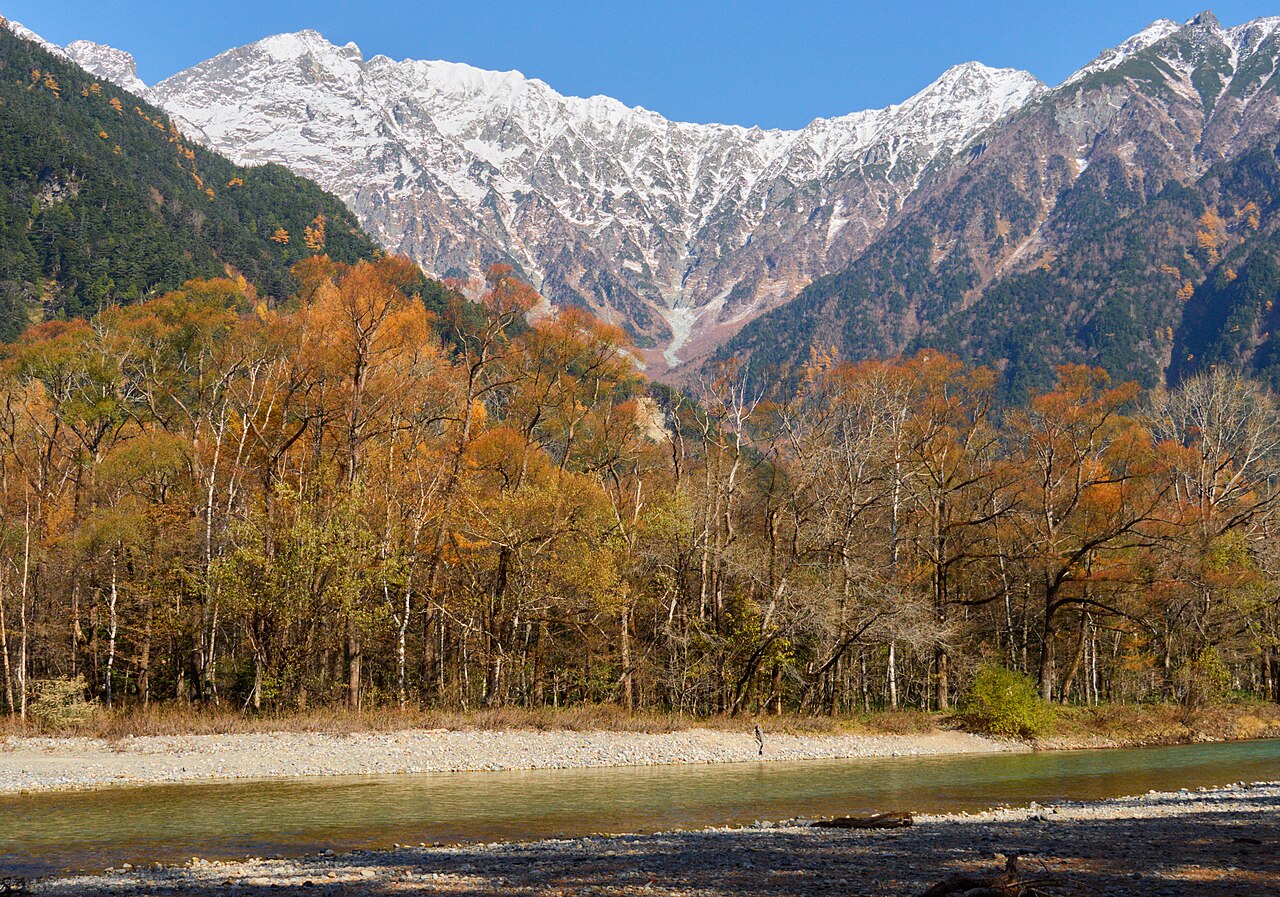
Cover photo: x768 / Wikimedia Commons (CC BY-SA 2.0)
Source Verification Date
The information in this article was verified in September 2026. Admission fees, operating hours, and light-up schedules are subject to change, so please double-check official websites prior to your trip.
Explore Kansai in Autumn with HD TELECOM
Transferring between Hankyu, Kintetsu, mountain buses, and checking walking directions requires a reliable internet connection all day long. HD TELECOM provides data SIMs, eSIMs, and Pocket WiFi tailored for Vietnamese residents in Japan and incoming tourists, backed by full support in Vietnamese. Explore our monthly eSIM plans, data SIM cards, or contact our support team today.
Related products
Find your plan with HD TELECOM
SIM, eSIM and Pocket WiFi — genuine quality, clear pricing, 24/7 support.