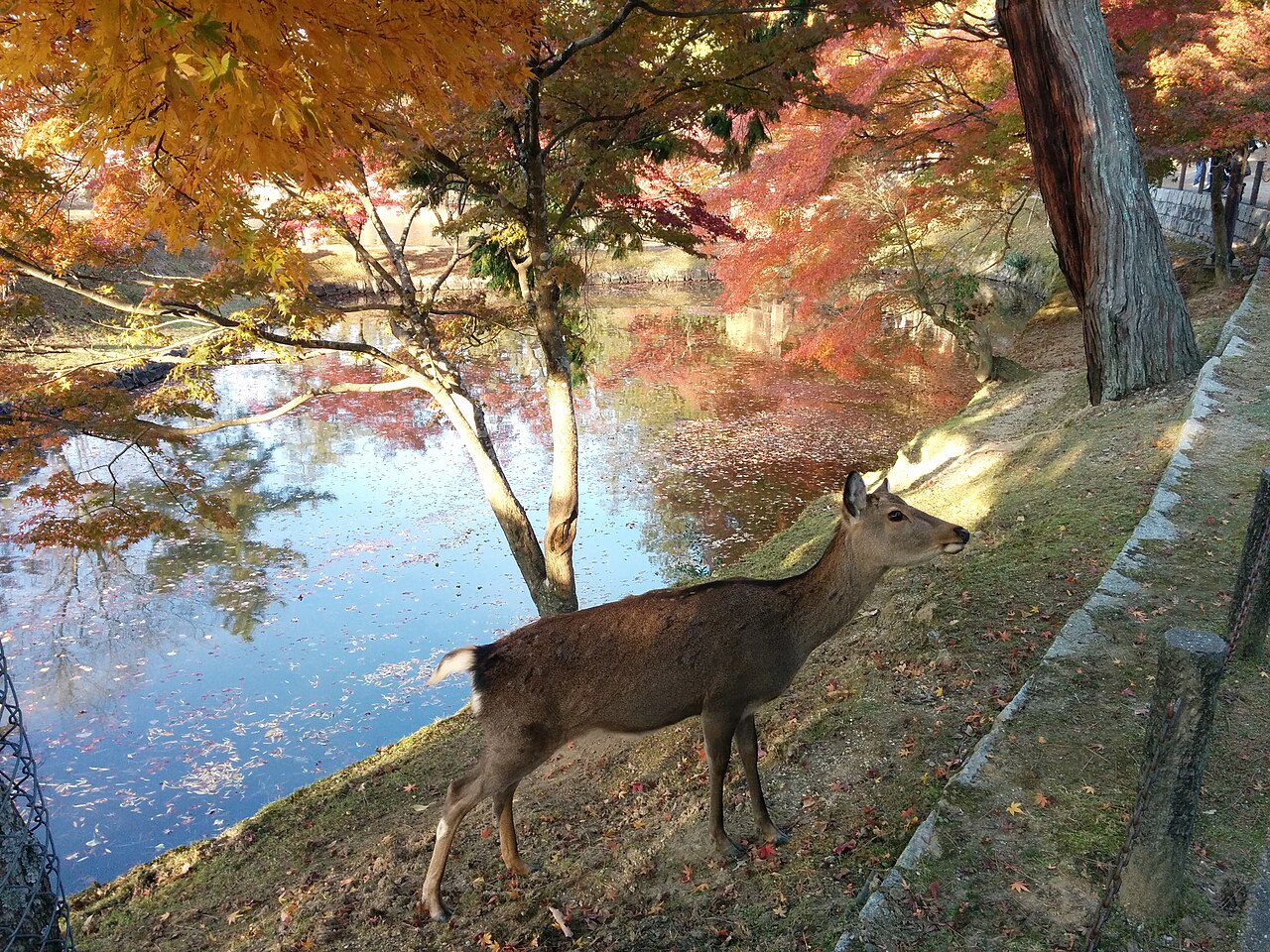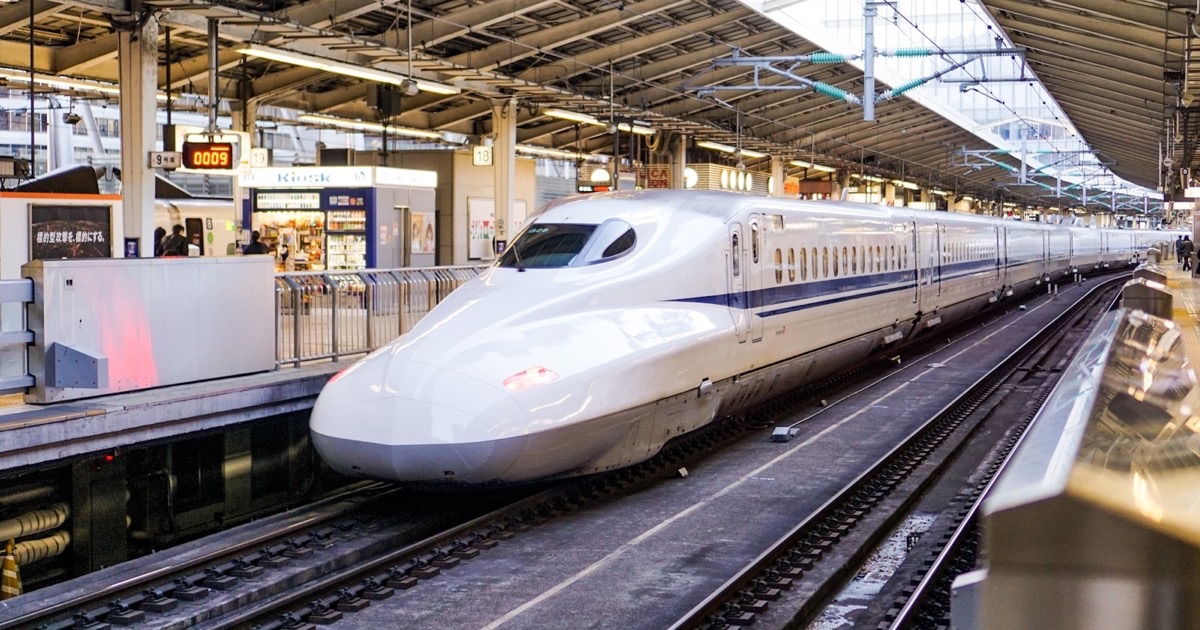

Japan Autumn Foliage Forecast by Region: Top 10 Spots from Hokkaido to Kyushu
September 28, 2026
Quick Answer
Autumn leaves in Japan move from north to south and from high mountains down to the plains. Hokkaido starts around mid-September, Tohoku and the mountainous Chubu region peak in October, Kanto, Kansai, Chugoku, and Shikoku are at their best from mid-November to early December, and Kyushu follows a similar timeframe. Including the high mountain areas, the foliage season lasts nearly three months. If you only have one trip, pick your destination based on the month you travel, rather than choosing a destination first and then trying to find the right month.
Who This Article Is For
People planning a autumn trip to Japan who aren't sure where to go in which month, as well as Vietnamese living in Japan who want to venture further beyond the familiar spots around Tokyo and Osaka. This guide selects 10 spots—one or two from each region—arranged in chronological order from earliest to latest leaf color change.
When This Article Might Not Be Right For You
- You need the exact peak dates for this year: this article only provides reference timeframes based on recent years. Official forecasts for each year are usually released starting from late September.
- You are only staying in Tokyo or Kyoto: you should read dedicated articles for each city.
- You are traveling in late December: except for a few late-blooming trees in Kyushu and Shikoku, the foliage season is over.
How Autumn Leaves Travel Across Japan
Maple and ginkgo leaves begin to change color when the daily minimum temperature drops below approximately 8°C, and reach their peak beauty when it drops below 5°C. The Japanese call this moving path "kouyou zensen" (autumn leaf front). It moves in the opposite direction of cherry blossoms: while cherry blossoms bloom from south to north, autumn foliage changes from north to south.
Elevation affects the timing just as much as latitude. Within the same prefecture, a mountain peak over 1,000 meters high can turn color a full month earlier than the city at its base. That is why Kamikochi in Nagano is beautiful in early October, whereas Nagano City doesn't reach its peak until early November.
In recent years, autumns in Japan have been warmer, so leaves in the plains often change color a few days to a week later than historical benchmarks. If you are reading an older guidebook, be sure to add a bit of extra buffer time.
| Region | High Mountains | Plains & Cities |
|---|---|---|
| Hokkaido | Mid to late September | Mid to late October |
| Tohoku | Early to mid-October | Late October to mid-November |
| Chubu (Nagano, Toyama, Gifu) | Early to mid-October | Early to mid-November |
| Kanto (Tokyo, Kanagawa, Saitama) | Mid to late October (Nikko, Gunma) | Late November to early December |
| Hokuriku, Tokai (Kanazawa, Nagoya) | Late October | Mid to late November |
| Kansai (Kyoto, Osaka, Nara) | Early to mid-November | Mid-November to early December |
| Chugoku, Shikoku | Late October to early November | Mid to late November |
| Kyushu | Late October to early November | Mid-November to early December |
10 Autumn Leaf Spots in Order from Earliest to Latest
1. Daisetsuzan (Hokkaido): Where Autumn Begins
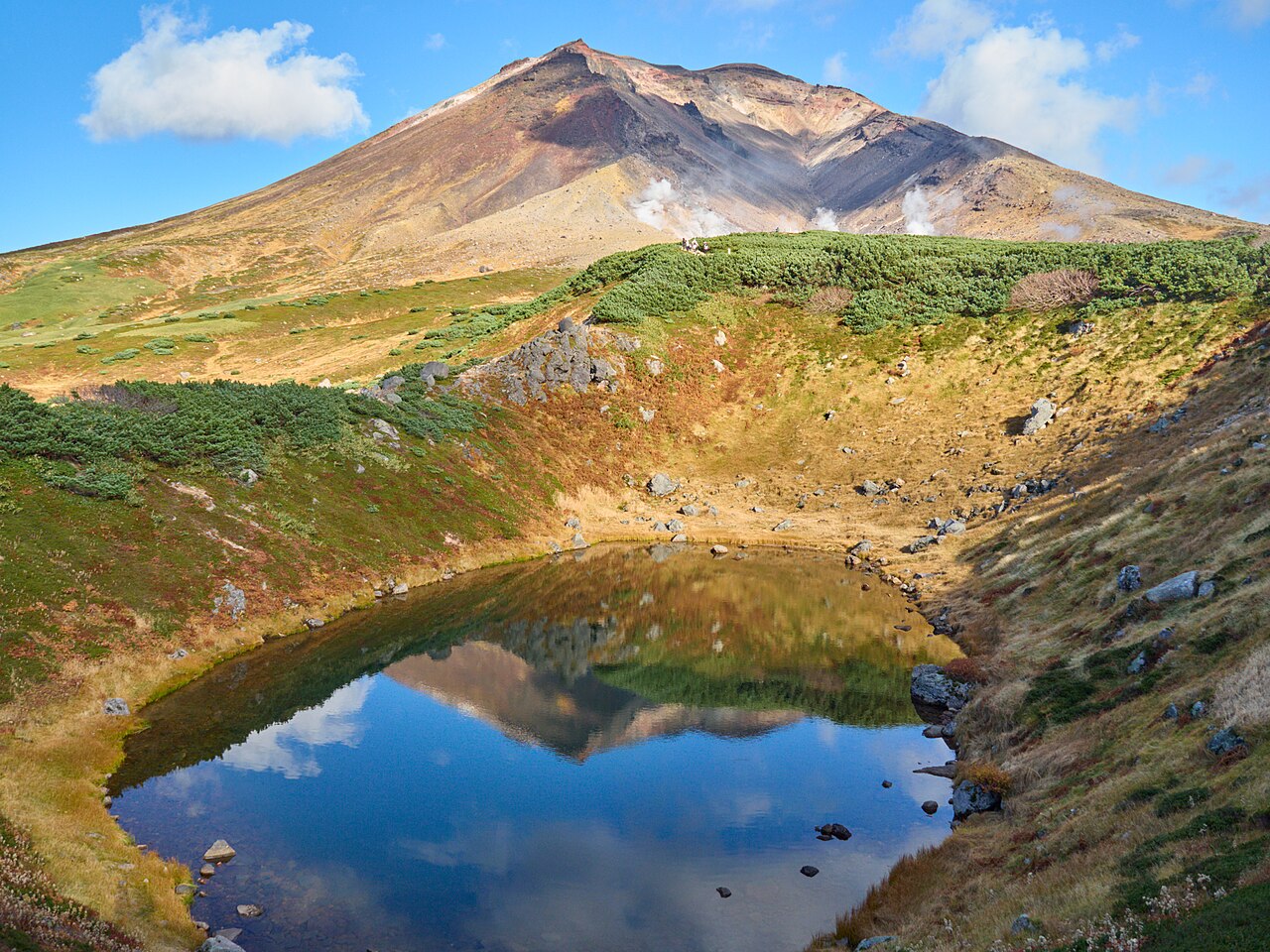
Photo: lumoplank / Wikimedia Commons (CC0)
Daisetsuzan National Park is the largest mountainous region in Hokkaido and also the first place in Japan to see autumn foliage, from around mid- to late September. The slopes of Mount Asahidake are covered with low shrubs turning brilliant red and yellow among volcanic ponds and fumaroles. The Asahidake Ropeway takes you up to an elevation of about 1,600 meters, where you can take a circular hiking trail around Sugatami Pond lasting about an hour.
To the east, Sounkyo Gorge features sheer cliffs and waterfalls, with foliage peaking from late September to early October. It takes about 1.5 to 2 hours by bus from Asahikawa. Early snow can occur on the mountain in late September, so bring a warm, heavy jacket.
2. Oirase Mountain Stream (Aomori): A Stream Through Beech Forests
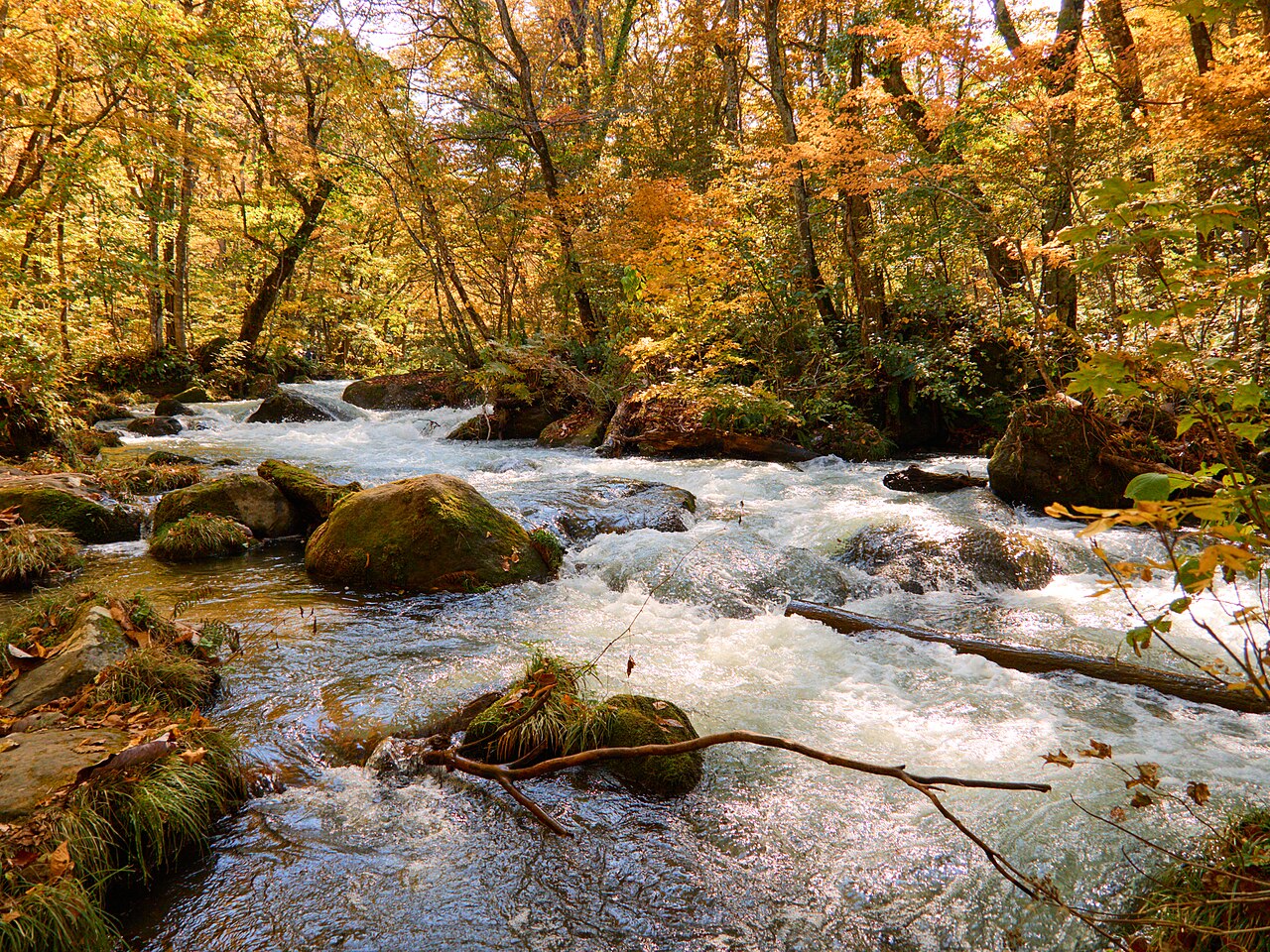
Photo: lumoplank / Wikimedia Commons (CC0)
Oirase is a 14-kilometer-long mountain stream flowing out of Lake Towada, flanked on both sides by beech and maple forests. A walking trail runs right along the stream, passing numerous small waterfalls and moss-covered rock rapids. The foliage is at its best from mid- to late October. Many visitors walk a 3 to 5 km section between Ishigedo and Choshi Otaki Falls, taking the bus for the remainder.
Take a JR bus from Aomori or Hachinohe Station, which takes about 1.5 to 2.5 hours. During peak season, private cars are restricted on the road along the stream, making the bus the easier way to travel.
3. Kamikochi (Nagano): Golden Foliage Below the Japanese Alps
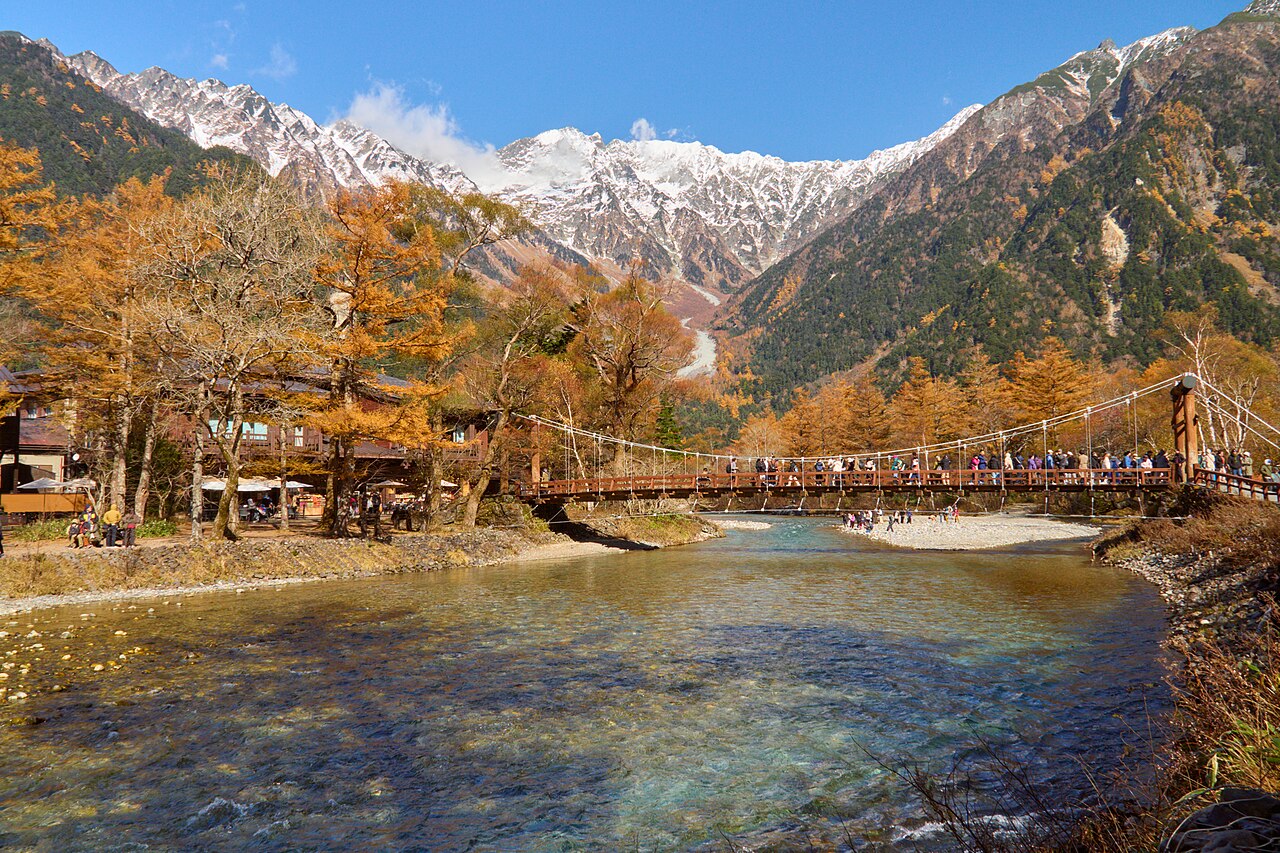
Photo: lumoplank / Wikimedia Commons (CC0)
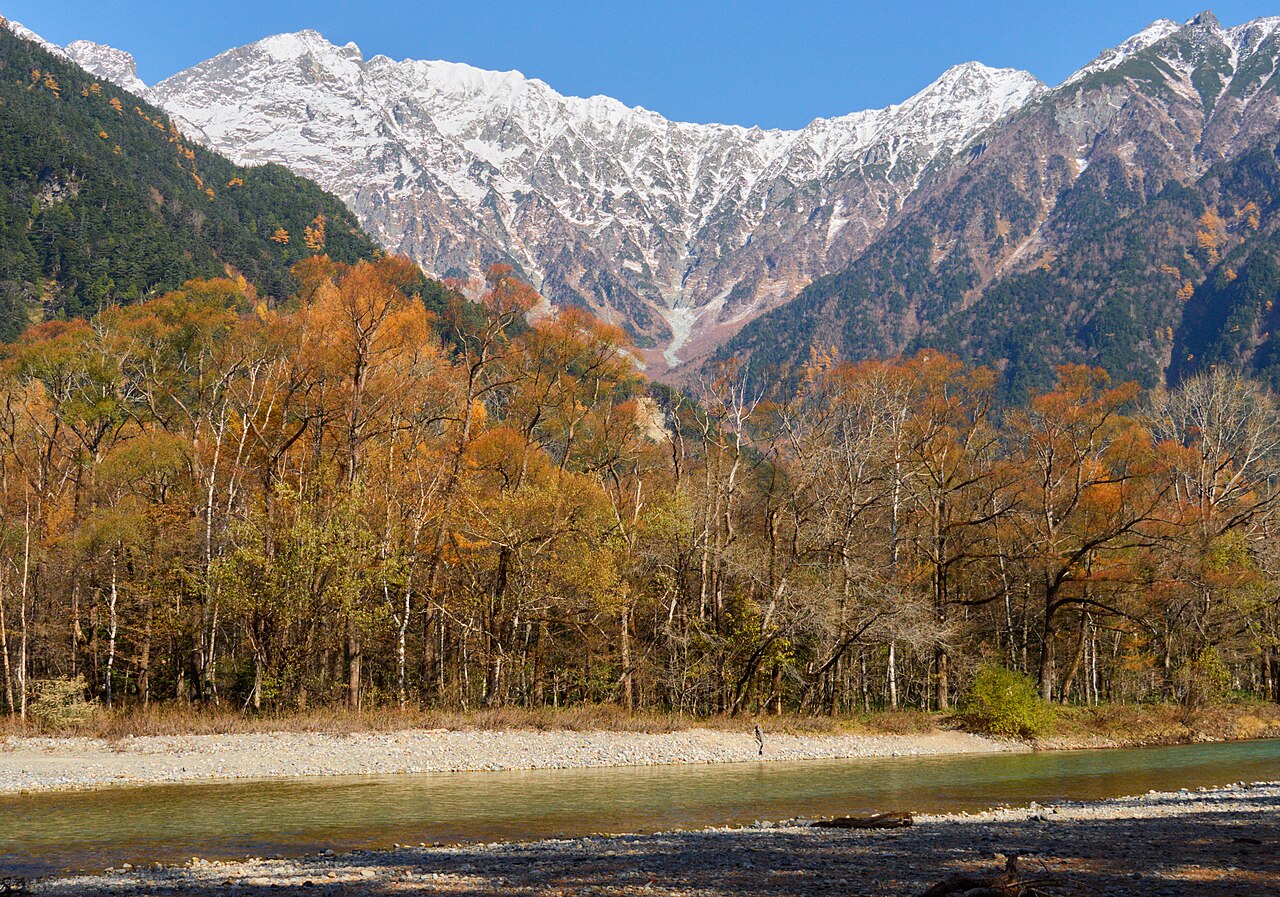
Kamikochi is a valley sitting at an elevation of about 1,500 meters in the Northern Japan Alps. From early to mid-October, forests of Japanese larch (karamatsu) and birch turn bright yellow against a backdrop of grey rocky peaks that are sometimes already dusted with snow. The wooden Kappa-bashi Bridge and Myojin Pond are two iconic spots everyone visits.
Private cars are not allowed into Kamikochi, so you must take a shuttle bus or taxi from Sawando or Hirayu. Direct express buses operate from Shinjuku in Tokyo during peak season, taking about 5 hours. Kamikochi is closed from mid-November to late April of the following year, so this is a spot you must visit early in the season.
4. Kurobe Gorge (Toyama): A Mining Train Through the Mountains
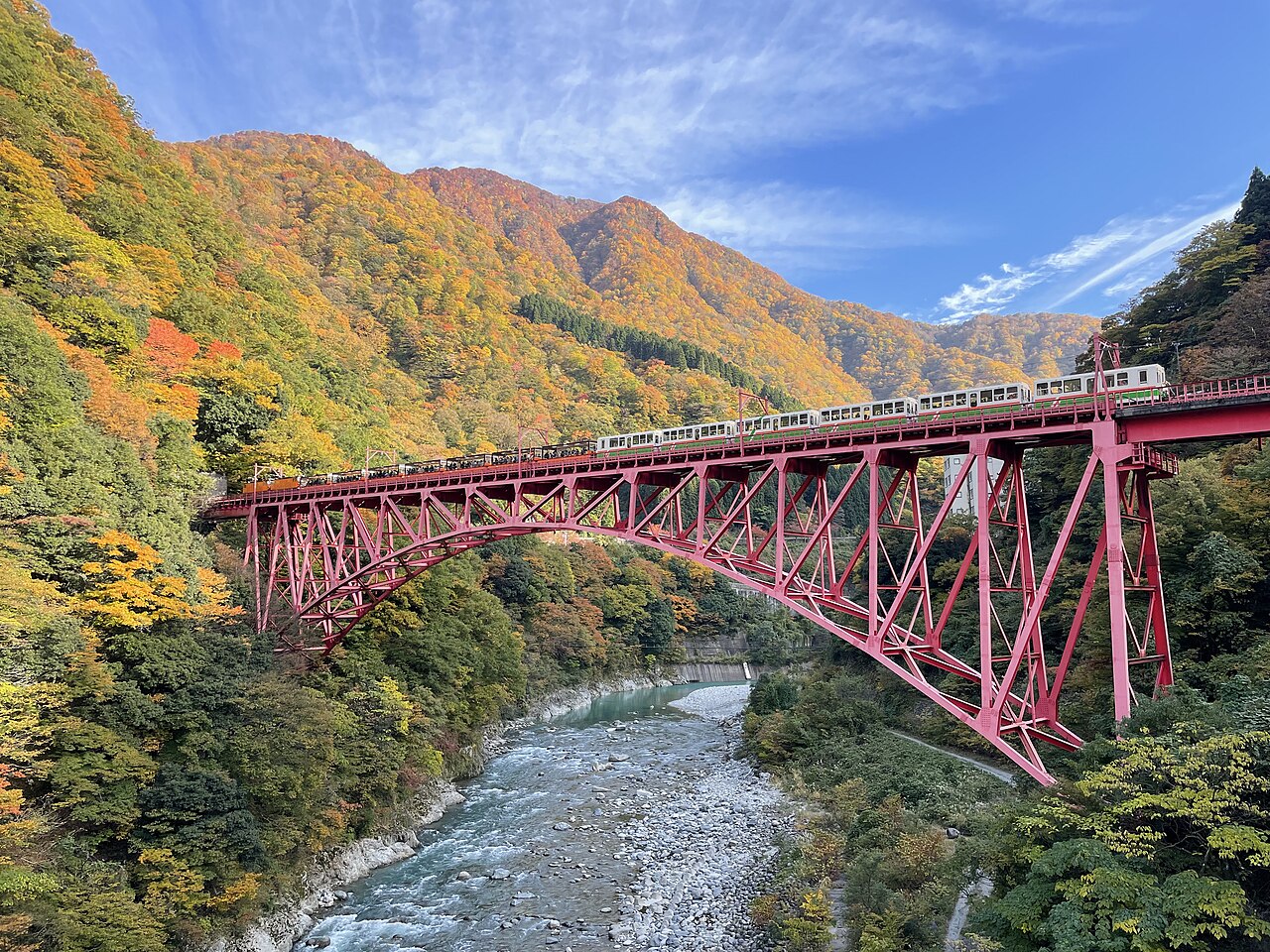
Photo: Totti / Wikimedia Commons (CC BY-SA 4.0)
The Kurobe Kyokoku Railway is a small, open-air train originally built to assist hydroelectric dam construction, now carrying tourists from Unazuki Onsen Station deep into the gorge. The train passes through over 40 tunnels and across 20 bridges, flanked by steep mountain walls. The foliage looks spectacular from late October to mid-November, gradually changing color from top to bottom.
Starting in 2024, due to the effects of the Noto earthquake, portions of the railway may operate on a limited route and not reach the final station. Check the official website before visiting for announcements regarding operating sections and autumn opening dates.
5. Chuson-ji Temple in Hiraizumi (Iwate): A Golden Hall Amidst the Forest
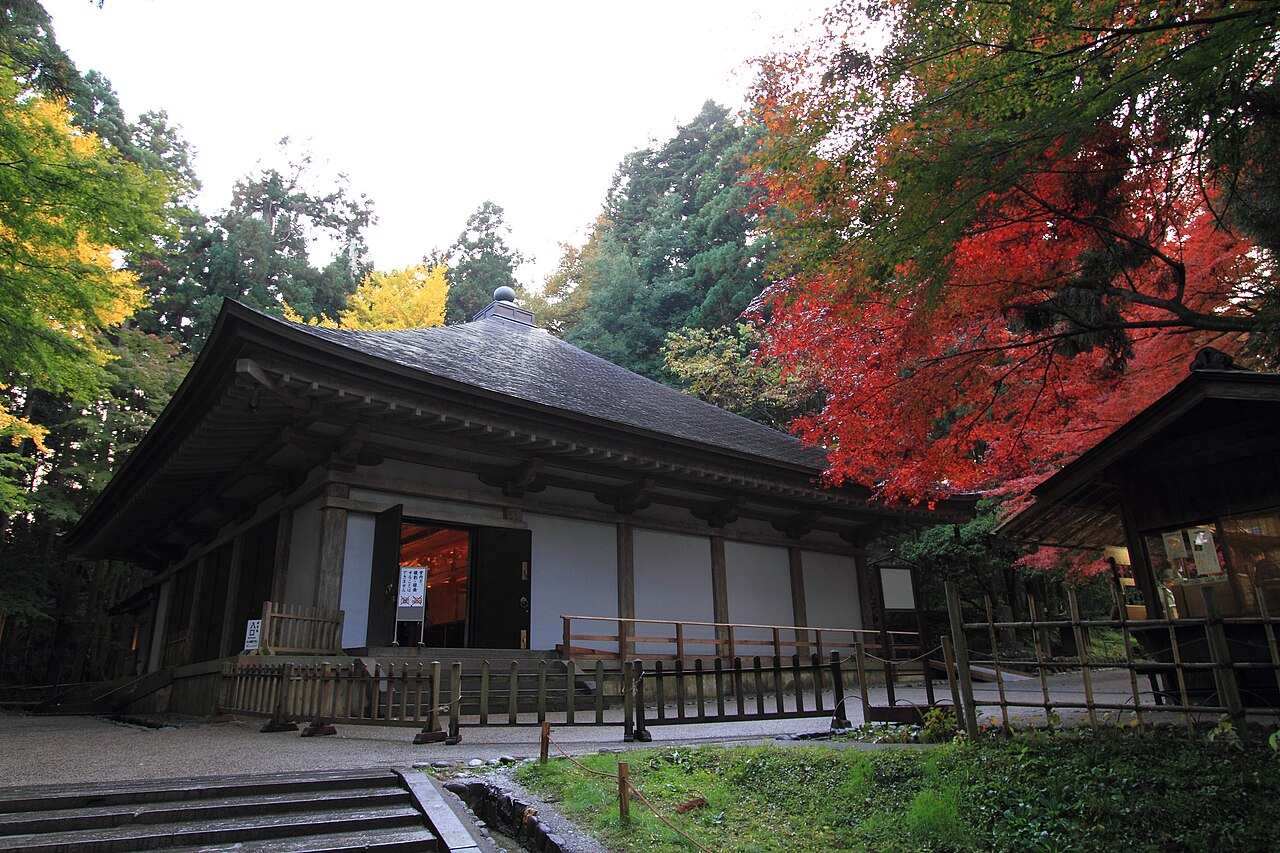
Photo: skyseeker / Wikimedia Commons (CC BY 2.0)
Hiraizumi was the seat of the Northern Fujiwara clan in the 12th century and is now a UNESCO World Heritage site. The Tsukimizaka slope leading up to Chuson-ji Temple is lined with ancient cedar trees interspersed with Japanese maples. The gilded Konjiki-do (Golden Hall) is housed inside a protective glass structure. Nearby Motsu-ji Temple features a spacious Jodo-style garden pond where autumn leaves reflect beautifully on the water's surface. Foliage peaks from late October to mid-November.
Take the Tohoku Shinkansen to Ichinoseki, then a JR train or bus for about 10 to 20 minutes. You can combine this with Geibikei Gorge for a scenic river boat ride between towering cliffs.
6. Kenroku-en Garden (Kanazawa): Autumn Leaves and Snow Ropes
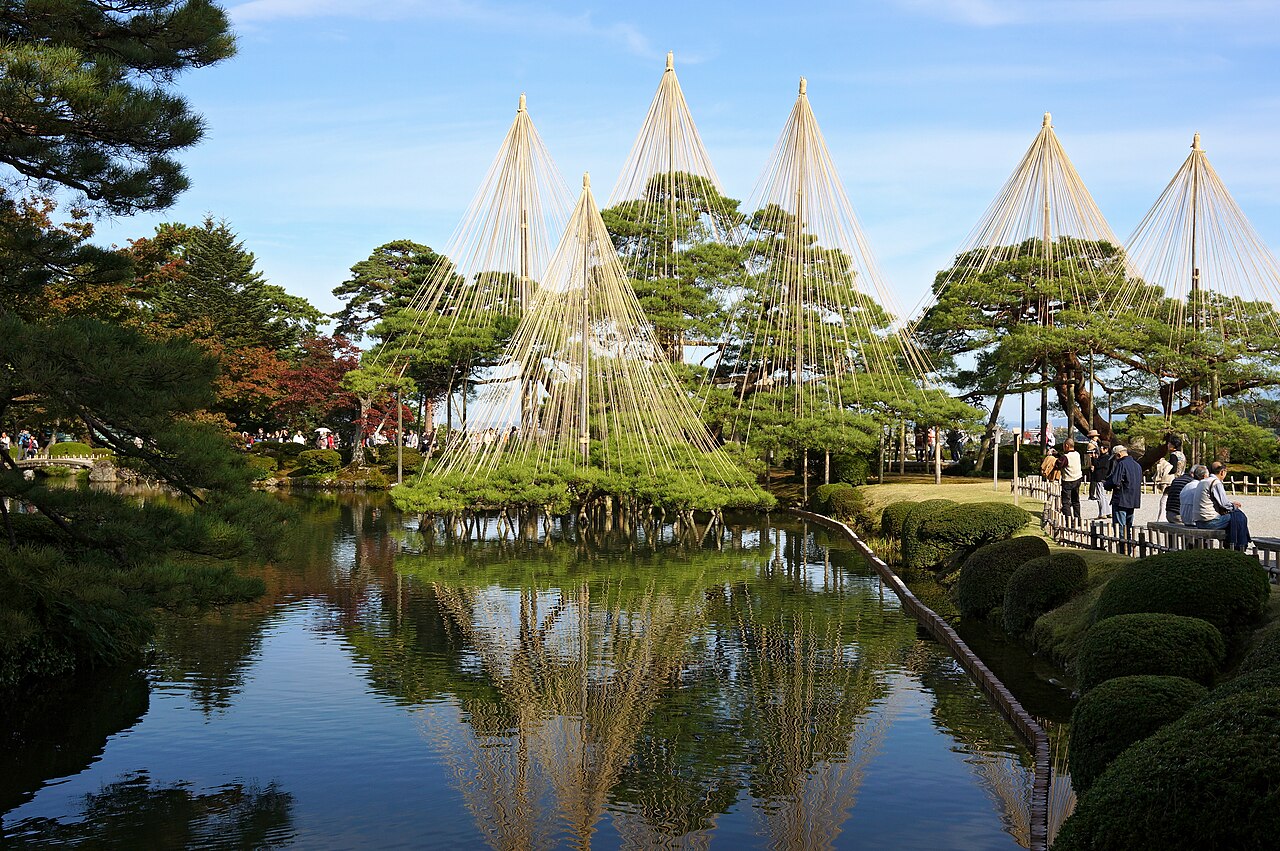
Photo: 663highland / Wikimedia Commons (CC BY 2.5)
Kenroku-en in Kanazawa is ranked as one of Japan's Three Great Gardens. Autumn brings colorful maple leaves around Kasumiga-ike Pond and winding streams. Starting November 1st, the garden begins installing "yukitsuri"—conical rope structures attached from the top of wooden poles down to pine branches to protect them from heavy snow, resembling umbrellas made of rope. Visiting in mid-November allows you to see both the red foliage and the yukitsuri ropes simultaneously.
From Tokyo, take the Hokuriku Shinkansen for about 2.5 hours. Garden admission is around 320 yen. You can easily pair this with a visit to Omicho Market and the Higashi Chaya historic district.
7. Korankei Valley (Aichi): 4,000 Maple Trees and Evening Illuminations
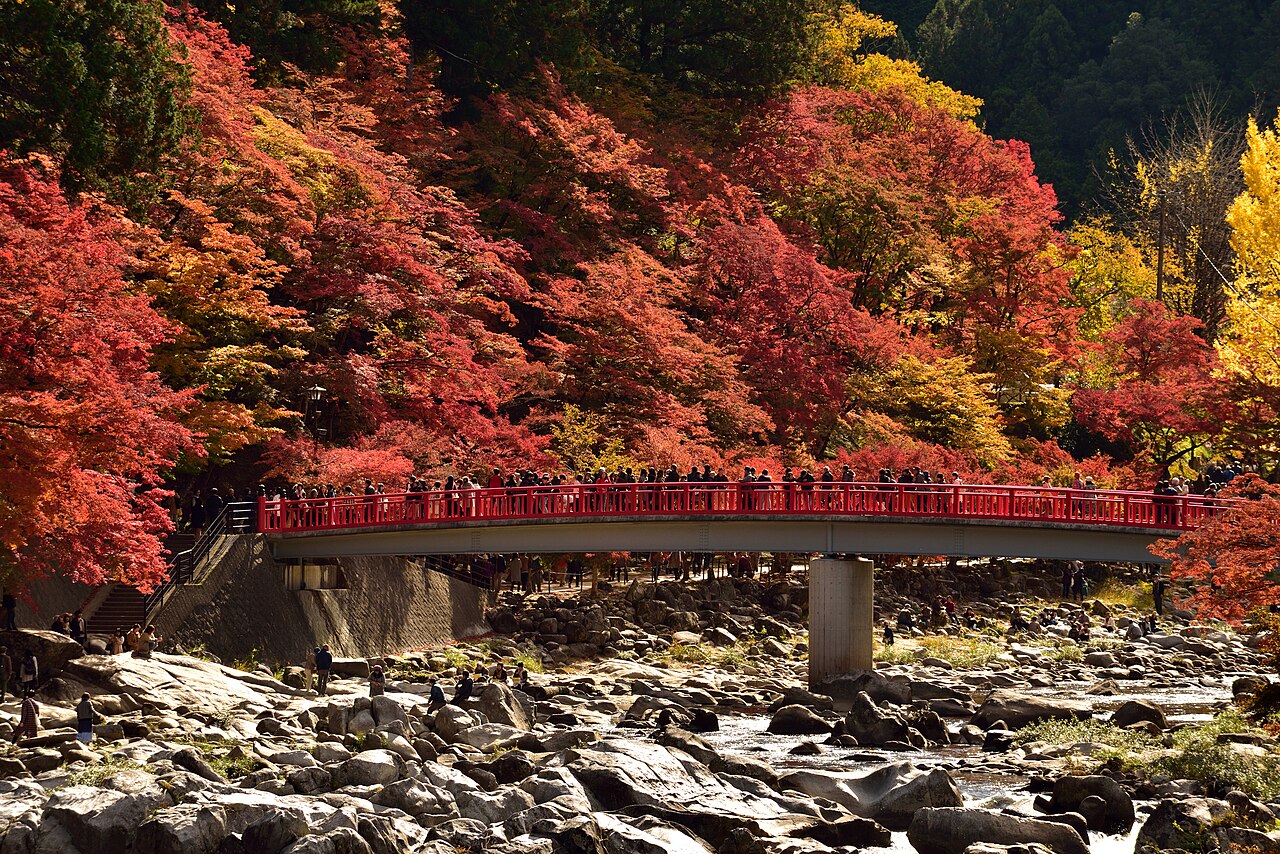
Photo: Bariston / Wikimedia Commons (CC BY-SA 4.0)
Korankei, located on the outskirts of Toyota City, boasts around 4,000 maple trees along the Tomoe River and Mount Iimori. The leaves peak from mid- to late November. During the autumn leaf festival, the area is illuminated until around 9:00 PM, with the red Taigetsukyo Bridge spanning the river being the most popular photo spot.
Take the Meitetsu Train from Nagoya to Higashi-Okazaki or Toyotashi Station, then a bus for about 40 to 70 minutes. Roads leading into the valley get heavily congested on autumn weekends, so taking an early bus or visiting on a weekday is highly recommended.
8. Momijidani Park in Miyajima (Hiroshima): Maples Beside the Floating Torii Gate
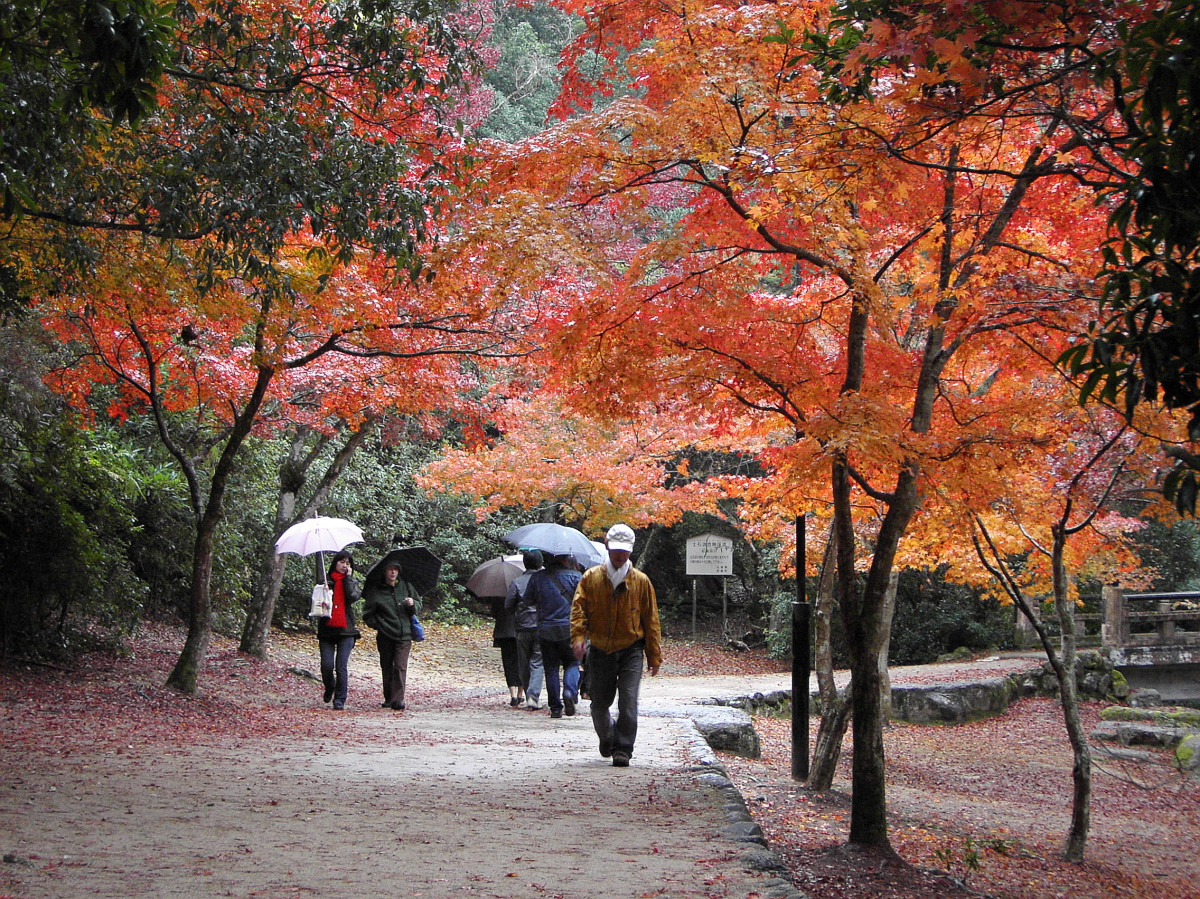
Photo: Spiegel from Hiroshima, Japan / Wikimedia Commons (CC BY 2.0)
Miyajima is famous for the iconic red torii gate of Itsukushima Shrine standing in the sea at high tide. Behind the shrine lies Momijidani Park—whose name literally means "Maple Valley"—home to roughly 700 maple trees lining a stream and red bridges. The leaves peak from mid- to late November. The Miyajima Ropeway begins right inside the park, taking visitors up Mount Misen for sweeping views of the Seto Inland Sea.
Take a 10-minute ferry ride from Miyajimaguchi Station. Island visitors are subject to a 100-yen tourist tax (introduced in 2023), usually collected alongside the ferry ticket purchase. Be sure to check the tide tables if you want to see the torii gate surrounded by water at high tide.
9. Iya Valley (Tokushima): Vine Bridges Deep in the Shikoku Mountains
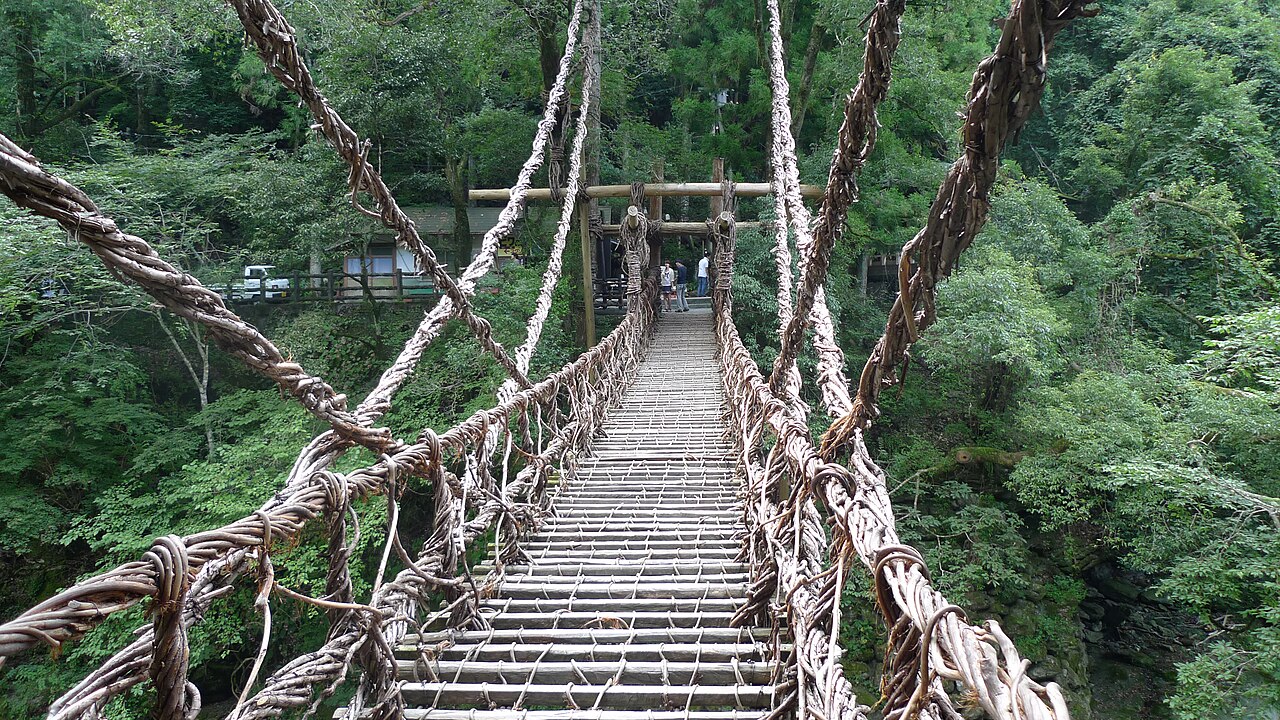
Photo: Motokoka / Wikimedia Commons (CC BY-SA 4.0)
Iya is one of Shikoku's most remote mountainous regions, famous for Kazura-bashi, a suspension bridge made of woven mountain vines stretching 45 meters long and hanging 14 meters above the mountain stream. Walking across sways slightly but is entirely safe; the bridge is rebuilt every three years. Nearby Oboke Gorge offers scenic boat tours through sheer rock canyons. The foliage is at its finest from early to mid-November.
Take a JR train to Oboke Station, followed by a 20-minute bus ride. Because bus services are infrequent, many visitors opt to rent a car from Tokushima or Takamatsu for greater flexibility.
10. Yabakei (Oita): Eight Views in a Single Glance
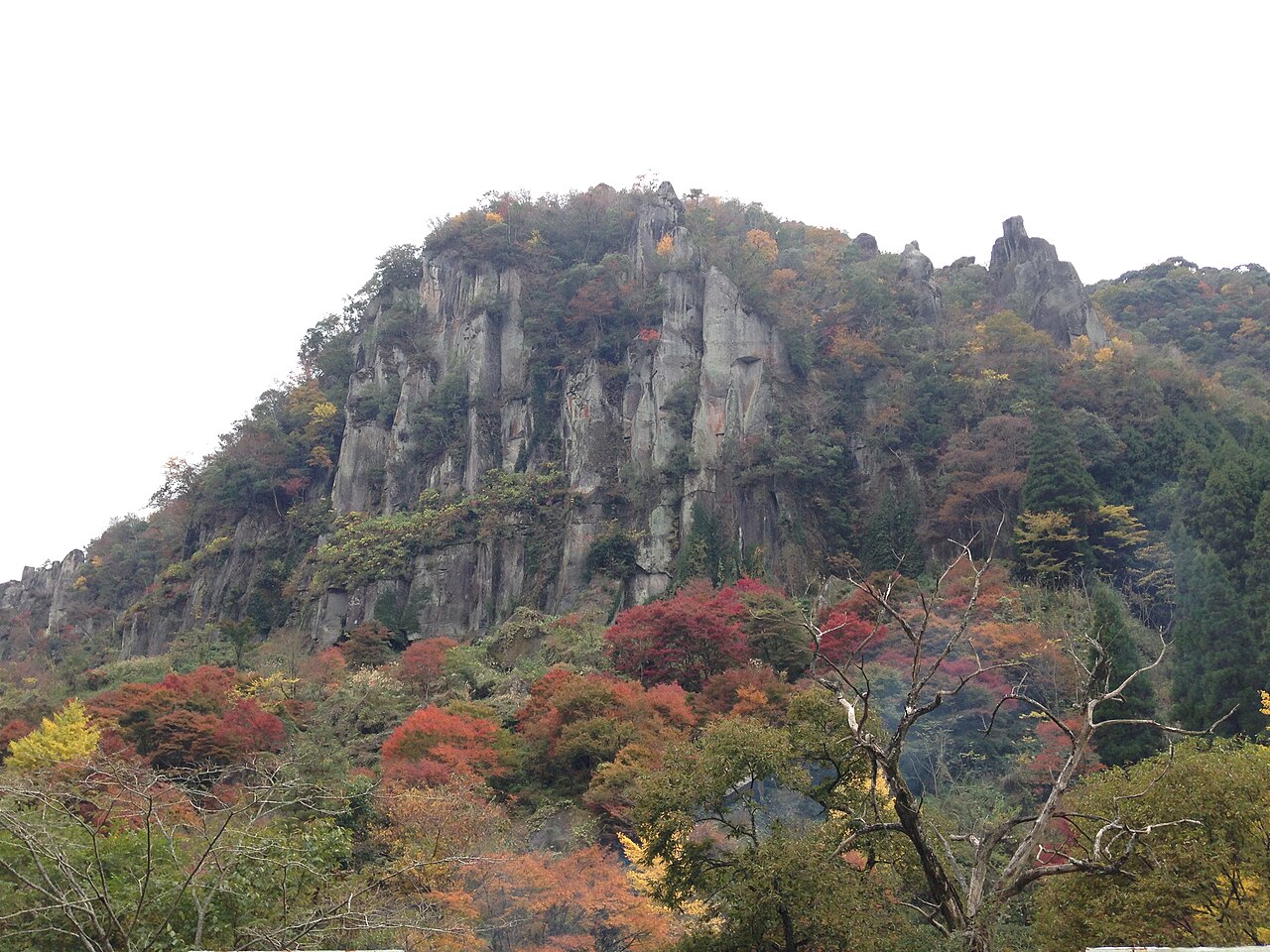
Photo: そらみみ / Wikimedia Commons (CC BY-SA 4.0)
Yabakei is a scenic rocky valley region in northern Kyushu. The most famous spot is Hitome Hakkei, which translates to "eight views in one glance," where standing at the observation platform reveals eight distinct rock formations covered in vibrant red and yellow leaves. Foliage peaks from early to mid-November. Nearby is the Ao no Domon tunnel, which was hand-dug by a Buddhist monk over a 30-year period during the Edo period.
Take a JR train to Nakatsu Station, then a bus for about 50 minutes to Hitome Hakkei. Additional bus services are operated on peak autumn weekends. If staying in Fukuoka, this can easily be done as a day trip.
How to Plan by Month
- Late September: Hokkaido (Daisetsuzan). A rare window offering early autumn foliage while temperatures in the lowlands remain mild.
- Mid-October: Tohoku (Oirase, Hakkoda) and the alpine areas of Chubu (Kamikochi, Tateyama).
- Late October to early November: Kurobe, Hiraizumi, Nikko, Yabakei, and Iya.
- Mid to late November: Kanazawa, Korankei, Miyajima, Kyoto (northern mountain areas), and Nara.
- Late November to early December: Tokyo, Kyoto (city center), Osaka, Kamakura, and Fukuoka.
Costs and Money-Saving Tips
- Whole-Japan JR Pass prices are quite high following the 2023 rate increase; it is only worth buying if you plan to take multiple long-distance Shinkansen rides over 7 to 14 days. Regional JR passes (such as the JR East Pass, JR Kansai Pass, or JR Kyushu Pass) are often much cheaper options.
- Domestic flights on low-cost carriers like Peach, Jetstar, or Skymark for long distances—such as Tokyo to Sapporo or Fukuoka—are often cheaper than the Shinkansen if booked early.
- Hotels near famous foliage spots experience dramatic price hikes on autumn weekends. Staying in a nearby major city (Asahikawa, Aomori, Matsumoto, Nagoya, Hiroshima, Fukuoka) and taking day trips is usually much more affordable.
- Long-distance highway buses for routes like Tokyo to Kanazawa or Tokyo to Sendai often cost only one-third to one-half the price of a Shinkansen ticket.
What to Prepare
- Layered clothing: In the mountains of Hokkaido and Kamikochi, morning temperatures can drop below freezing, whereas Kyushu afternoons can still reach around 20°C.
- Non-slip footwear for unpaved trails along streams such as Oirase and Momijidani.
- Check road, train, and bus statuses: Mountainous areas can experience road closures due to early snow or landslides following heavy rains and typhoons.
- A stable mobile network connection: Many locations on this list are in remote mountain areas; having offline maps or a SIM card with reliable coverage is essential.
Common Mistakes to Avoid
- Assuming one foliage timeframe applies to all of Japan. Visiting Hokkaido in late November means entering winter, while visiting Kyoto in mid-October means the leaves haven't started changing yet.
- Forgetting about elevation differences. Within the same prefecture, peak foliage on a mountain and in a valley city can differ by a full month.
- Failing to check winter closure dates. Kamikochi, the Tateyama Kurobe Alpine Route, select ropeways, and mountain passes close for the season starting mid to late November.
- Booking accommodation too late. Good-value hotel rooms in Kyoto, Kanazawa, and Miyajima for November often sell out 1 to 2 months in advance.
Frequently Asked Questions
When does the autumn leaf season in Japan start and end?
It starts in the high mountains of Hokkaido around mid-September and ends in the plains of Kanto, Kansai, and Kyushu around early to mid-December. The peak viewing period in any specific location lasts only about 1 to 2 weeks.
If I can only visit Japan once in autumn, which month should I choose?
If you are taking the classic Tokyo-Kyoto-Osaka route, November 20 to December 5 is the safest window. If you want to explore Hokkaido or Tohoku, choose October.
Where can I check autumn foliage forecasts?
Websites like tenki.jp, Weather News, and Walker Plus release forecasts starting in late September and update spot-by-spot conditions once the season begins. The JNTO website provides an English summary categorized by region.
Do typhoons and rain ruin the autumn leaves?
Severe late-season typhoons can cause leaves to fall early or scorch their edges. Sunny days, cool crisp nights, and adequate moisture provide the ideal conditions for leaves to develop their richest colors.
Do ginkgo and maple leaves change color at the same time?
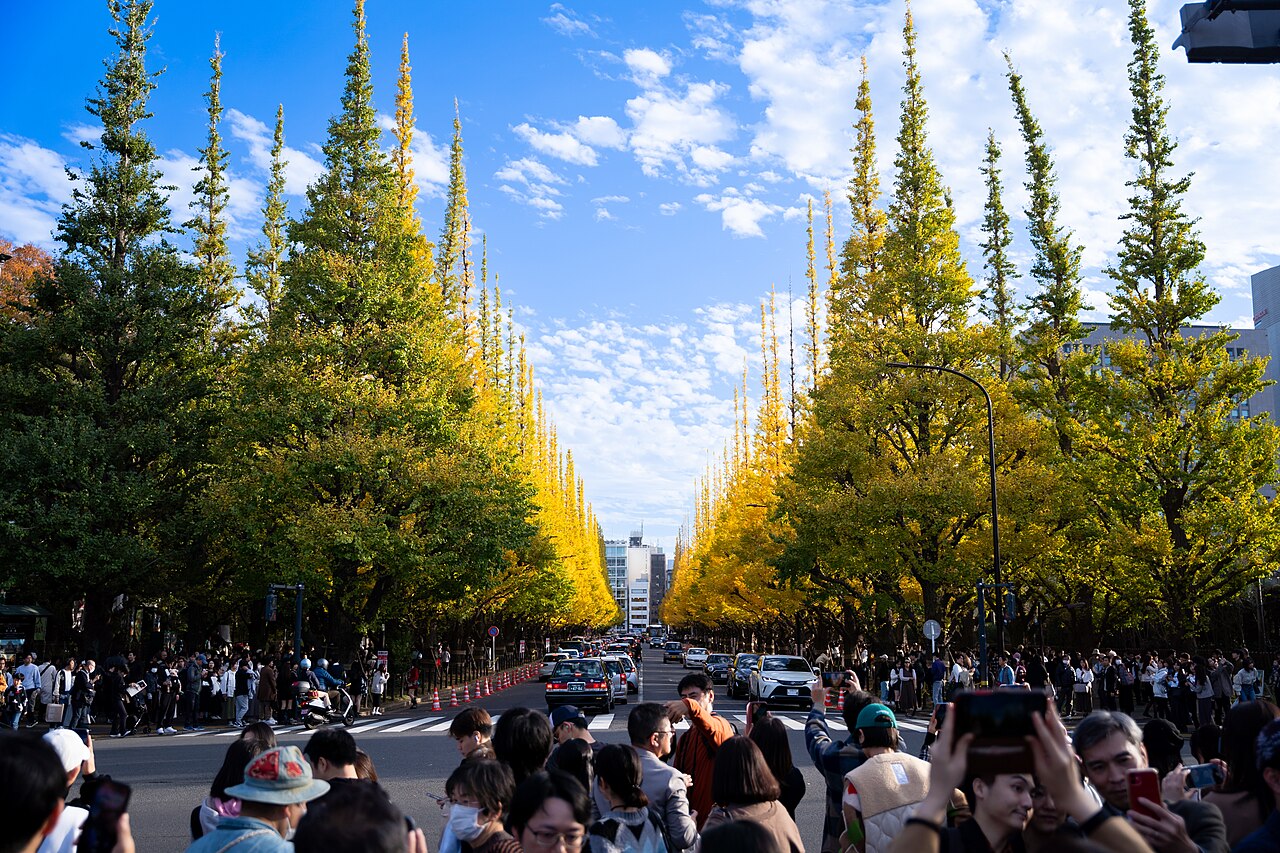
Not entirely. In lowland plains, ginkgo leaves usually turn yellow about a week earlier than maple leaves turn red. That is why in some years you might arrive in Tokyo to see golden ginkgo trees while the maples are still a mix of green and red.
Reference Sources
- Japan National Tourism Organization (JNTO): japan.travel
- Japan Meteorological Agency (JMA): maple and ginkgo observation data
- Foliage Forecasts: tenki.jp, Weather News, Walker Plus (koyo)
- Official tourism websites of Hokkaido, Aomori, Nagano, Toyama, Ishikawa, Aichi, Hiroshima, Tokushima, Oita
Cover photo: lumoplank / Wikimedia Commons (CC0)
Source Verification Date
The information in this article was verified in September 2026. Foliage timeframes serve as general guidelines based on recent years. Train schedules, mountain road conditions, and seasonal opening dates change annually, so please confirm details prior to your departure.
Explore Japan This Autumn, Stay Connected with HD TELECOM
An autumn foliage journey often spans multiple prefectures and remote mountain regions, requiring reliable mobile data to adjust your itinerary when weather changes or transit lines are suspended. HD TELECOM provides data SIMs, eSIMs, and Pocket WiFi tailored for Vietnamese residents in Japan and international travelers, backed by full Vietnamese-language support. Check out our monthly eSIM plans, data SIM cards, or contact customer support today.
Related products
Find your plan with HD TELECOM
SIM, eSIM and Pocket WiFi — genuine quality, clear pricing, 24/7 support.