

Top 10 Most Beautiful Autumn Foliage Spots in Tokyo with a Detailed Schedule
September 27, 2026
Quick Answer
Autumn colors in Tokyo usually begin to turn in mid-November and reach their peak from late November to early December. If you are short on time, the 3 most impressive must-visit spots are: Meiji Jingu Gaien Ginkgo Avenue (a vibrant golden leaf carpet), Rikugien Garden (nighttime autumn foliage illumination), and Shinjuku Gyoen National Garden (a vast space combining various autumn trees). For convenient travel and real-time train schedule lookups, you should prepare an IC card (Suica/Pasmo) along with a monthly eSIM package or a high-data SIM card.
Who Is This Article For?
This article is specially compiled for:
- Vietnamese international students, technical trainees, and workers living and working in Tokyo looking for places to hang out and take photos on weekends.
- Independent travelers visiting Japan for the first time in autumn who want to optimize their train travel itinerary.
- Anyone who wants to know the exact timing of leaf color changes, admission prices, and practical tips for each location.
When This DOES NOT Apply
The content of this article is not suitable if:
- You plan to travel to Tokyo around September or October. At this time, autumn is just beginning in Tokyo, and the trees are still green. If traveling during this period, you will need to go to higher-elevation areas like Hokkaido, Nikko, or Karuizawa to see red leaves.
- You are traveling on an all-inclusive guided tour with private charter buses and a fixed itinerary that cannot be freely changed.
Steps to Plan Your Tokyo Autumn Foliage Trip
To enjoy a complete autumn excursion without missing the peak beauty of the trees, you should follow these steps:
- Monitor the Autumn Leaves Forecast (Momiji Forecast): Track weekly leaf color updates via Japanese weather forecast websites (such as Tenki.jp or Japan-Guide) starting from early November.
- Select Locations by Week:
- First week of November - mid-November: Prioritize suburban areas like Mount Takao and Showa Kinen Park.
- Late November - mid-December: Focus on central Tokyo spots like Meiji Jingu Gaien, Shinjuku Gyoen, and Rikugien.
- Prepare Transportation and Connectivity: Pre-purchase train passes or top up sufficient funds on your Suica/Pasmo card. Ensure your phone always has internet access using a monthly data SIM to check Google Maps and train schedules via the Navitime app.
- Organize Your Daytime Schedule: Parks usually open at 9:00 AM. Night falls very quickly during autumn in Japan (it starts getting dark around 16:30), so the best time for photography is between 10:00 AM and 2:00 PM.
Required Documents and Items to Prepare
When hunting for red leaves in Tokyo, you need to bring the following personal documents and items:
| Document / Item | Purpose | Practical Note |
|---|---|---|
| Residence Card (Zairyu Card) / Passport | Identity verification during random checks by authorities | Always carry the original with you as required by Japanese law |
| Suica / Pasmo / ICOCA Card | Payment for train fares, buses, and vending machines | Load at least 2,000 JPY in advance to avoid queuing at busy station charge machines |
| Cash (Japanese Yen) | Purchasing entrance tickets at traditional gardens or buying street snacks | Many heritage garden ticket booths only accept cash, not credit cards |
| Light Jacket & Scarf | Keeping warm | Tokyo experiences a large temperature drop between day and night (15°C daytime, dropping to 6-8°C at night) |
| Internet Connectivity Device | Checking maps, translating signs, and checking train schedules | It is recommended to use a monthly pocket WiFi if traveling in a group, or an eSIM if using a single device |
Estimated Budget for a Day of Leaf Viewing
The cost of autumn leaf viewing in Tokyo is relatively low, making it suitable for both students and working professionals:
- Transportation Costs (Train): 600 - 1,500 JPY/day (depending on the distance from your home to the attractions). If visiting multiple spots in a day, you can purchase a 24-hour Tokyo Subway Ticket for 800 JPY.
- Admission Tickets: Many large parks offer free entry (such as Yoyogi and Meiji Jingu Gaien). Some heritage gardens like Rikugien and Koishikawa Korakuen charge an entrance fee of 300 - 500 JPY/person.
- Snacks and Meals: 1,000 - 2,000 JPY for autumn street snacks like roasted chestnuts, dango skewers, hot tea, or a bento box for a picnic.
Peak Autumn Foliage Timing in Tokyo
Unlike cherry blossoms, which bloom briefly from mid to late spring, autumn foliage stays beautiful longer, lasting about 2 to 3 weeks in each area.
| Phase | Time Frame | Landscape Characteristics | Featured Trees |
|---|---|---|---|
| Color Transition (Forecast) | Early November - Mid-November | Leaves begin turning from green to yellow-orange in suburban areas | |
| Peak Season | 20/11 - 10/12 | Vibrant golden yellow leaves and rich red maple leaves cover the whole city | |
| Late Season (Falling Leaves) | After 10/12 - Mid-December | Fallen leaves form carpets on the ground; branches begin to go bare |
10 Must-Visit Autumn Foliage Spots in Tokyo
1. Meiji Jingu Gaien Ginkgo Avenue (Icho Namiki)
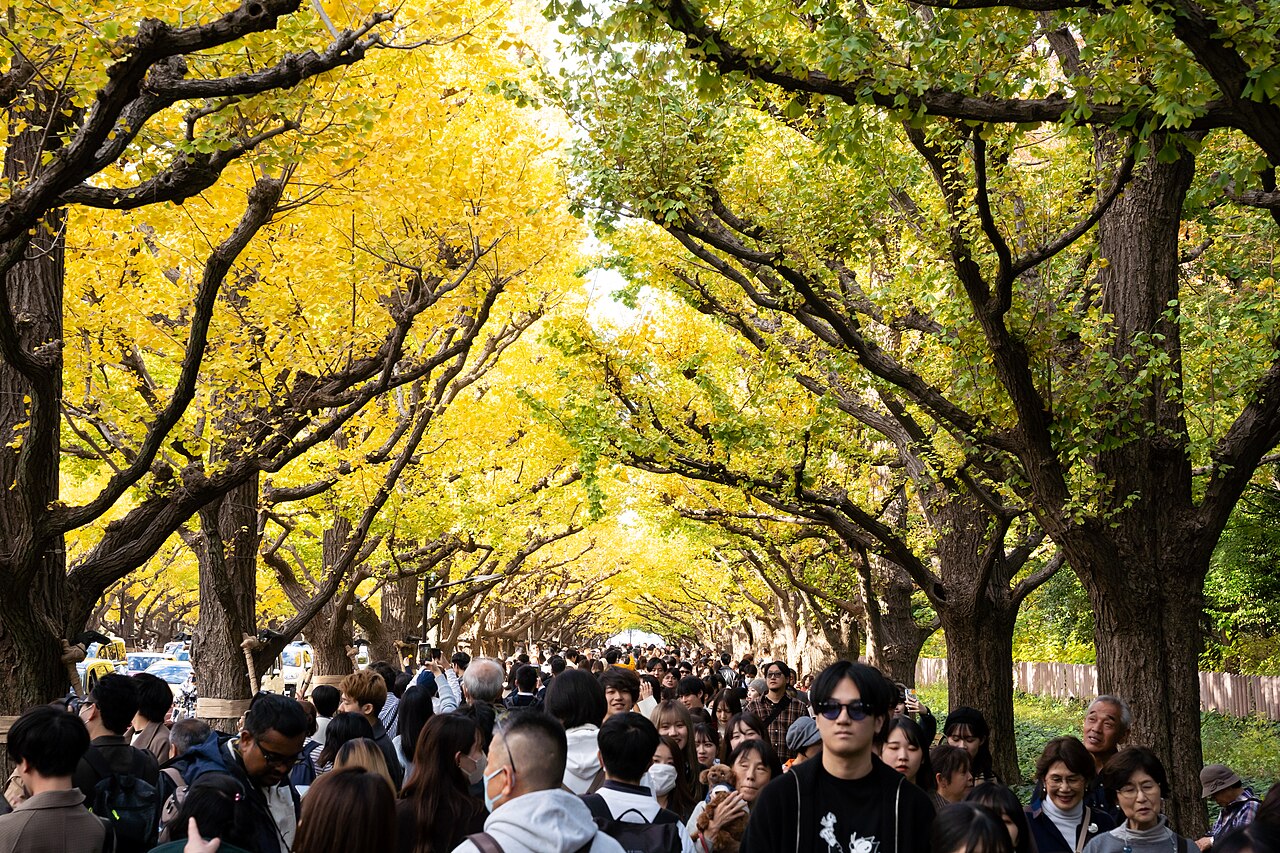
Photo: Dick Thomas Johnson from Tokyo, Japan / Wikimedia Commons (CC BY 2.0)
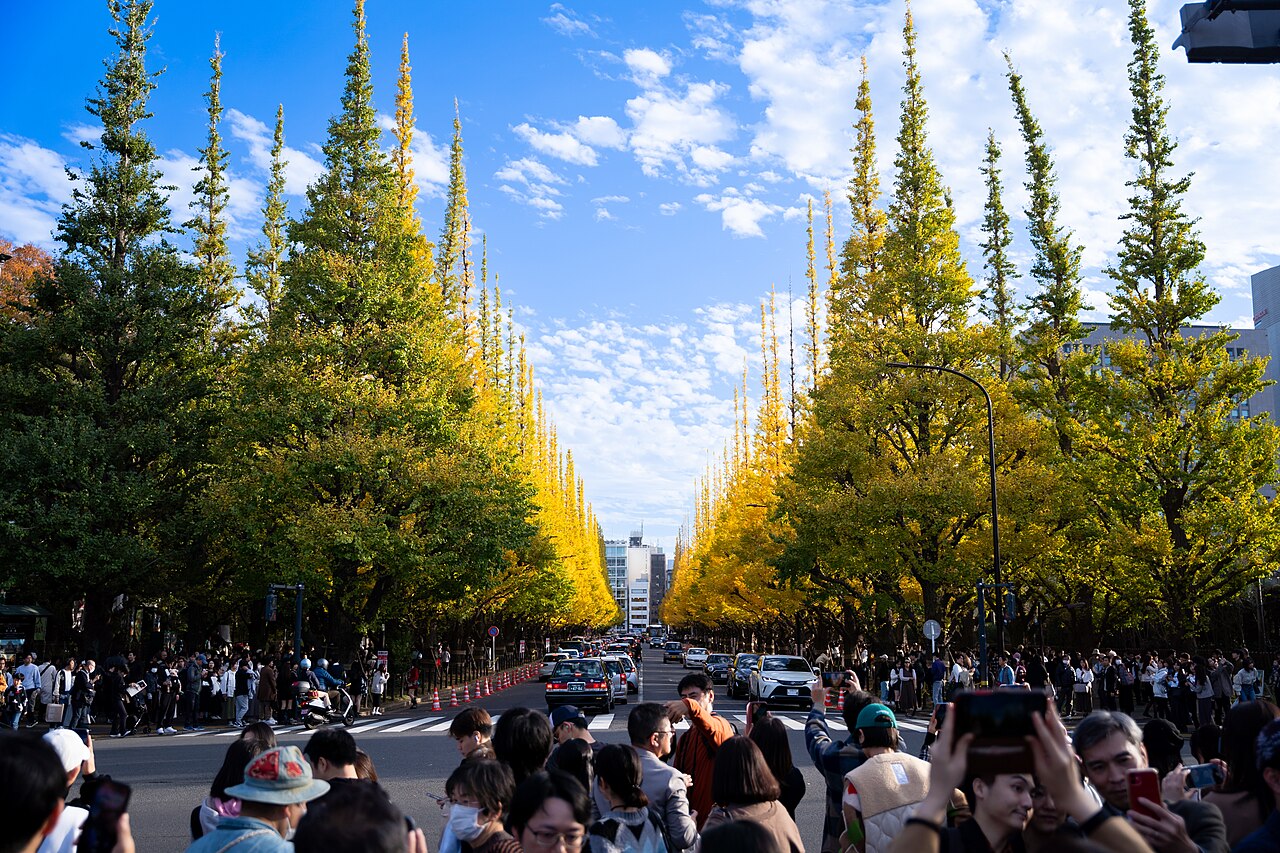
This is the most iconic autumn landmark of Tokyo. The avenue stretches about 300 meters, lined with 146 neatly trimmed ginkgo trees on both sides. When autumn arrives, the entire street transforms into a golden tunnel shimmering under the sunlight.
- Address: 1-1 Kasumigaokamachi, Shinjuku, Tokyo
- Nearest Station: Aoyama-itchome Station (Ginza/Hanzomon Line) or Shinanomachi Station (JR Chuo-Sobu Line)
- Admission: Free
- Best Time to Visit: Late November to early December
- Insider Tip: It is best to arrive before 9:00 AM to avoid crowds and get wide-angle photos without people in the background. After taking photos, you can stop by the open-air cafes along the avenue to enjoy the autumn atmosphere.
2. Showa Kinen Park
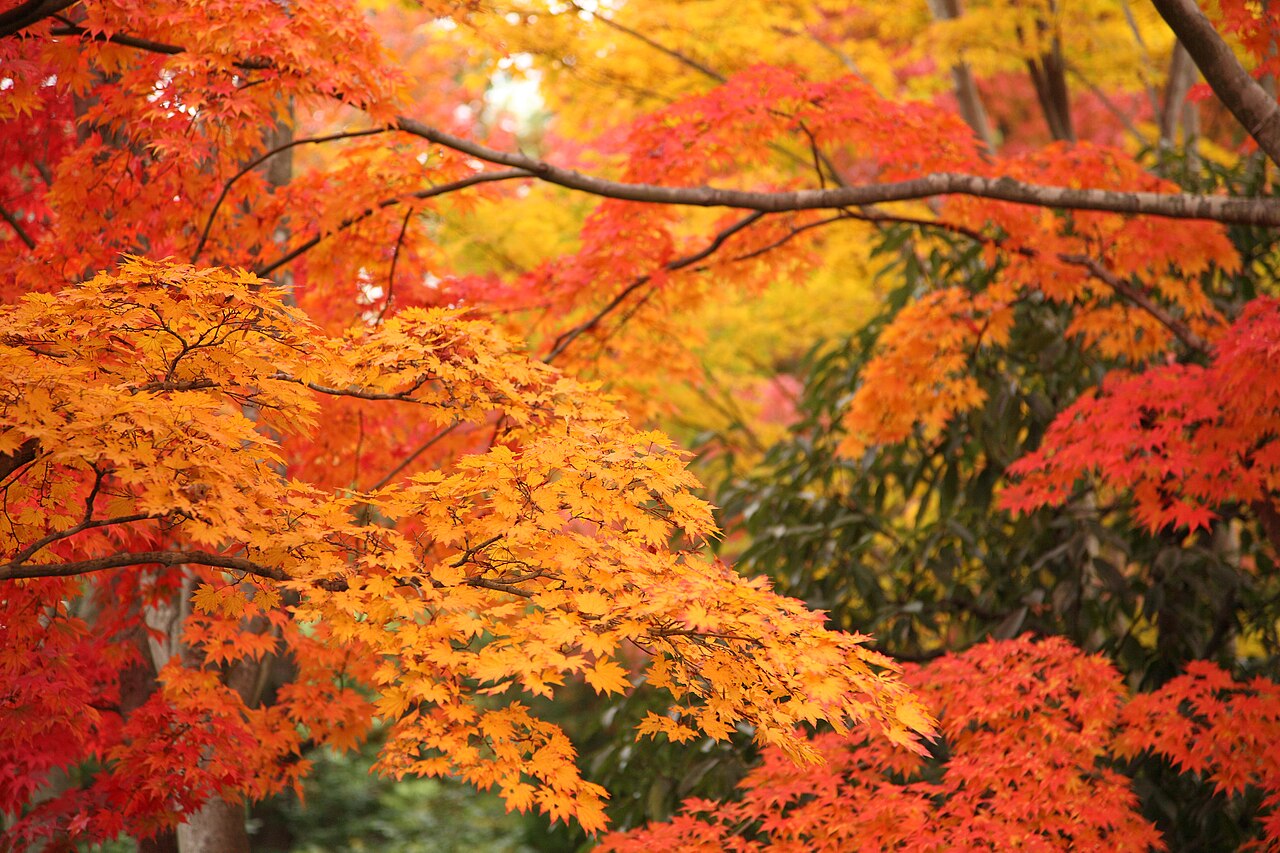
Photo: mrhayata / Wikimedia Commons (CC BY-SA 2.0)
Spanning over 180 hectares in Tachikawa, Showa Kinen Park is where autumn arrives earliest in the Tokyo area. It features two stunning ginkgo avenues: one right at the Tachikawa Gate and another along the Canal. Additionally, the Japanese garden inside the park has hundreds of red maple trees reflected on the pond surface.
- Address: 3173 Midoricho, Tachikawa, Tokyo
- Nearest Station: Nishi-Tachikawa Station or Tachikawa Station (JR Chuo Line)
- Admission: 450 JPY (Adults)
- Best Time to Visit: Early November to late November
- Insider Tip: The park is extremely vast, so you should rent a bicycle right at the entrance gate (around 600 JPY/3 hours) to move between areas without tiring your feet.
3. Shinjuku Gyoen National Garden
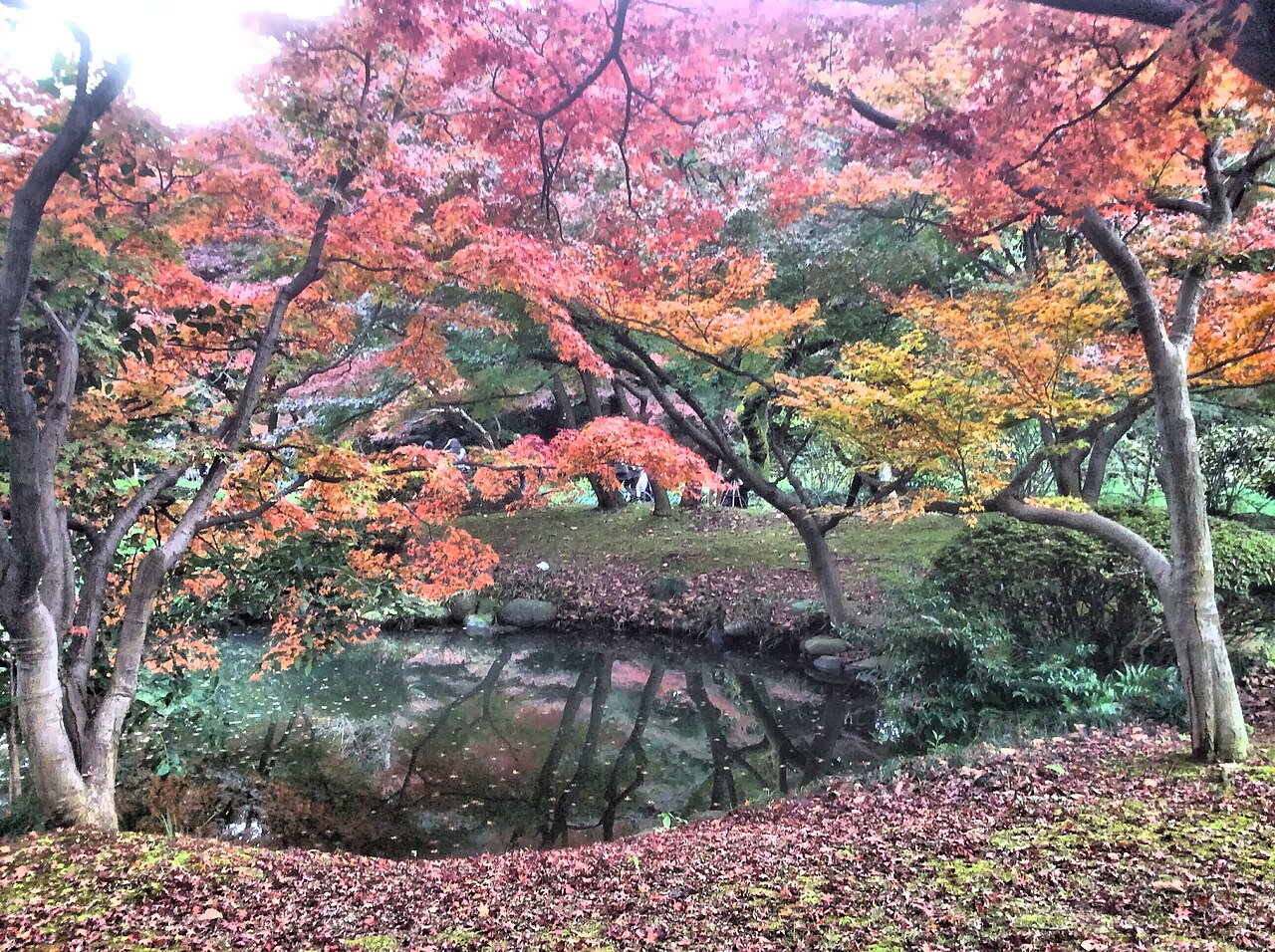
Photo: nesnad / Wikimedia Commons (CC BY-SA 3.0)
Located right in the bustling heart of Shinjuku, Shinjuku Gyoen seamlessly blends French garden, English landscape, and traditional Japanese garden designs. Autumn here offers a wonderful mix of colors, combining yellow ginkgo leaves, deep red momiji maples, and sprawling green lawns.
- Address: 11 Naitomachi, Shinjuku, Tokyo
- Nearest Station: Shinjuku-gyoenmae Station (Marunouchi Line) or Sendagaya Gate (JR Chuo-Sobu Line)
- Admission: 500 JPY (Adults), 250 JPY (Students)
- Best Time to Visit: Mid-November to early December
- Insider Tip: Alcohol and noisy sports equipment are prohibited in the park. Bring a picnic mat, buy some pastries and hot tea, and enjoy sitting under the canopy of red leaves.
4. Rikugien Garden (Night Illumination)
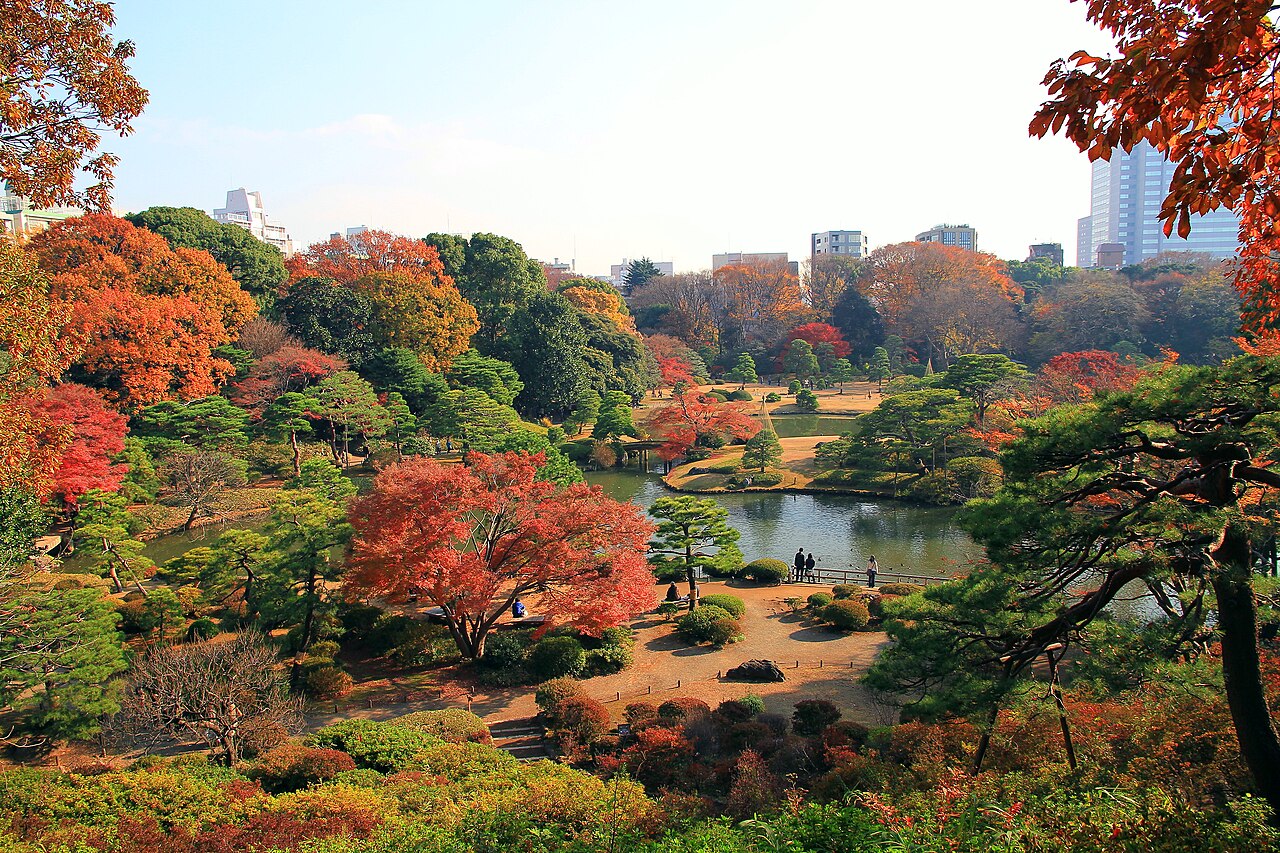
Photo: 京浜にけ / Wikimedia Commons (CC BY-SA 3.0)
Rikugien is one of Tokyo's finest Edo-period landscape gardens. The special autumn feature at Rikugien is its evening illumination event. The red maple groves around the central pond are illuminated, creating a magical scene straight out of a movie.
- Address: 6-16-3 Honkomagome, Bunkyo, Tokyo
- Nearest Station: Komagome Station (JR Yamanote Line or Namboku Line)
- Admission: Daytime 300 JPY / Night event ticket approx. 900 - 1,000 JPY
- Best Time to Visit: Late November to early December
- Insider Tip: Ticket lines for the night event can be very long. You should purchase an e-ticket online in advance to use the priority lane. Don't forget to wear warm clothes as nighttime temperatures around the pond drop significantly.
5. Mount Takao (Takaosan)
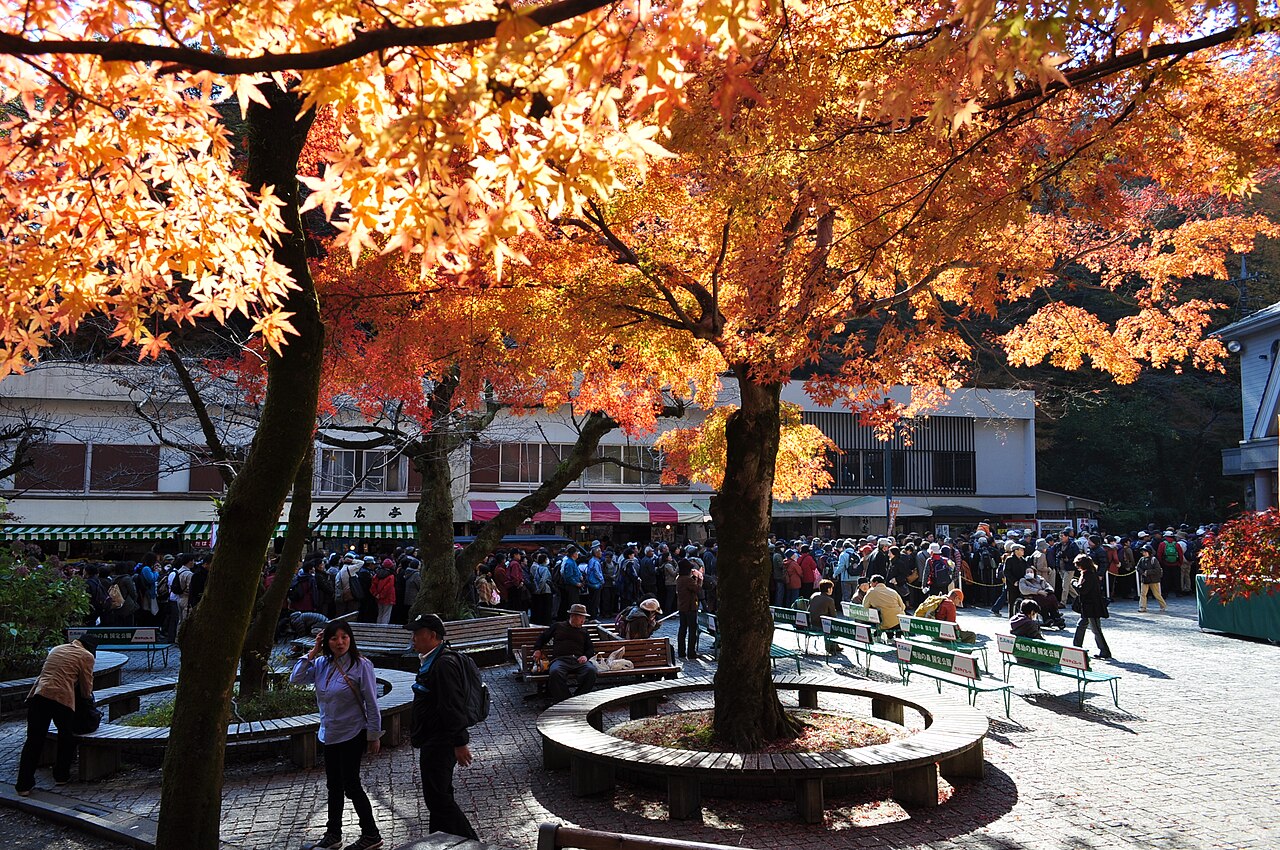
Photo: 江戸村のとくぞう (Edomura no Tokuzo) / Wikimedia Commons (CC BY-SA 3.0)
If you want to immerse yourself in wild nature without traveling far from Tokyo, Mount Takao is the top choice. Taking just about 50 minutes by train from Shinjuku, you will arrive at the foot of the mountain. Riding the cable car or funicular railway through tunnels of fiery red maples offers an unforgettable experience.
- Address: Takaomachi, Hachioji, Tokyo
- Nearest Station: Takaosanguchi Station (Keio Line)
- Admission: Free entry to the mountain. Cable car/Funicular round trip 950 JPY
- Best Time to Visit: Mid-November to late November
- Insider Tip: Take the cable car up and hike down along Trail 1 to admire the ancient Yakuo-in Temple covered in red leaves. Enjoying a bowl of hot Tororo Soba at the summit is a must-try experience.
6. Koishikawa Korakuen Garden
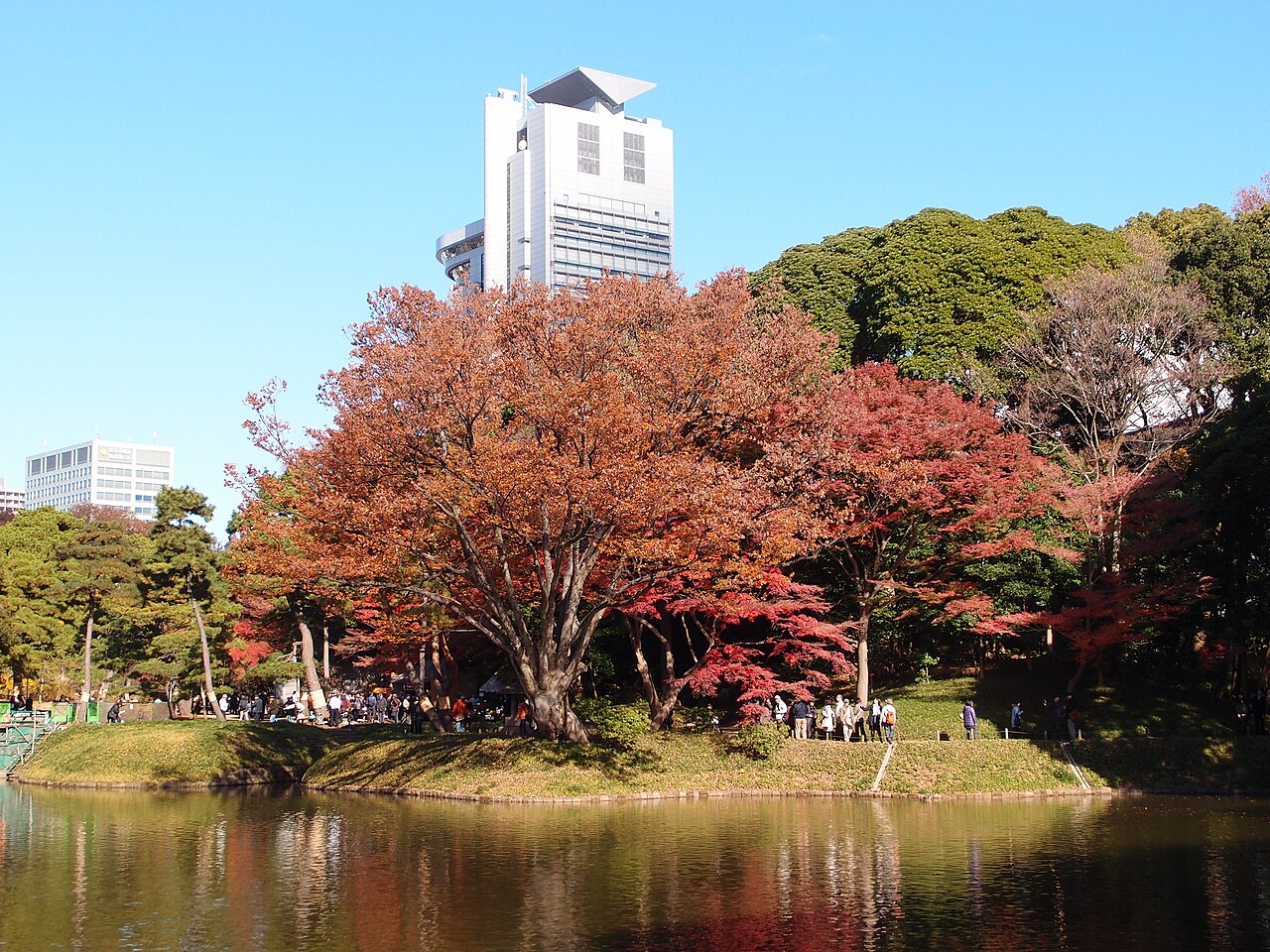
Photo: Guilhem Vellut from Annecy, France / Wikimedia Commons (CC BY 2.0)
Situated right next to the Tokyo Dome entertainment complex, Koishikawa Korakuen is Tokyo's oldest surviving Edo-period garden. The garden is designed to recreate famous landscape miniature scenes from Japan and China. The red arched stone bridge (Tsutenkyo) surrounded by vibrant red maple foliage is the most valuable photo spot here.
- Address: 1-6-6 Koraku, Bunkyo, Tokyo
- Nearest Station: Iidabashi Station (Toei Oedo Line / JR Chuo-Sobu Line) or Korakuen Station
- Admission: 300 JPY
- Best Time to Visit: Late November to mid-December
- Insider Tip: After touring the peaceful garden, it takes only a 3-minute walk to get to Tokyo Dome City for convenient dining, entertainment, and shopping.
7. Yoyogi Park
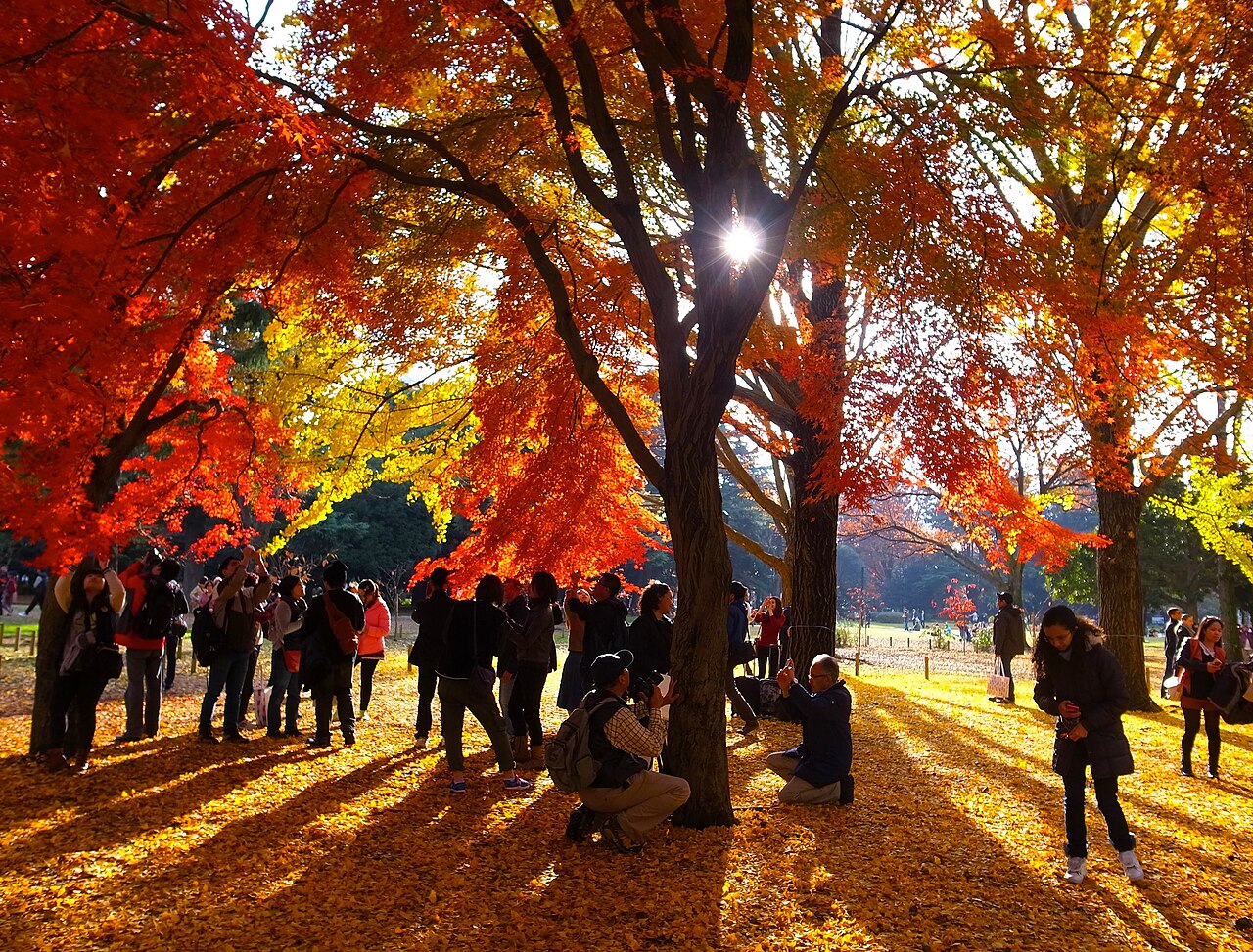
Photo: Nesnad / Wikimedia Commons (CC BY-SA 4.0)
Yoyogi is one of Tokyo's most vibrant public parks. Unlike the quiet atmosphere of traditional gardens, Yoyogi in autumn bursts with colors from thousands of ginkgo, maple, and zelkova trees. It is an ideal venue for friend gatherings, street performance rehearsals, or walking pets.
- Address: 2-1 Yoyogikamizonocho, Shibuya, Tokyo
- Nearest Station: Harajuku Station (JR Yamanote Line) or Yoyogi-koen Station
- Admission: Free
- Best Time to Visit: Mid-November to early December
- Insider Tip: The southern area of the park near Harajuku Gate has the highest concentration of golden ginkgo trees. You can easily combine strolling through Harajuku and Omotesando with a picnic in Yoyogi all in one day.
8. Inokashira Park (Kichijoji)
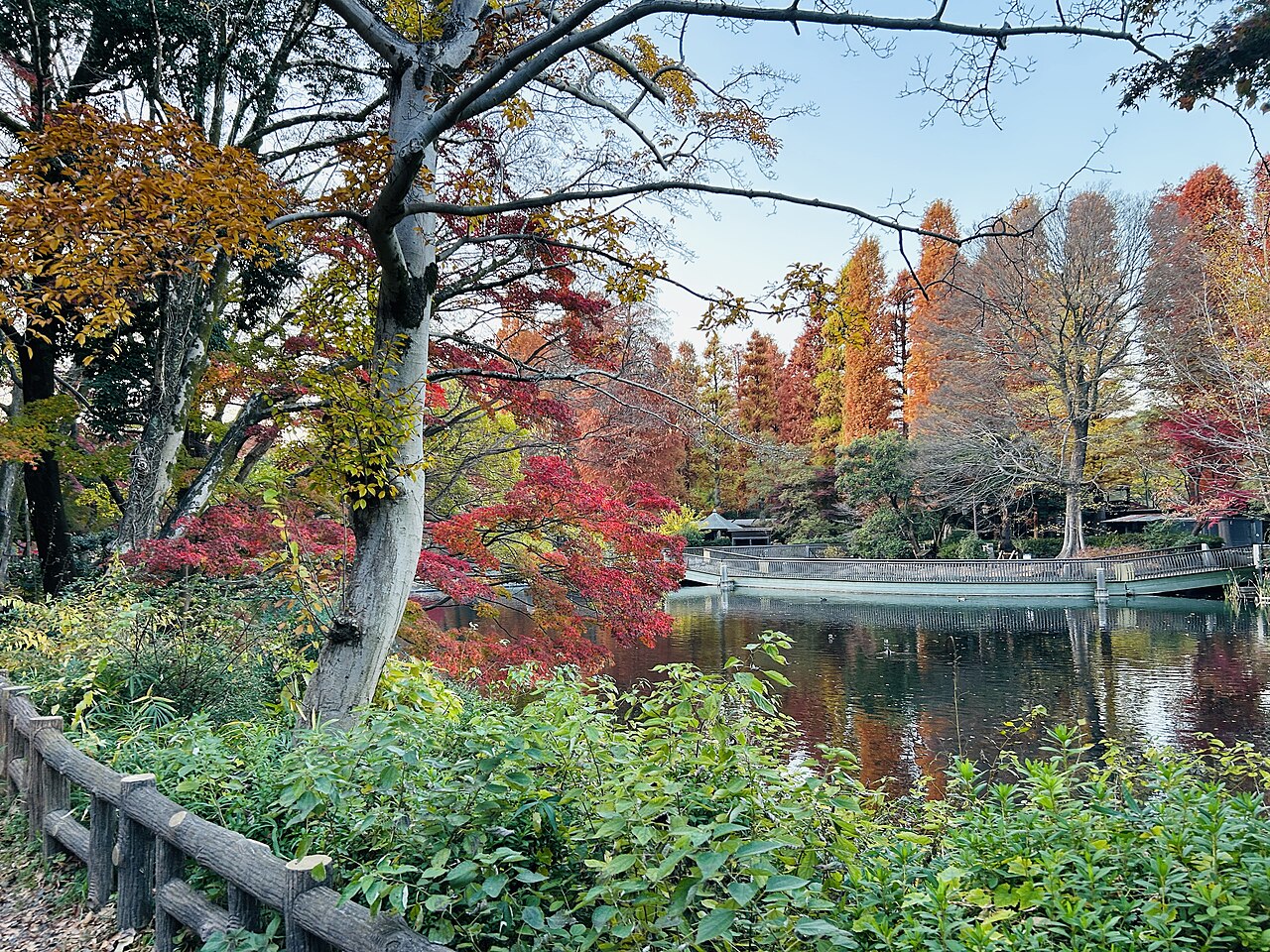
Photo: Htanaungg / Wikimedia Commons (CC BY-SA 4.0)
Located in the trendy neighborhood of Kichijoji, Inokashira Park is famous for its large central pond. When autumn comes, changing foliage drapes over the tranquil water. The best experience here is renting a swan pedalo boat to paddle into the middle of the pond and take in the autumn colors encircling the shores.
- Address: 1-18-3 Gotenyama, Musashino, Tokyo
- Nearest Station: Kichijoji Station (JR Chuo Line / Keio Inokashira Line)
- Admission: Free park entry. Boat rental approx. 700 - 800 JPY/30 minutes
- Best Time to Visit: Late November to early December
- Insider Tip: There are many retro-style cafes and vintage clothing shops surrounding the park. Plan to spend a full weekend day exploring Kichijoji.
9. Hamarikyu Gardens
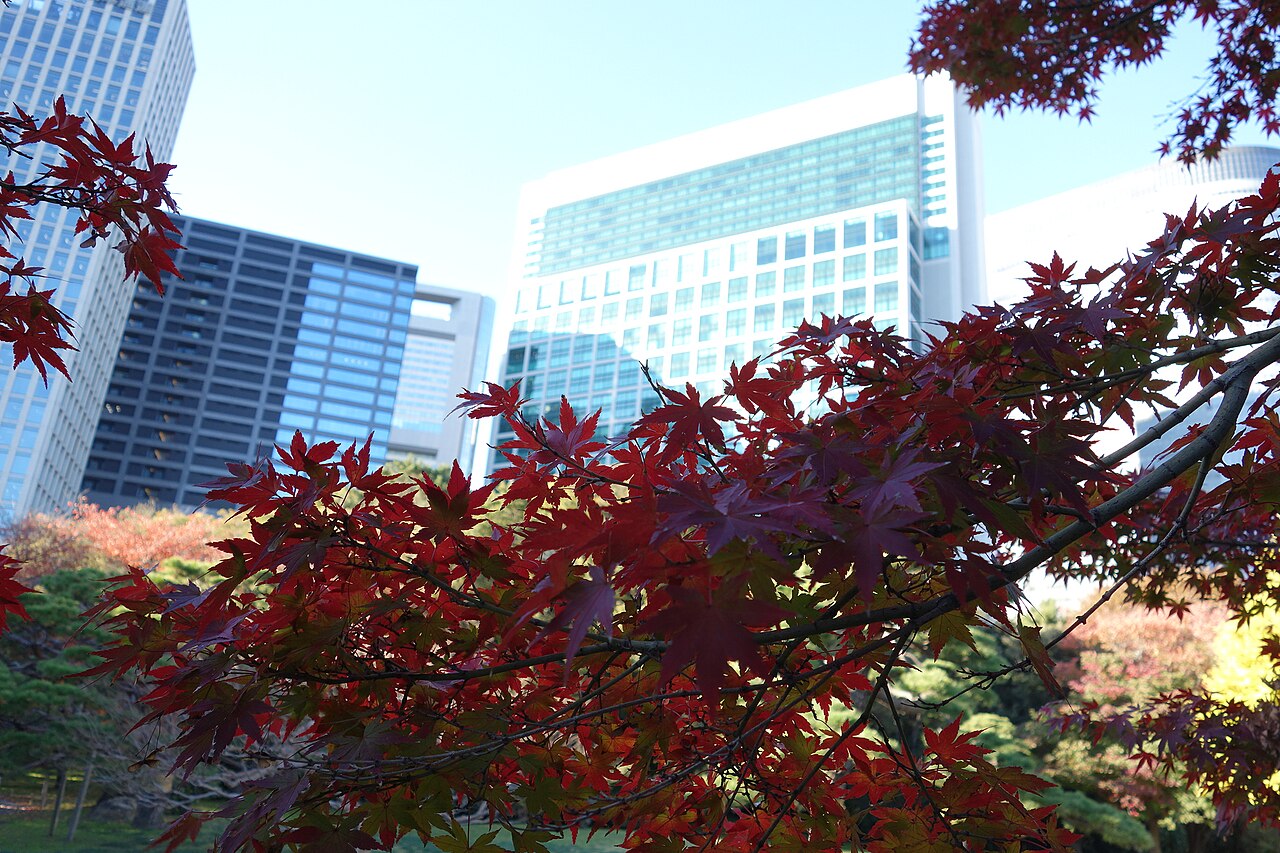
Photo: 690 Noda / Wikimedia Commons (CC BY 3.0)
Enclosed by the modern skyscrapers of the Shiodome district, Hamarikyu features seawater ponds drawn directly from Tokyo Bay. The striking contrast between the historic autumn leaves, the teahouse perched on the pond, and the background of soaring modern buildings creates a unique scenery found nowhere else.
- Address: 1-1 Hamarikyuteien, Chuo, Tokyo
- Nearest Station: Shiodome Station (Toei Oedo Line) or Shimbashi Station (JR Yamanote Line)
- Admission: 300 JPY
- Best Time to Visit: Late November to mid-December
- Insider Tip: Stop by the Nakajima No Chaya teahouse in the middle of the pond to order a set of Matcha green tea and traditional Wagashi sweets to enjoy while watching falling leaves.
10. Mount Mitake (Mitakesan)
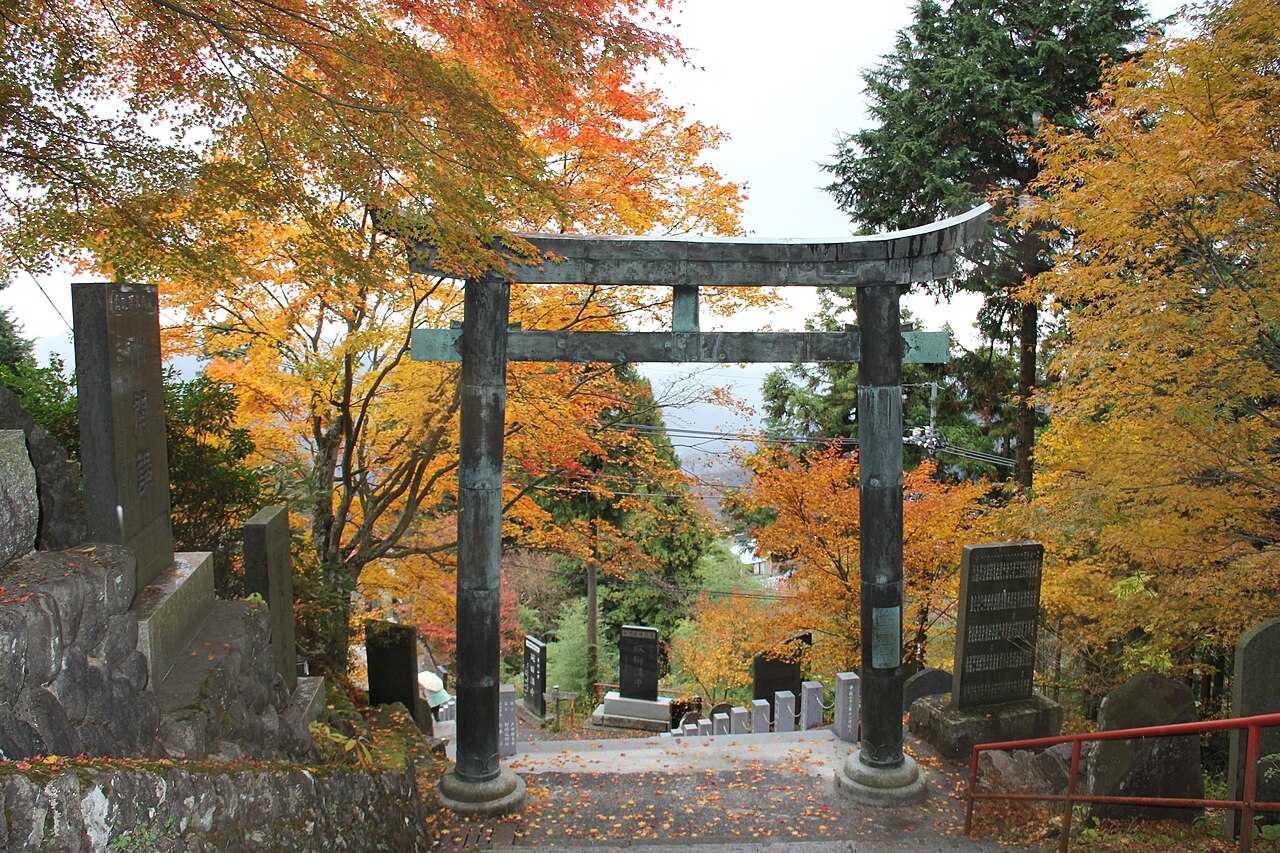
Photo: Arashiyama / Wikimedia Commons (CC BY-SA 3.0)
Located in the Chichibu-Tama-Kai National Park in the Ome area (western Tokyo), Mount Mitake is perfect for those who love fresh mountain air combined with vivid autumn foliage. It features the sacred Musashi Mitake Jinja Shrine at the peak and hiking trails passing through waterfalls and streams covered in maple leaves.
- Address: Mitakesan, Ome, Tokyo
- Nearest Station: Mitake Station (JR Ome Line), then take a Nishi Tokyo Bus to the Takimoto cable car station
- Admission: Cable car round trip 1,130 JPY
- Best Time to Visit: Early November to mid-November
- Insider Tip: The trail from the summit passing through the Rock Garden is scenic but can be uneven. Wear athletic shoes with good grip and carry your own drinking water.
Common Mistakes When Viewing Autumn Leaves in Tokyo
Many students and tourists make small mistakes that can ruin the fun or cause unnecessary expenses during an autumn foliage outing:
- Leaving too late in the day: In Japanese autumn, it gets pitch dark by 16:30. If you head out at 13:00 - 14:00, the sunlight will already be gone by the time you arrive, leaving your leaf photos dim and poorly lit.
- Not bringing small change in cash: Although Japan is modern, ticket booths at national gardens or street snack vendors often only accept coins or small bills (1,000 JPY). 10,000 JPY notes can sometimes be difficult to make change for.
- Forgetting to arrange internet connectivity in advance: In large parks like Showa Kinen or mountainous areas like Mount Takao, getting lost is easy without Google Maps. Moreover, failing to check train apps (Navitime, Jorudan) might cause you to miss the last train back to the center. Check out voice call SIM cards or data SIM services from HD TELECOM in advance to stay connected at all times.
- Dressing too lightly: Sunny autumn days can feel warm (16-18°C), but as soon as the sun sets, temperatures drop rapidly below 8°C with chilly winds. Always bring a thick jacket just in case.
Frequently Asked Questions (FAQ)
When do autumn leaves start and end in Tokyo?
Leaves start turning yellow in suburban mountains from early November. In central Tokyo, peak colors occur from around November 20 to December 10. After mid-December, most leaves will have fallen.
Do I need to buy tickets in advance to view autumn foliage in Tokyo parks?
Most public parks (Yoyogi, Meiji Jingu Gaien) offer free admission. Heritage gardens (Rikugien, Koishikawa Korakuen) charge entry fees at the gate. However, for night illumination events at Rikugien, purchasing online tickets in advance is recommended to avoid long queues.
Where is the best place in Tokyo for night autumn leaf illuminations?
Rikugien Garden is Tokyo's most famous and impressive spot for nighttime autumn leaf illumination. Additionally, Showa Kinen Park also hosts night illumination events in select areas depending on the year.
What is the most convenient mode of transport between leaf-viewing spots?
Trains (JR Yamanote Line and Subway lines) are the fastest and most economical option. Using a Suica or Pasmo card to tap in and out is recommended for convenience, saving you from purchasing paper tickets for each leg.
How can I get real-time updates on daily leaf conditions?
You can search for the Japanese names of locations on X (formerly Twitter) or Instagram, filtering by the latest posts (Recent) to view real-time check-in photos posted by visitors on that day.
References
The content of this article has been compiled from official information provided by Japanese tourism authorities:
- Tokyo Tourism Official Website (Go Tokyo): gotokyo.org
- Japan National Tourism Organization (JNTO): japan.travel
- Japan Weather & Autumn Foliage Forecast: tenki.jp
Cover photo: Dick Thomas Johnson from Tokyo, Japan / Wikimedia Commons (CC BY 2.0)
Source Verification Date
Location information, ticket prices, and schedules in this article were verified and updated by HD TELECOM in October 2024.
Stay Seamlessly Connected with HD TELECOM Throughout Japan's Autumn
A successful autumn leaf photography trip is incomplete without a high-speed internet connection to check train routes, check in at locations, or stay in touch with friends. If you are living or studying in Tokyo or preparing to travel to Japan, visit HD TELECOM's office in Shin-Okubo or access our product catalog to choose the right plan for you:
- Easily register for 12-month prepaid SIM packages with no unexpected extra fees.
- Get 100% Vietnamese language support and setup assistance at the store or via our online support channel.
- Simple procedures with no cumbersome requirements.
HD TELECOM
Find your plan with HD TELECOM
SIM, eSIM and Pocket WiFi — genuine quality, clear pricing, 24/7 support.