

How to buy Shinkansen tickets: reserved vs. unreserved seats, and the cheapest ways to buy
August 9, 2026
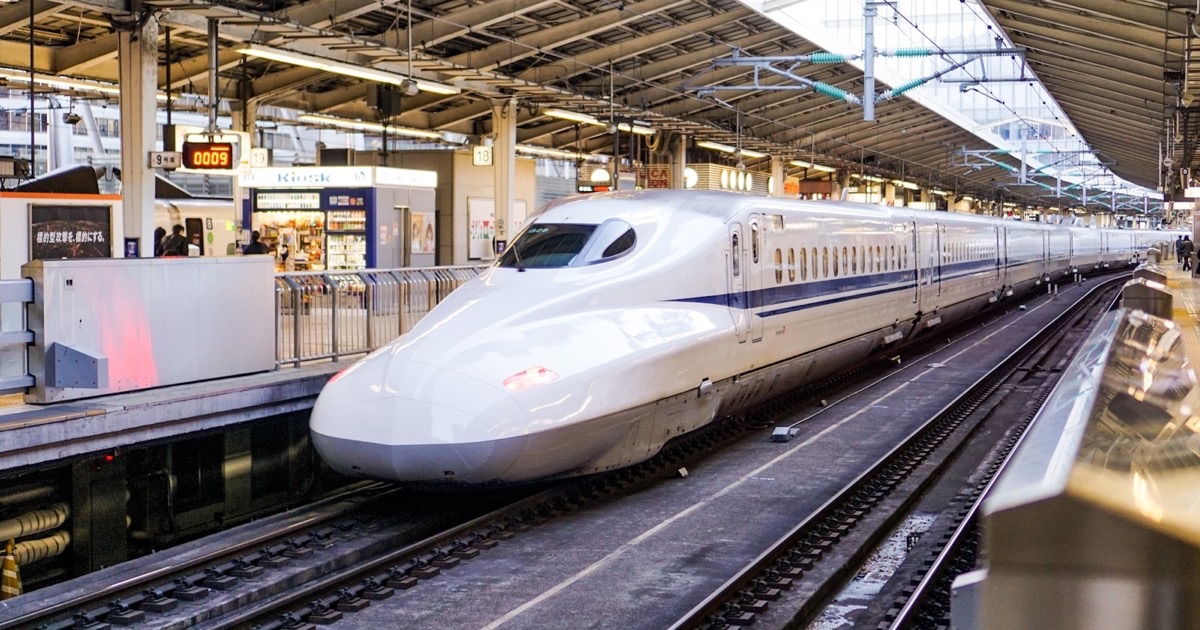
Buying a Shinkansen ticket for the first time, almost every Vietnamese person gets confused by the same scene: the ticket machine fires a string of Japanese at you, the price shows two or three numbers added together for no apparent reason, and only when you board do you realize you are in the wrong car. This article untangles it from the start: what a Shinkansen ticket includes, which seat to choose for your budget, and — most importantly for 2026 — the date ranges when Nozomi trains completely drop unreserved seats, leaving you to stand the whole way if you don't know in advance.
1. Shinkansen tickets consist of TWO parts — understand this and confusion is gone
Unlike train tickets in Vietnam, a Shinkansen trip requires two tickets combined (or one ticket covering both):
- Basic fare ticket (乗車券 — jōshaken): pays for the distance, just like a regular train ticket. The farther you go, the more expensive it is.
- Express surcharge (特急券 — tokkyūken): paid additionally to ride the high-speed train. This is where you choose your seat type.
Therefore, when the machine prints two tickets, don't panic — feed both tickets stacked together at the same time into the ticket gate to pass. And when comparing prices, remember to look at the total of both parts.
2. Three types of seating — choose based on your budget and situation
| Type | Characteristics | Price | Best for |
|---|---|---|---|
| Unreserved seat (自由席) | No seat numbers. Board the unreserved car, find an empty seat and sit; if it's full, you stand. | Cheapest | Solo travelers, flexible schedules, off-peak travel |
| Reserved seat (指定席) | Car number and seat number printed on the ticket. Guaranteed a seat. | A few hundred yen more expensive than unreserved seats | Traveling with small children/elderly, lots of luggage, peak times |
| Green Car (グリーン車) | Luxury car: wide seats, deep reclining, quiet. | Most expensive | Long trips where you want to rest, business travel |
For most Vietnamese traveling within Japan, the economical choice is: quiet weekdays — unreserved seats; weekends, holidays, traveling with family — add a few hundred yen to get reserved seats to guarantee a spot. A few hundred yen in exchange for 2–3 hours of not having to stand is a great deal.
3. Smart tips for using unreserved seats
- Know where the unreserved cars are located. Unreserved cars are usually located at the front of the train (lower car numbers). The platform has clear signs showing which car is 自由席 — check the electronic board or floor markings.
- Queue up 15–20 minutes early at the exact platform door position for the car. Japanese people queue neatly in two orderly lines — just join the correct line.
- Choose a train starting from the origin station if possible (e.g., boarding at the starting station instead of midway) — the train arrives empty, and queueing early almost guarantees a seat.
- Avoid peak hours: early Monday morning, Friday evening and Sunday evening, and holidays (see section 4). Midday on weekdays is the quietest time slot.
- Shift by one train: if the upcoming train is packed, wait 10–20 minutes for the next one — main Shinkansen lines run as frequently as subways.
4. ⚠️ IMPORTANT 2026: Date ranges when Nozomi trains have NO unreserved seats
This is something many Vietnamese do not know and easily get caught out by. On the Tokaido/Sanyo line (Tokyo – Nagoya – Osaka – Hiroshima – Hakata), the fastest train is Nozomi. During peak periods, all seats on Nozomi become reserved seats — unreserved seats are no longer sold:
| Holiday | Date Range (2026) |
|---|---|
| Obon | August 7 – August 16 |
| Silver Week | September 18 – September 23 |
| Sports Day Weekend | October 10 – October 12 |
| Labor Thanksgiving Weekend | November 21 – November 23 |
| New Year | December 25, 2026 – January 5, 2027 |
During these periods, if you hold an unreserved ticket and board a Nozomi train, you can still board, but you must stand in the aisle or between cars — standing the Tokyo–Osaka leg takes about two and a half hours, which is very tough if you have small children or large luggage.
A valid workaround: take Hikari or Kodama
Along the same rail line are two slower train types: Hikari (stops at more stations, Tokyo–Osaka is about 20–40 minutes slower than Nozomi) and Kodama (stops at every station, the slowest). During holidays, these two types still have unreserved seats. If you want to save money and still get a seat during Obon or New Year, the tactic is: tolerate being 20–40 minutes slower, board the Hikari, and queue early. Many thrifty Japanese people do exactly this.
5. How to buy the CHEAPEST tickets: real methods
① Book early — biggest discounts
Advance purchase ticket programs (早特 / 早割) sold online, booked 2–4 weeks in advance, offer the deepest discounts. Two main official systems: EX Hayatoku (Tokaido/Sanyo/Kyushu lines) and Tokudane on Ekinet (JR East lines to Tohoku, Niigata, Nagano...). Discounted seats are limited — weekends and holidays sell out very fast, so book as soon as you see them.
② Book online via Smart EX — convenient and better prices than the counter
Smart EX is the official online ticketing service for the Tokaido/Sanyo/Kyushu lines: register for free with a credit card, book tickets on your phone, pass through the gates using an IC card or QR code — no need to queue for paper tickets. The paid membership version EX Reservation offers even cheaper fares, suitable for frequent Shinkansen travelers.
③ Student discount (学割) — international students should remember to use it
One-way trips of 101km or more receive a 20% discount on the basic fare ticket (乗車券). You need to apply for a student discount certificate (学割証) at your school office first, then buy the ticket at the counter. Note: this only discounts the basic fare, not the express surcharge — but on long stretches, it still saves a significant amount.
④ Round-trip discount (往復割引) — still exists but narrowing
One-way distances of 601km or more (e.g., Tokyo–Hiroshima) receive a 10% discount on the basic fare ticket each way when purchasing a round trip. Important note: Smart EX stopped selling this round-trip discount for trips starting March 31, 2026 — if you want to use it, buy it at the ticket counter.
⑤ All-inclusive tour packages (ticket + hotel) — surprisingly cheap
Japanese travel agencies sell packages combining round-trip Shinkansen tickets and a hotel where the total price is often only slightly higher than a single individual ticket — essentially getting the hotel almost for free. If your trip involves an overnight stay, compare package prices before buying individual tickets. Disadvantage: stricter change/cancellation conditions.
6. Where to buy tickets, what to click?
Automatic ticket vending machines at stations
- Select English in the corner of the screen (many machines also have Chinese and Korean).
- Select "Shinkansen" → arrival station → number of passengers.
- Select seat type: Non-reserved or Reserved — if you select Reserved, the machine will let you choose your train and seat on the diagram immediately.
- Pay with cash or card. The machine prints the tickets — keep them safe, losing a ticket means buying it again.
Midori no Madoguchi ticket counter (みどりの窓口)
Counters with staff, suitable when you need student discounts, round-trip tickets, or complex itineraries. A tip for those not confident in their Japanese: write it down on paper in advance — travel date, departure and arrival stations, number of passengers, seat type — hand it to the staff and you're done, no need to talk much.
Online (Smart EX / Ekinet)
Book on your phone, choose your seat on the seat map, and change trains for free multiple times before departure time (according to ticket conditions). This is the method frequent travelers use the most.
7. Frequently Asked Questions
Do unreserved seat tickets have to be for a specific train?
No — that is the beauty of it. Unreserved tickets can be used for any train on the day for the purchased route (valid for the allowed train type). Missed your train? Just hop on the next one.
What happens if I miss my train with a reserved seat ticket?
According to general JR rules, if you miss a train with a reserved seat ticket, you are usually still allowed to board the next train on the same day but must sit in an unreserved seat. Don't throw away your ticket — ask station staff for guidance.
Do children need tickets?
Children aged 6–11 buy child tickets (about half price). Under 6 years old travel for free if sitting on an adult's lap or using an unreserved seat without taking up a separate space — occupying a separate reserved seat requires purchasing a child ticket.
Do large luggage items (oversized suitcases) need to be booked in advance?
On the Tokaido/Sanyo line, oversized suitcases (total of three dimensions over 160cm) require booking a seat with luggage storage space behind it (free reservation when buying a reserved seat ticket). Bringing it on board without a reservation may incur an extra fee. If traveling with a large suitcase, just choose a reserved seat with luggage space for peace of mind.
Is the JR Pass worth it?
The JR Pass is for people with temporary tourist residence status — Vietnamese living, working, or studying in Japan cannot use it. Family members visiting from Vietnam can consider it, depending on the itinerary; calculate the total individual ticket price of the itinerary and compare it to the Pass price before buying.
Is there WiFi on the train? How is mobile signal?
Most trains have free WiFi, but it can be spotty when crowded; mobile signals along the route are generally good, occasionally weak when passing through long tunnels. If you need to work or watch movies the whole way, using mobile data is still more stable than train WiFi.
Conclusion
Remembering four things is enough to buy tickets with confidence: ① tickets consist of two combined parts; ② on weekdays take unreserved seats to save money, on busy holidays add a few hundred yen for reserved seats; ③ during the 2026 holidays (Obon Aug 7–16, Silver Week Sep 18–23, Oct 10–12, Nov 21–23, New Year Dec 25–Jan 5) Nozomi trains have no unreserved seats — if you want cheap seating, take Hikari/Kodama; ④ booking 2–4 weeks early online is the best way to get heavy discounts.
And a small tip from us: traveling far is when you need the internet most — checking train transfers, looking at maps, telling the person picking you up your arrival time. If your data plan often runs out during such trips, HD TELECOM has data SIM/eSIMs and pocket WiFi for foreigners in Japan, with cash-on-delivery payment and Vietnamese support — message us for advice on a plan that fits your needs.
Ticket prices, regulations, and date ranges in this article are subject to change as announced by JR — check the official JR or Smart EX website before your trip.
Related products
Find your plan with HD TELECOM
SIM, eSIM and Pocket WiFi — genuine quality, clear pricing, 24/7 support.
Japan Autumn Foliage Forecast by Region: Top 10 Spots from Hokkaido to Kyushu
Top 10 Most Beautiful Autumn Foliage Spots in Tokyo with a Detailed Schedule

Mid-August Obon: Summer's Longest Holiday and How Vietnamese People Make the Most of It
Tokai Region Fireworks in August: Hida-Takayama Hand-held Fireworks and Central Festival Highlights