

Japan August 2026 Fireworks Schedule: Where to Watch, Dates, and How to Get There
August 9, 2026
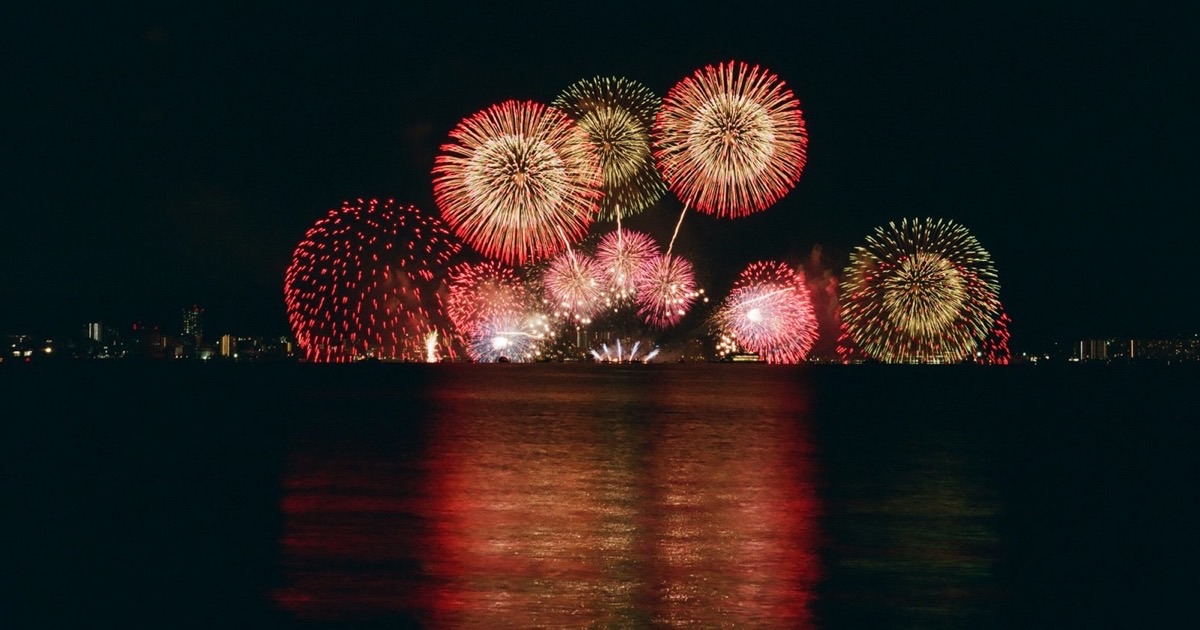
Japanese summers have something that everyone who lives here remembers forever: the sound of fireworks echoing in your chest on an August night, the smell of gunpowder mixed with food aromas from street stalls, and the sea of people in yukata sitting packed along the riverbanks. The Japanese call it hanabi taikai (花火大会) — not just "firing fireworks," but a full-scale festival. This article summarizes the August 2026 schedule by region so you can choose the festival closest to you, along with practical tips for first-time Vietnamese visitors.
⚠️ Read before making plans
The schedule below is compiled from Japanese fireworks specialty websites (Walkerplus, Weathernews, JR East) at the time of writing. However, there are three things you must keep in mind:
- Fireworks are very frequently postponed or canceled due to weather. Light rain won't stop them, but strong winds or thunderstorms mean postponement to a backup date (予備日) or outright cancellation. Always check the official website or social media accounts of the organizers on the day of the event.
- Dates and times may change due to safety reasons, budget constraints, or scheduling conflicts — many festivals in 2026 have shifted their schedules compared to previous years (see the Kansai section below for a very clear example).
- Seated tickets usually sell out months in advance. If you want decent seating at major festivals, you need to book early; otherwise, arrive very early to claim a standing spot.
1. Tokyo and the Kanto Region
Tokyo has the highest density of festivals in the country and also the largest crowds. A few major milestones for August 2026:
| Date | Festival | Location | Scale |
|---|---|---|---|
| 8/1 | Itabashi Hanabi (67th) | Arakawa Riverbank, Itabashi | ~15,000 fireworks · ~550,000 attendees |
| 8/1 | Edogawa-ku Hanabi (51st) | Edogawa Riverbank | ~14,000 fireworks |
| 8/1 | Hachioji Hanabi | Fujimori Park, Hachioji | ~4,000 fireworks · ~90,000 attendees |
| 8/8 | Jingu Gaien Hanabi | Meiji Jingu Gaien, Shinjuku | ~10,000 fireworks · ~1 million attendees |
| 8/8 | Okutama Nouryou Hanabi (49th) | Atago Mountain Square, Okutama | ~1,000 fireworks |
| 8/11 | Hachijojima Nouryou Hanabi (25th) | Sokodo Port, Hachijo Island | 650 fireworks |
| 8/29 | Akishima Kujira Matsuri Yume Hanabi (54th) | Akishima City Stadium | ~4,000 fireworks · 45,000 attendees |
Tips specifically for Tokyo: festivals in Tokyo are overwhelmingly crowded — Jingu Gaien can draw up to a million people. The nearest train stations often restrict entry and exit points, and police set up one-way pedestrian routes. If you are traveling with young children, consider suburban festivals (Okutama, Akishima) — they are less crowded, more relaxed, and kids won't risk getting lost.
2. Tohoku — Home to Japan's Most Prestigious Festival
If you can only go once in your lifetime, fireworks enthusiasts will choose Tohoku:
- August 29 — Omagari "Zenkoku Hanabi Kyougi Taikai" (大曲の花火), Daisen City, Akita Prefecture. This is the national fireworks competition festival, dating back to 1910, where the finest fireworks artisans in Japan compete. One of Japan's "three great hanabi." Going to Omagari is not like watching regular fireworks — it is like attending an art competition.
- August 6 — Sendai Tanabata Hanabi, Miyagi: opening the famous Sendai Tanabata Festival.
- August 7 — Aomori Hanabi (72nd) at Aomori Port, about 10,000 fireworks, held in conjunction with the famous Nebuta Festival — Nebuta float boats drifting on the sea against a backdrop of fireworks.
- August 7 — Ichinoseki (Iwate) ~10,000 fireworks and Yonezawa (Yamagata) ~5,000 fireworks.
- August 9 — Kitakami Michinoku Geinou Matsuri, Iwate: floating lanterns on the river accompanied by fireworks.
Tohoku is far from Tokyo, so if you plan to go to Omagari on August 29, book your Shinkansen tickets and hotel starting now — train services add extra runs but still sell out, and hotels in Daisen and Akita fill up months in advance.
3. Koshinetsu — Niigata, Nagano, Yamanashi
- August 2–3 — Nagaoka Matsuri Dai Hanabi (Niigata): about 20,000 fireworks over two nights along the Shinano River, fired from 19:20 to 21:10. Also among the "three great hanabi." (This year's event has already passed — if you are reading this after August 3, mark your calendar for next year.)
- August 9 — Niigata Matsuri Hanabi (Niigata City): about 340,000 attendees, fired over the Shinano River.
- August 14 — Ashinano Hanabi (Azumino, Nagano): ~4,000 fireworks, ending with a wide starmine display.
- August 14 — Asashina Nouryou Hanabi (Saku, Nagano): ~2,000 fireworks, ~30,000 attendees.
- August 15 — Suwako Hanabi (Lake Suwa, Nagano): about 12,000 fireworks launched from boats on the lake, 19:30–20:30 — the sound echoing against the cliffs around the lake creates a unique resonance found nowhere else.
- August 15 — Roraku Toro Nagashi & Hanabi (Nagano City): 4,000 fireworks combined with floating lanterns.
4. Kansai — Important Note for 2026
This is where many people will be disappointed if they don't read ahead: two familiar Kansai festivals in 2026 will NOT take place in August:
- Naniwa Yodogawa Hanabi (38th) — postponed to October 17, 2026.
- Minato Kobe Hanabi — postponed to October 19–23, 2026, fired from 18:30–18:50 daily at Meriken Park.
In August, Kansai still has small and medium-sized festivals, for example, August 22 — SBI Mai Hanabi in Osaka-Sennan at Sennan Long Park (gates open at 15:00, fireworks scheduled for 19:15–20:15). If you live in Osaka/Kobe and want to see large-scale hanabi, save your schedule for October this year — and remember that October weather is cooler, making viewing much more comfortable than the 35-degree heat of August.
5. Kyushu
- August 1 — Okawa Hanabi (Okawa, Fukuoka)
- August 5 — 367th Chikugogawa Hanabi (Kurume, Fukuoka): about 12,000 fireworks — one of the oldest festivals in Kyushu, as suggested by the number "367th."
- August 8 — Yume HANABI 2026 (Ogori, Fukuoka)
- August 13 — Kanmon Kaikyo Hanabi 2026 (Kitakyushu): fired across the Kanmon Straits, viewable from both the Fukuoka and Yamaguchi shores.
- August 15 — Yamaga (Kumamoto): fireworks during Yamaga's biggest summer festival.
- August 22 — Amagigawa Hanabi (Asakura) and Miyako-machi Natsu Matsuri
- August 25 — Mizuta Tenmangu Sentoumyou Hanabi (Chikugo)
- August 29 — Matsuri Minami 2026 (Kitakyushu)
- Notable mention: Sasebo (Nagasaki) features a festival scaling up to ~22,000 fireworks — one of the largest numbers in Kyushu.
6. Hokkaido
Hokkaido fires fireworks sporadically throughout the summer, not clustered together like Honshu. A major milestone for August 2026: August 13 — fireworks along the Tokachi Riverbanks, Obihiro City, 19:20–21:00 (postponed to August 14 in case of heavy rain). Additionally, early August features small festivals in Sapporo (Bankei Ski Area), Otaru, and Sunagawa. A major advantage of Hokkaido: August evenings are cool, so watching fireworks doesn't require enduring the oppressive heat of Tokyo or Osaka.
7. Going to watch hanabi: things that often surprise Vietnamese people
- Much more crowded than you think. One million people at Jingu Gaien is no exaggeration. Train stations after the event can have lines lasting 40–60 minutes before you can board a train.
- Arrive 2–3 hours early to get a spot. Japanese people lay down tarps to claim spots starting in the afternoon. Bringing a tarp (レジャーシート, sold at Daiso for 110 yen) is a must.
- Mobile network signal is very weak in large crowds. This is the most frustrating thing: messages won't send, calls won't go through, and maps keep spinning. See the section below.
- Restroom lines are extremely long. Go before entering the central area, don't wait until you urgently need to.
- You must take your trash home with you. Many places do not have public trash cans — carrying a plastic bag for your own trash is basic etiquette.
- Mosquitoes. Riverbanks in the evening are full of mosquitoes; insect repellent spray or patches are lifesavers.
8. Mobile data and phone preparation — don't underestimate it
It sounds minor, but this is what ruins the evening for many people:
- Set a SPECIFIC meeting spot and specific time before splitting up — for example, "exit number 3 of combini X at 21:30." In massive crowds, making phone calls is nearly hopeless.
- Take screenshots of maps and tickets to use offline when the network gets congested.
- Bring a portable power bank. Recording fireworks for 30 minutes drains your battery noticeably; running out of battery in a sea of people is a very stressful situation.
- Check if your data plan still has allowance. Many people run out of data right during festival season because they are constantly recording videos and posting stories. If your data runs out before the 25th every month, your plan might not fit your needs — check out our article "Save half on your phone bill in Japan" to re-evaluate.
If you are using a small data plan and plan to attend several festivals this summer, HD TELECOM can consult you on temporarily upgrading your plan or choosing a better-suited package — message us in Vietnamese for free consultation.
Conclusion
August in Japan comes only once a year, and you won't always be here. Pick a festival near you — whether it's the grand Omagari in Akita or a small gathering by a countryside river — wear a yukata if you have one, bring a tarp and power bank, go early, and look up. Summers in Japan will become memories you tell your children and grandchildren about.
Final note: all date and time information in this article is subject to change. Before going, please check the official website of that specific festival — especially on the day of the event, because the weather dictates everything.
Related products
Find your plan with HD TELECOM
SIM, eSIM and Pocket WiFi — genuine quality, clear pricing, 24/7 support.
Christmas in Japan 2026: Christmas Markets, Where to Go and What to Eat
Omagari August 29 — The National Fireworks Competition, the pinnacle of Japanese hanabi art
Tokyo Fireworks in August 2026: Detailed Schedule and How to Survive the Crowd

Japan travel 5–14 days: Where to buy travel eSIM, how to use it, how much does it cost?