

Omagari August 29 — The National Fireworks Competition, the pinnacle of Japanese hanabi art
August 9, 2026
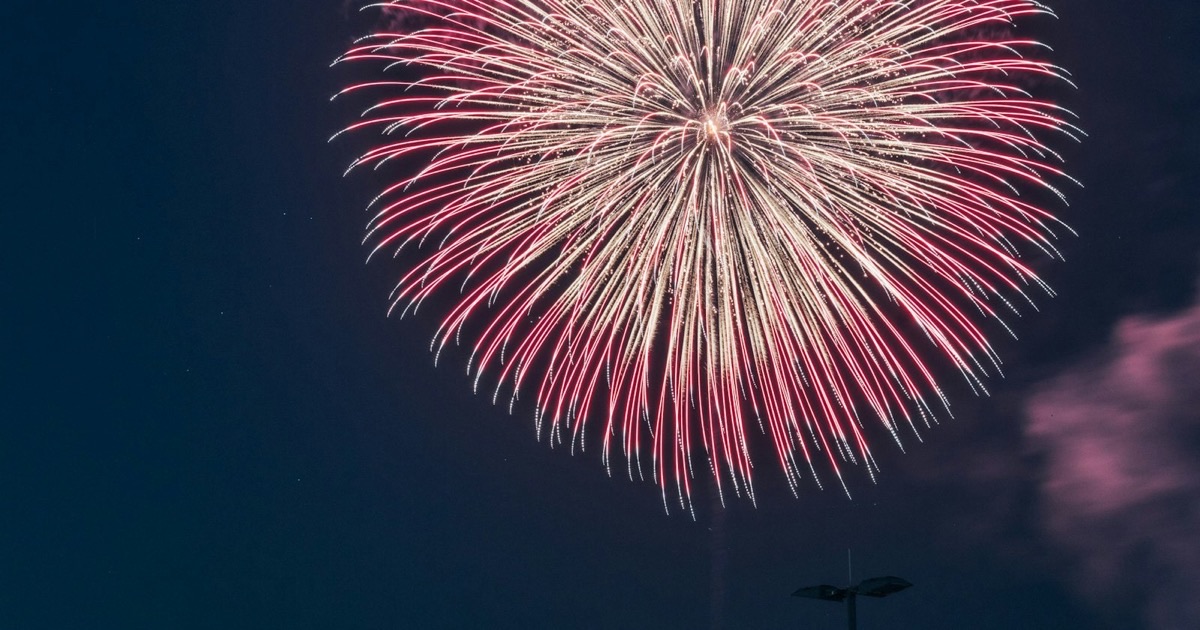
There are three major fireworks festivals in Japan known as the "Big Three Hanabi," and among them, Omagari (大曲の花火) is the one most respected by industry professionals. The reason is simple: this is not just a show, but a national competition — where the finest fireworks artisans in Japan bring their works to be judged. In 2026, the festival will take place on Saturday, August 29 along the banks of the Omono River in Daisen City, Akita Prefecture.
1. Why is Omagari special?
The festival dates back to 1910 — over a century of continuous operation. What makes it unique:
- This is a competition featuring the most prestigious awards in the Japanese fireworks industry. Artisans who win at Omagari gain nationwide recognition; the highest prize is named after the Prime Minister.
- Artisans ignite their own creations by hand. Instead of technicians pushing buttons to a preset script, each display is an artisan's personal signature.
- It features a daytime fireworks category (昼花火). Very few places still preserve this: daytime fireworks do not use light but rather colored smoke — artisans shape patterns using blue, red, and yellow smoke against the bright sky. This is an ancient technique maintained at a competitive scale only at Omagari.
- The finale "Dai Warimono" and the free-style performance are choreographed to music, usually prompting the audience to rise and applaud.
2. How to "Understand" the Show?
First-time visitors often just think "how beautiful." But knowing a few basic concepts will make viewing much more enjoyable — much like watching soccer while understanding the offside rule:
Three criteria judged by the panel
- Roundness (真円): the bursting shell must form a perfect sphere viewed from every angle. Even a slight distortion loses points.
- Uniformity of "petals": the rays of light must spread evenly, with the same length and simultaneous extinction. A single misaligned ray is a flaw.
- Color and color transition (変化): many works change color 2–3 times during a single burst — transitions must be decisive, simultaneous, and without bleeding.
A few words worth knowing
- Warimono (割物): traditional spherical bursting fireworks — the main category of the competition.
- Starmine (スターマイン): rapid-fire sequences choreographed to a rhythm, usually used for free-style performances.
- Shakudama (尺玉): a 1 shaku sized shell (~30cm), spreading about 320m — the standard size for major displays.
Quick tip: when a shell bursts, try judging it yourself based on the three criteria above. You will be surprised to find yourself starting to see the differences between works — and that is the true joy of Omagari.
3. How to get to Daisen?
From Tokyo
Take the Akita Shinkansen to Omagari Station, about 3.5 hours. On the day of the festival, JR East usually runs special extra trains for both outbound and late-night inbound trips. However, tickets sell out very fast — book as early as possible, especially for the night return trip.
From other regions
You can fly to Akita Airport and then take a train or bus to Daisen. Many travel agencies sell all-inclusive tours featuring transportation, seating tickets, and accommodation — more expensive than traveling independently, but saves the headache of ticket booking.
Accommodation — The Biggest Challenge
Hotels in Daisen and Akita City book up months in advance, and prices surge significantly on that night. Two approaches used by seasoned travelers:
- Stay further away (Akita, Morioka, or even Sendai) and catch a train back the next morning.
- Make a day trip using late extra trains — tiring but feasible if departing from Tokyo.
4. Seating Tickets
Omagari has paid seating areas (桟敷席 sajikiseki) on the riverbank, sold through advance registration/lotteries months ahead and always sold out. If you do not have a ticket:
- There is still a free viewing area — but you must go very early (from midday) to secure a spot.
- Further areas along the riverbank still offer good visibility because Omagari fireworks are launched very high.
- Some tour packages include seat tickets — if you want to guarantee a spot, this is a detour worth considering.
5. Sample Itinerary for a Day in Omagari
| Time | Activity |
|---|---|
| Morning | Depart from Tokyo via Shinkansen (approx. 3.5-hour journey) |
| Midday | Arrive in Omagari, have lunch, buy supplies at a combini (water, snacks — it will be very crowded by afternoon) |
| Afternoon | Head to the riverbank to secure a spot; watch the daytime fireworks competition — don't miss it, this is exclusive to Omagari |
| Dusk | Rest, have dinner with previously bought food, prepare a light jacket (Akita nights are cooler than Tokyo) |
| Evening | Main competition categories and grand displays |
| After the finale | Wait 30–60 minutes for the crowd to thin out before heading to the station |
6. Practical Preparations
- A leisure sheet (tarp to sit on) and a light jacket — late August nights in Akita are much cooler than in Tokyo.
- A thin raincoat (poncho style) instead of an umbrella — umbrellas block the view of the person behind, considered impolite in crowded places in Japan.
- Portable charger: recording video all evening drains battery quickly.
- Pre-purchased food and drinks: food stalls are crowded and run out early.
- Trash bag to take your waste back.
- Cash: many local stalls do not accept cards.
7. Mobile Network Signal in Omagari
Daisen is a small city, and on the festival night, hundreds of thousands of people converge — network usage density spikes compared to normal days, making signal congestion almost certain. Prepare by:
- Taking screenshots of train tickets, seat tickets, area maps, and seat numbers for offline use.
- Arranging a specific meeting point with your group; do not rely on phone calls.
- Downloading the return train schedule in advance — if the network is jammed, you will still know when the last train departs.
- If you are traveling from another region and using a small data plan, consider topping up extra data for that day.
Conclusion
Omagari is not a convenient trip: it's far, hard to book tickets, hard to find lodging, and requires waiting for hours. But for anyone who has been, it is one of the most memorable nights of living in Japan — the moment tens of thousands of people hold their breath together and then erupt in cheers after a perfectly round fireworks shell is indescribable in words. If you can arrange your schedule for August 29 this year, give it a try.
Dates, times, and formats are subject to change — check the official festival website before heading out, especially on the day of the event due to weather conditions.
Related products
Find your plan with HD TELECOM
SIM, eSIM and Pocket WiFi — genuine quality, clear pricing, 24/7 support.

Kansai 2026: Why Naniwa Yodogawa and Minato Kobe are not happening in August
August Koshinetsu Fireworks: Lake Suwa, Niigata, Nagano — Where Fireworks Echo Through the Mountains
Tokyo Fireworks in August 2026: Detailed Schedule and How to Survive the Crowd
Japan August 2026 Fireworks Schedule: Where to Watch, Dates, and How to Get There