
Kanazawa in Late Autumn: A Two-Day Itinerary with Kenroku-en
November 12, 2026
1. Quick Answer
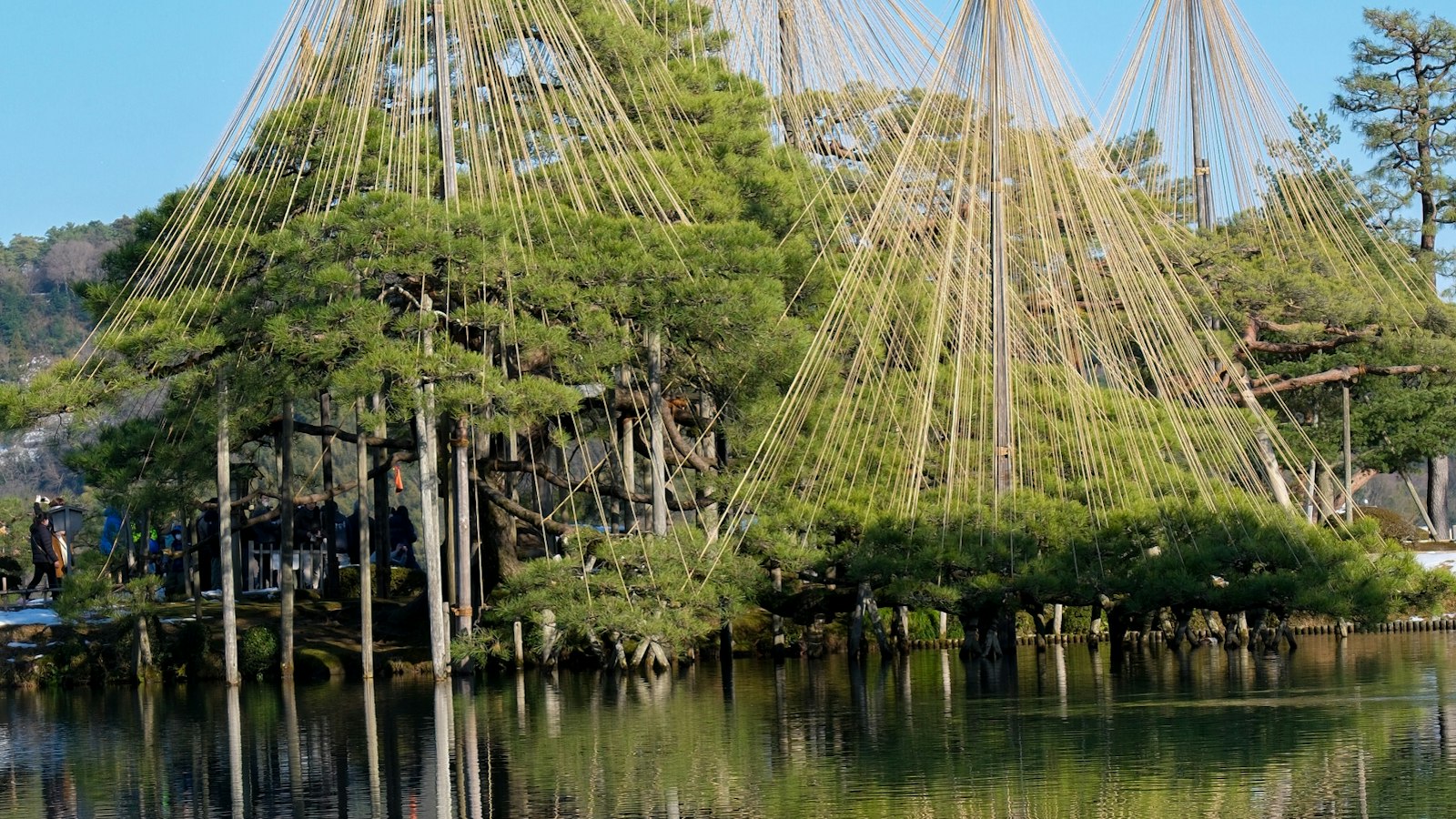
Kanazawa (Ishikawa Prefecture) is at its best in late autumn: leaves at Kenroku-en garden and Kanazawa Castle Park usually peak around November 10–25, 2026, with color lasting into early December. At the same time the garden puts up its yukitsuri (umbrella-shaped snow ropes on pine trees, from around early November to mid-March), and snow-crab season starts at Omicho Market. Two days covers the highlights:
- Day 1: Kenroku-en (¥320), Kanazawa Castle Park (free), the 21st Century Museum of Contemporary Art, and the garden illumination in the evening on scheduled nights.
- Day 2: Omicho Market in the morning, the Higashi Chaya teahouse district and the Nagamachi samurai district.
From Tokyo, the Hokuriku Shinkansen takes about 2.5 hours. In the city, the Kanazawa Loop Bus costs ¥220 per ride or ¥800 for a day pass.
We checked these details on November 12, 2026, against the sources listed at the end. Illumination dates, foliage timing and prices can change; check Visit Kanazawa and the garden's official site before you go.
2. Why Visit Kanazawa in Late Autumn?
Kanazawa was the seat of the wealthy Maeda clan in the Edo period and largely escaped wartime damage, so its teahouse districts, samurai quarter and gardens survive. Late autumn brings three things at once:
- Red and gold leaves in Kenroku-en, around the castle and along the city's ginkgo-lined streets (which peak in early November).
- Yukitsuri: the icon of Kanazawa's winter, ropes strung from a central pole to pine branches so they don't break under heavy snow.
- Cold-season food: snow crab, yellowtail (buri) and Sea of Japan seafood.
Compared with Kyoto, Kanazawa is less crowded, its main sights are walkable, and it fits nicely into a two-day trip.
3. Kenroku-en: Tickets, Hours and Illuminations
| Item | Details |
|---|---|
| Admission | ¥320 adults; ¥500 combo with another facility (such as the castle turrets) |
| Autumn hours | 8:00–17:00 |
| Free early entry | About 6:30–8:00 via the Mayumizaka or Katsurazaka gates (times vary by season) |
| Foliage peak | Around November 10–25, 2026, lasting into early December |
| Illuminations (free) | 18:00–20:45 on selected November nights: November 7, 14, 15, 21, 22, 28 and 29, 2026 (per Visit Kanazawa) |
| Yukitsuri | Put up from around early November, kept until around mid-March |
Kenroku-en is considered one of Japan's three great gardens. Don't miss the two-legged Kotoji-toro stone lantern by Kasumigaike Pond, the garden's classic photo spot, or the Karasaki pine with its cone of yukitsuri ropes. Going early in the morning helps you beat tour groups and catch the best light.
4. Kanazawa Castle Park and Gyokusen'inmaru Garden
Right next to Kenroku-en, Kanazawa Castle Park is free to enter. Walk along the stone walls, the Ishikawa-mon gate and the reconstructed turrets (entering the turrets requires a ticket). Gyokusen'inmaru Garden within the castle grounds is illuminated after dark on Friday, Saturday and pre-holiday evenings, which pairs well with a Kenroku-en light-up.
5. Higashi Chaya Teahouse District
A district of two-story wooden teahouses (ochaya) from the Edo period, where geisha performed. Today it's full of craft shops, cafés and gold-leaf stores. Kanazawa produces most of Japan's gold leaf, so you'll find gold-leaf ice cream, crafts and cosmetics.
- Arrive early (before 10 a.m.) or after 4 p.m. for quieter streets and photos.
- Some teahouses, such as Shima, are open to visitors (fee charged).
- Nearby Kazuemachi along the Asano River is another historic teahouse street, and quieter.
6. Nagamachi Samurai District
Lanes of earthen walls, canals and wooden gates once lived in by samurai families. The Nomura family residence has a small garden that's beautiful in autumn (admission charged). In late autumn the earthen walls are covered with straw mats (komogake) to protect them from snow, another seasonal sight.
7. Omicho Market and Snow-Crab Season
Omicho is “Kanazawa's kitchen,” with a few hundred stalls selling seafood and produce, plus places to eat. Late autumn is when it's most exciting:
- Snow crab: the Sea of Japan snow-crab season usually opens in early November (in Ishikawa, typically from November 6). Male crabs are called kano-gani; smaller females, kobako-gani, have a shorter season. Prices vary widely by size and day.
- Kaisendon: bowls of rice topped with fresh seafood; popular shops have queues before opening.
- Snacks: grilled oysters, scallops and seafood croquettes from the stalls.
Arrive before 10 a.m. to avoid crowds, and note that some stalls close on Wednesdays or Sundays – NEEDS VERIFICATION for the shop you plan to visit.
8. 21st Century Museum of Contemporary Art
A round glass building near Kenroku-en. The public zone is free; exhibitions and some famous works (such as Leandro Erlich's “swimming pool”) require tickets and may need timed reservations at weekends. It's a good choice on rainy days, which are common in Kanazawa in late autumn.
9. Suggested Two-Day Itinerary
Day 1: Garden, Castle and Art
- Early morning: enter Kenroku-en at opening (or during free early entry) and spend about 1.5 hours.
- Lunch: near the garden; try jibu-ni, Kanazawa's simmered duck or chicken dish.
- Afternoon: the 21st Century Museum, then walk over to the castle park.
- Evening: on scheduled nights, see the Kenroku-en and Gyokusen'inmaru illuminations; dinner of seafood in the Katamachi or Korinbo area.
Day 2: Market, Old Town and Samurai
- Morning: Omicho Market, with a kaisendon breakfast.
- Late morning: Higashi Chaya and Kazuemachi; try gold-leaf ice cream.
- Afternoon: Nagamachi samurai district and the Nomura residence.
- Late afternoon: buy souvenirs at Kanazawa Station (the wooden Tsuzumi-mon gate outside is a famous photo spot) and board the Shinkansen.
Got an extra day? Take a bus to Shirakawa-go (see our guide to the Shirakawa-go light-up 2027) or visit the Kaga onsen towns.
10. Getting to and Around Kanazawa
| From | How | Time (approx.) |
|---|---|---|
| Tokyo | Hokuriku Shinkansen (Kagayaki, Hakutaka) | about 2.5 hours |
| Osaka, Kyoto | Thunderbird limited express to Tsuruga, then the Hokuriku Shinkansen | about 2–2.5 hours – NEEDS VERIFICATION by timetable |
| Nagoya | Shirasagi limited express to Tsuruga and change to the Shinkansen, or a highway bus | varies |
| Takayama | Highway bus via Shirakawa-go | varies |
In town, the Kanazawa Loop Bus circles the main sights for ¥220 per ride or ¥800 for a day pass. Many sights are walkable: Kenroku-en, the castle and the 21st Century Museum are minutes apart. If you have a JR regional pass such as the Hokuriku Arch Pass, check its coverage before buying single tickets.
11. Weather and What to Pack
- Kanazawa is famously rainy; locals say you can forget your lunch but never your umbrella. Bring a folding umbrella and waterproof shoes.
- In late November, days are a little above 10°C and evenings are colder; dress in layers for the illuminations.
- From December, snow is possible; snow-covered yukitsuri are beautiful, but bring non-slip shoes.
12. Your Phone and Mobile Data in Kanazawa
On this trip you'll need data to check updated illumination schedules, look up Loop Bus times, translate menus at Omicho and book museum time slots. On rainy days you'll be changing plans often and need quick searches. Download offline maps and save e-tickets in advance.
Need mobile data during your Japan trip? Compare HD Telecom's available eSIM and Wi-Fi options, and check device compatibility before choosing a plan. Visitors can read our guide to travel eSIMs for 5–14 day trips. For longer stays, see HD Telecom's Monthly Data eSIMs (your phone must support eSIM) and Monthly Pocket WiFi rentals, and check each plan's data allowance, the speed after the allowance runs out and the terms on the product page. For more seasonal dishes, see our guide to autumn food in Japan.
13. Estimated Two-Day Budget (Excluding Hotels and Shinkansen)
| Item | Estimate |
|---|---|
| Kenroku-en admission | ¥320 (¥500 combo ticket) |
| Kanazawa Castle Park | Free (turrets charged separately) |
| 21st Century Museum exhibitions | Varies by exhibition – NEEDS VERIFICATION |
| Loop Bus day pass | ¥800 |
| Nomura residence and a teahouse visit | roughly ¥1,000–1,500 combined – NEEDS VERIFICATION |
| Food (kaisendon, jibu-ni, snacks, dinner) | about ¥6,000–12,000; snow crab can cost much more |
These are rough figures to help you plan. If you want to splurge on snow crab, budget separately, as a whole male crab can be very expensive.
14. Rainy-Day Plan
Rain is common in Kanazawa in late autumn, so it helps to have a backup plan:
- Museums: the 21st Century Museum, the D.T. Suzuki Museum (a quiet space for reflection), and the Kanazawa Phonograph Museum or craft museums in the old districts.
- Hands-on crafts: gold-leaf workshops, where you decorate a small item such as chopsticks or a box, are popular and take about an hour. Book ahead at weekends.
- Markets and food halls: Omicho Market is covered, and the department stores around Korinbo have large food halls.
- Gardens in the rain: Kenroku-en's moss and stone lanterns look beautiful in light rain, and there are fewer visitors. Just bring waterproof shoes.
15. Common Mistakes to Avoid
- Arriving at Kenroku-en at midday. Tour groups peak late morning to mid-afternoon. Early entry or late afternoon is calmer.
- Assuming every night has an illumination. The Kenroku-en light-ups are on specific dates only; check before planning your evening.
- Going to Omicho too late. Popular kaisendon shops can sell out, and many stalls close by late afternoon.
- Underestimating walking distances. The sights are close, but walking between Higashi Chaya, the castle and Nagamachi adds up. Use the Loop Bus when your legs are tired.
- Not booking hotels early. Foliage weekends and the start of crab season are busy, so book accommodation as soon as your dates are set.
16. Where to Stay in Kanazawa
- Around Kanazawa Station: the most convenient for the Shinkansen and buses, with many business hotels. Good for short stays and early departures.
- Korinbo and Katamachi: the central shopping and dining district, within walking distance of Kenroku-en, the castle and Nagamachi. Best if you want to eat out in the evening and walk back.
- Near Higashi Chaya: machiya townhouse rentals and small guesthouses give you a quiet, atmospheric stay, but check access with luggage, as some lanes are narrow.
- Kaga Onsen area: if you'd like a hot-spring ryokan, the onsen towns of Kaga are reachable by train and can be combined with Kanazawa.
Foliage weekends and the opening of crab season are busy, so compare prices early and look at cancellation conditions before you book.
17. FAQ
Can I visit Kanazawa as a day trip from Tokyo?
Yes, since the Shinkansen takes about 2.5 hours, but you'll only have time for Kenroku-en and one old district. Staying one night is much more relaxed.
Are the Kenroku-en illuminations free?
According to the sources we checked, the November illumination nights are free. Confirm exact dates on Visit Kanazawa.
How much does snow crab cost in Kanazawa?
Prices vary widely by size, type (male or female) and day. Eating at market stalls is usually cheaper than restaurants. Ask the price before ordering.
When are the yukitsuri put up?
Usually from around early November, staying up until mid-March.
Is Kanazawa as crowded as Kyoto?
Kanazawa does get busy in foliage season, especially at weekends, but it's usually less crowded than Kyoto. Early mornings and weekdays are most comfortable.
Is the JR Pass useful for Kanazawa?
The nationwide JR Pass covers the Hokuriku Shinkansen between Tokyo and Kanazawa, and regional passes such as the Hokuriku Arch Pass may also suit you. Compare the pass price with single tickets for your actual route before buying.
What souvenirs are typical of Kanazawa?
Gold-leaf crafts and cosmetics, Kutani porcelain, traditional wagashi and seafood products from Omicho. Check your home country's rules before bringing back food.
18. Conclusion
Two days in Kanazawa in late autumn give you Kenroku-en's foliage, the first yukitsuri of the season, historic teahouse streets, the samurai quarter and snow crab at Omicho. Go between about November 10 and 25 for the best color, check the illumination dates, pack an umbrella and waterproof shoes, and keep your phone connected so you can switch plans when it rains.
Sources (checked November 12, 2026)
Related products
Find your plan with HD TELECOM
SIM, eSIM and Pocket WiFi — genuine quality, clear pricing, 24/7 support.