

Seishun 18 Kippu Winter 2026–27: Prices, Rules and Sample Itineraries
October 30, 2026
1. Quick Answer
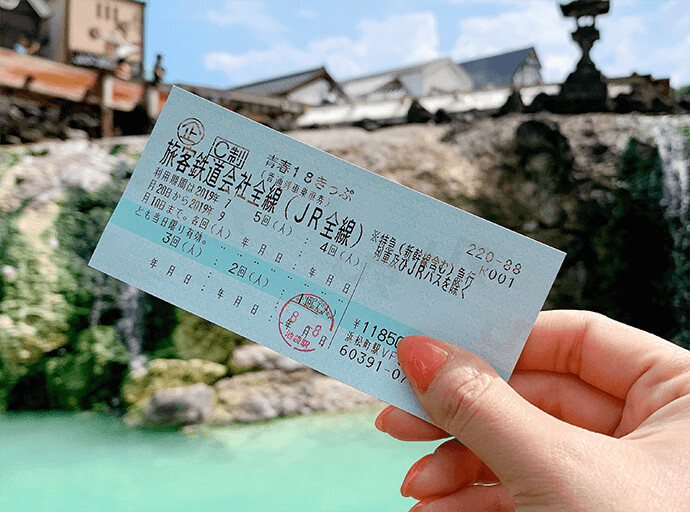
The winter 2026–27 Seishun 18 Kippu (青春18きっぷ) is valid from December 11, 2026 to January 11, 2027, and goes on sale on November 27, 2026. There are two versions: a 3-consecutive-day ticket for ¥10,000 and a 5-consecutive-day ticket for ¥12,050. Adults and children pay the same price. While the ticket is valid, you get unlimited rides on JR local and rapid trains across Japan, but not on the Shinkansen or limited express trains.
The ticket pays off if the regular fares you would pay each day add up to more than about ¥3,334 (3-day ticket) or ¥2,410 (5-day ticket). It suits travelers with time to spare who want to save money: students, solo travelers and anyone who enjoys watching the countryside go by. It does not suit a tight schedule. Tokyo to Osaka by local trains takes about 8 to 9 hours, compared with about 2.5 hours on the Nozomi Shinkansen.
We checked these details on October 30, 2026, against the JR Group announcement and the sources listed at the end. Confirm on JR's websites before you buy.
2. What Is the Seishun 18 Kippu, and Who Can Buy It?
The Seishun 18 Kippu is a seasonal ticket from the JR Group, sold three times a year: spring, summer and winter. Despite the “18” in the name (it refers to the age of 18), there is no age or nationality restriction. Residents of Japan, international students and tourists can all buy it. That is a big difference from the Japan Rail Pass and most regional passes, which are limited to short-term visitors or non-Japanese passport holders.
JR changed how the ticket works in 2024. It used to have five separate day-uses that could be spread out or shared among several people. Now the ticket covers consecutive days: you pick a start date when you buy it, and it is valid for 3 or 5 days in a row. JR kept this rule for 2026.
| Item | 3-day ticket | 5-day ticket |
|---|---|---|
| Price (adult and child) | ¥10,000 | ¥12,050 |
| Average per day | about ¥3,334 | about ¥2,410 |
| Winter validity | Dec 11, 2026 – Jan 11, 2027 | |
| Sales start | Nov 27, 2026 | |
| Last day of sale | Jan 9, 2027 | Jan 7, 2027 |
| Users | One ticket per person, non-transferable | |
3. Which Trains Are Covered?
Covered
- Local and rapid trains (ordinary cars, non-reserved seats) of every JR company nationwide.
- JR BRT bus rapid transit services.
- The JR Miyajima ferry to Miyajima island in Hiroshima.
- On a few sections served only by express trains, such as the Sekisho Line between Shintoku and Shin-Yubari in Hokkaido, you can use non-reserved seats and vacant reserved seats on those trains.
Not covered (extra ticket required)
- The Shinkansen and limited express trains (for example Azusa, Hitachi and Thunderbird).
- Non-JR lines such as Tokyo Metro, Toei, Keisei, Odakyu, Kintetsu and Hankyu.
- Third-sector lines that were split off when new Shinkansen lines opened, except for a few sections you may ride straight through without getting off: Aoimori Railway (Aomori–Hachinohe), Ainokaze Toyama Railway (Toyama–Kurikara), IR Ishikawa Railway (Kurikara–Tsubata) and HapiLine Fukui (Tsuruga–Echizen-Hanandō). If you get off at a station that isn't allowed, you must pay the full fare for the whole trip.
To reach Hokkaido on this ticket, you need the Hokkaido Shinkansen Option Ticket for ¥4,650. It is valid for one day, on a date when your Seishun 18 Kippu is valid. It covers vacant ordinary-car seats on the Hokkaido Shinkansen (Shin-Aomori – Kikonai) and ordinary trains on the Dōnan Isaribi Railway (Kikonai – Goryōkaku).
4. Where to Buy and How to Use It
- Buy: at JR ticket offices (みどりの窓口) or reserved-seat ticket machines (指定席券売機) at JR stations, up to one month before your start date.
- Pick a start date: you choose your first day at purchase. You may change the start date once before use. You cannot switch between the 3-day and 5-day versions.
- At the gates: the ticket works in automatic ticket gates. At small unstaffed or gateless stations, show it to staff or the conductor.
- Refunds: unused tickets can be refunded for a ¥220 fee. Once you have started using the ticket, there is no refund, even if snow delays or cancels your trains.
One important point: IC cards such as Suica and ICOCA cannot replace the Seishun 18 Kippu. Don't tap your IC card at the gate while traveling on this ticket, or the fare will be deducted from your card.
5. Is It Worth It? A Quick Calculation
Add up the basic fares (乗車券) for the trips you plan each day and compare them with the ticket's average daily cost.
| Option | Typical cost | Time |
|---|---|---|
| Nozomi Shinkansen Tokyo – Shin-Osaka, reserved seat (regular season) | ¥14,720 one way | about 2.5 hours |
| Local trains Tokyo – Osaka on the Seishun 18 Kippu | about ¥2,410–¥3,334 (one ticket day) | about 8–9 hours, depending on connections |
| Local trains Tokyo – Nagoya | one ticket day | about 6 hours |
| Local trains Osaka – Hiroshima | one ticket day | about 5 hours |
As a rule of thumb, if you make one round trip a day and each leg costs about ¥1,700 or more, the 3-day ticket pays off. With the 5-day ticket, legs of about ¥1,200 or more are enough. These are estimates, so check real fares for your route in a journey-planner app before you buy.
6. Sample Winter Itineraries
3-Day Ticket: Tokyo – Nagoya – Kyoto/Osaka
- Day 1: leave Tokyo in the morning on the Tokaido Line, stop for lunch in Shizuoka or Hamamatsu, and reach Nagoya by evening.
- Day 2: ride from Nagoya to Kyoto (about 2.5 to 3 hours on local trains) and sightsee in the afternoon.
- Day 3: move around Kansai (Kyoto – Osaka – Nara – Kobe) for the day. All of these hops are on JR lines.
This gets you one way across Japan for very little. If you need to get back to Tokyo quickly, buy a Shinkansen ticket for the return. Our guide to riding the Shinkansen between Tokyo, Kyoto and Osaka explains how to choose trains and buy tickets.
5-Day Ticket: Into Snow Country
Head north from Tokyo on the Tohoku Line through Utsunomiya, Kōriyama and Sendai, then branch off onto scenic local lines in snow country. In winter, trains in heavy-snow areas can be delayed or suspended. Build in spare time and don't book hotels too far along each day's route. If you plan to visit the Sapporo Snow Festival in February, note that it falls outside the winter validity period.
Day Trips From Tokyo
If you are based in Tokyo, you can spend each day of a 3-day ticket on a long day trip: Nikko (via Utsunomiya and the JR Nikko Line), Matsumoto (Chuo Line) or the Boso Peninsula (Uchibo and Sotobo lines). Check which sections are JR first, because many sightseeing spots are on private railways.
7. Winter Tips
- Avoid the year-end peak. Around December 28 to January 3, many people travel home. Local trains near big cities get very crowded, especially in the morning. If you can, travel in mid-December or after January 4.
- Check the last train. In rural areas there may be only one train an hour, and the last one can leave before 9 p.m.
- Bring food. Small stations have few shops, so stock up at a big station or convenience store before boarding. Our guide to what to buy at a Japanese konbini has ideas.
- Pack light. Local trains have no large luggage racks. A backpack or cabin-size suitcase is easiest.
- Green cars and paid seats. Some rapid trains have Green cars or reserved seats that cost extra. The Seishun 18 Kippu only covers ordinary cars; supplements for these seats depend on each JR company's rules – NEEDS VERIFICATION at the station.
8. Common Mistakes and How to Avoid Them
Most problems with the Seishun 18 Kippu come from a handful of predictable mistakes. Knowing them in advance saves money and stress.
Choosing a start date before checking the weather
Because the days are consecutive, a snowstorm on day two still uses up day two. For trips into snow country, check the medium-range forecast before you buy and remember you can change the start date once before use. If heavy snow is forecast, shift the trip rather than lose a day.
Assuming every “rapid” train is covered
Ordinary rapid trains are covered, but some trains that look like rapid services are limited expresses or have paid reserved cars. In a journey-planner app, set the search to exclude limited express and Shinkansen trains (often a setting called “local trains only” or “Seishun 18”). Then check the train type on the departure board before boarding.
Planning too far for one day
Tokyo to Osaka in one day is possible but tiring, with several transfers and few chances to sit down for a meal. Splitting the journey with a night in Nagoya, or stopping for an afternoon in Shizuoka, Hamamatsu or Gifu, usually makes the trip far more enjoyable at almost no extra transport cost.
Forgetting non-JR sections
Many sightseeing spots sit on private railways. Hakone's Tozan Railway, the Fujikyu Line to Kawaguchiko and the Enoden in Kamakura are not JR. Budget for these separately, or choose destinations reachable entirely by JR.
Not leaving time at transfer stations
Connections on local lines can be tight. If one train runs late in the snow, you can miss the next by a minute and wait an hour. Where possible, plan transfers at larger stations with more frequent services, and avoid routes whose last connection of the day leaves no margin.
| Situation | Better choice |
|---|---|
| Only 1–2 long trips planned | Single tickets or a night bus may cost less than a 3-day ticket |
| You need to arrive by a fixed time | Shinkansen for that leg, Seishun 18 for the rest |
| You want to see snow country slowly | 5-day Seishun 18 Kippu with flexible overnight stops |
| You're traveling with someone | Each person needs their own ticket |
9. Your Phone on a Full Day of Local Trains
On a Seishun 18 trip you rely on your phone constantly. You will check connections (missing one train in the countryside can mean an hour's wait), watch for snow delay notices, find food or a hotel near the station, and stay in touch when traveling alone. Six to nine hours on local trains also drains your battery. Carry a power bank and download offline maps for where you'll spend the night. Our list of essential apps for traveling in Japan covers the best route planners.
Need mobile data during your Japan trip? Compare HD Telecom's available eSIM and Wi-Fi options, and check device compatibility before choosing a plan. For longer stays, HD Telecom offers Monthly Data eSIMs (your phone must support eSIM) and Monthly Pocket WiFi rentals (one device for the whole group). Check each plan's data allowance, the speed after the allowance runs out and the terms on the product page. Short-term visitors can start with our guide to travel eSIMs for 5–14 day trips.
Comparing budget options? See our guides to night buses between Tokyo and Osaka, domestic budget airlines and JR regional passes.
10. FAQ
Can foreigners buy the Seishun 18 Kippu?
Yes. There is no restriction on nationality, age or visa status. You buy it at JR stations like anyone else.
Can two people share one ticket?
No. Under the current rules, one ticket is for one person and cannot be transferred.
Can I use it on non-consecutive days?
No. The ticket is valid for 3 or 5 consecutive days from your chosen start date. Days you don't travel still count.
Can I pay a supplement to ride the Shinkansen?
Generally no. To ride the Shinkansen you need a full Shinkansen ticket (base fare plus express fee). The exception is the Hokkaido Shinkansen Option Ticket (¥4,650) for Shin-Aomori – Kikonai.
What if snow stops the trains?
Once you have started using the ticket, there is no refund for delays or cancellations. Follow JR's service updates and have a backup plan, such as staying an extra night.
When does the winter ticket go on sale?
On November 27, 2026. The 3-day ticket is sold until January 9, 2027, and the 5-day ticket until January 7, 2027.
11. Conclusion
The winter 2026–27 Seishun 18 Kippu is the cheapest way to cover long distances on JR if you don't mind going slowly. The 5-day ticket (¥12,050) has the lowest daily cost; the 3-day ticket (¥10,000) suits short trips. Pick dates outside the year-end rush, plan connections carefully, leave room for snow, and keep your phone connected so you can adapt when the timetable changes.
Sources (checked October 30, 2026)
Related products
Find your plan with HD TELECOM
SIM, eSIM and Pocket WiFi — genuine quality, clear pricing, 24/7 support.

Budget Domestic Flights in Japan: Peach, Jetstar Japan, the 7 kg Rule and Real Costs
Tokyo to Osaka Night Bus: Fares, Seat Types, Operators and First-Timer Tips
First-Time Skiing in Japan: Resorts Near Tokyo, Gear Rentals, Costs, and Safety Tips
Japanese Winter Food: Nabe, Oden, Roasted Sweet Potatoes, Snow Crab, and Where to Try Them