

Budget Domestic Flights in Japan: Peach, Jetstar Japan, the 7 kg Rule and Real Costs
October 30, 2026
1. Quick Answer
Low-cost carriers (LCCs) are usually the fastest and cheapest way to cover long distances in Japan, such as Tokyo – Sapporo, Osaka – Okinawa or Tokyo – Fukuoka. The two big domestic LCCs are Peach (based at Kansai, Osaka) and Jetstar Japan (based at Narita, Tokyo). Headline fares are often very low, but your real cost depends on three things: baggage, getting to the airport and flight times.
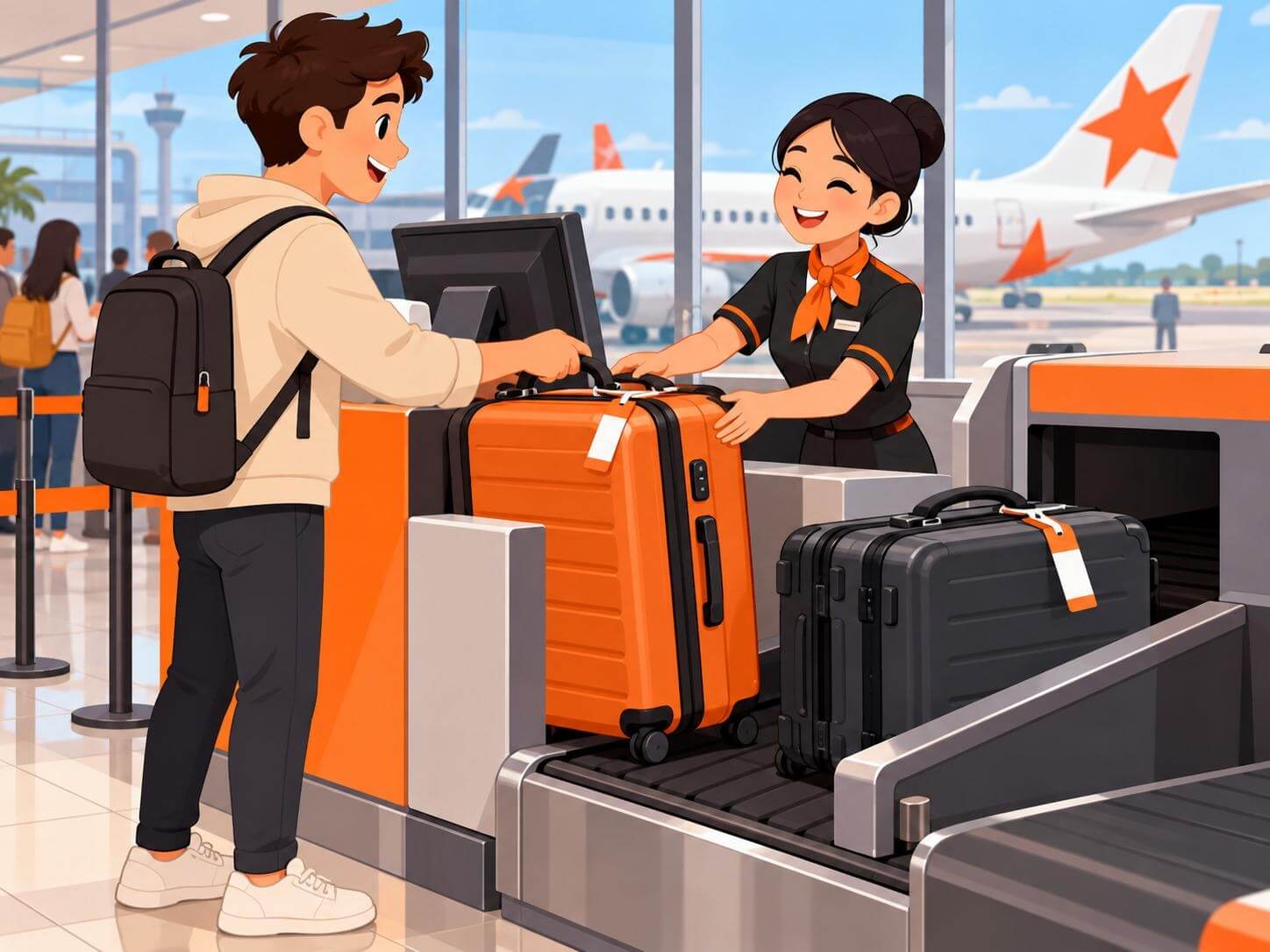
The rule that matters most is carry-on weight: on the cheapest Peach and Jetstar Japan fares you may bring two items totaling 7 kg. If you need to check a suitcase, add it online when you book, because buying it at the airport costs more. And since April 1, 2026, airlines only allow cabin bags that you can lift and stow in the overhead bin yourself.
We checked these details on October 30, 2026, against airline websites and the sources listed at the end. Baggage rules and fares change often; the conditions on your booking are what count.
2. When Should You Fly Instead of Taking the Shinkansen?
The Shinkansen wins on mid-distance routes such as Tokyo – Osaka or Tokyo – Kyoto: stations are in the city center, there's no check-in, and luggage limits are relaxed. Budget flights clearly win on long routes and island trips:
- Tokyo – Sapporo: a full day by train, about 1.5 hours in the air.
- Tokyo/Osaka – Okinawa, Ishigaki, Amami: only reachable by air or sea.
- Tokyo – Fukuoka: over four hours by Shinkansen; a flight booked early is often cheaper.
For Tokyo – Osaka, also compare the night bus and the Shinkansen. Once you add the cost of getting to Narita or Kansai, a budget flight is often not much cheaper.
3. Airlines and Main Routes
Peach
Peach's main base is Kansai Airport (Osaka). Its winter 2026 schedule (October 25, 2026 – March 27, 2027) lists 23 domestic routes, including:
- From Kansai: Narita (Tokyo), Sapporo (New Chitose), Sendai, Fukuoka, Nagasaki, Miyazaki, Kagoshima, Amami, Okinawa (Naha) and Ishigaki.
- From Narita: Sapporo, Fukuoka, Amami, Okinawa and Ishigaki.
- Other routes: Sapporo – Okinawa, Sendai – Sapporo, Nagoya (Chubu) – Sapporo/Sendai/Okinawa, and Fukuoka – Sapporo/Okinawa/Ishigaki.
Jetstar Japan
Jetstar Japan is based at Narita and flies many domestic routes from Tokyo and Osaka. Its network changes by season, so check the airline's website when you book.
“Mid-cost” Airlines for Comparison
Skymark isn't a pure LCC, but its fares are often below JAL and ANA and it allows 10 kg of carry-on. JAL and ANA regularly offer advance-purchase sale fares that include free checked baggage (JAL: up to 20 kg in Economy). Sometimes a discounted JAL or ANA fare costs less than an LCC fare plus bags.
4. Baggage Rules: Where Budget Travelers Lose Money
| Airline | Carry-on | Checked |
|---|---|---|
| Peach | 2 items, 7 kg total; main bag up to 115 cm in total dimensions (each side within 55 × 40 × 25 cm) | Minimum fare: paid. Standard and Standard Plus: 1 bag included (20 kg) |
| Jetstar Japan (Starter) | 2 items, 7 kg total; overhead bag up to 56 × 36 × 23 cm, under-seat item 40 × 30 × 20 cm | Usually not included; buy by weight band or choose a bundle with baggage |
| Skymark | 2 items, 10 kg total; up to 115 cm in total dimensions | Depends on fare – NEEDS VERIFICATION |
| JAL / ANA | 1 bag + 1 personal item, 10 kg total | JAL: up to 20 kg free in Economy; ANA: depends on fare |
Upcoming change at Jetstar Japan: from February 2, 2027, Economy bookings will include only one under-seat item by default. To bring an overhead-bin bag, you'll need a priority option or a qualifying fare. If you're booking for February or later, read the baggage section carefully.
Weight tips: 7 kg fills up fast. An empty cabin suitcase already weighs 2 to 3 kg. Weigh your bags at home, wear your heavy coat on board instead of packing it, and keep heavy electronics such as a laptop in your personal item. If you're over the limit, your bag will be moved to the hold and charged at the airport.
5. Peach Fare Types
| Minimum | Standard | Standard Plus | |
|---|---|---|---|
| 7 kg carry-on (2 items) | Yes | Yes | Yes |
| Checked bag | Paid | 1 free | 1 free |
| Seat selection | Paid | 3 seat types free | 3 seat types free; front rows paid |
| Flight changes | No | No | Yes |
| Cancellation for personal reasons | No refund | Refunded as Peach Points (after fee) | Refunded (after fee) |
| Ticketing fee | Yes | Free | Free |
If you have a suitcase to check, Standard is often better value than Minimum plus a bag. If your plans may change, only Standard Plus allows flight changes. If the airline cancels or significantly delays your flight, every fare type gets a refund.
6. Check-In and Cut-Off Times
LCCs are strict about time. According to Peach's website, for domestic flights:
- Airport check-in and bag drop: from 90 to 30 minutes before departure.
- Security: by 25 minutes before departure.
- Boarding gate: by 20 minutes before departure.
Peach offers app auto check-in (your boarding pass is issued automatically 120 minutes before departure) and baggage tag kiosks at New Chitose, Narita, Kansai and Naha. Other airlines have their own cut-offs; check your confirmation email. Arriving even a minute late can mean being refused boarding without a refund.
7. Don't Forget the Cost of Reaching the Airport
LCCs mostly use airports far from city centers: Narita (Tokyo) and Kansai (Osaka). At Narita, many LCC flights, including Jetstar Japan, use Terminal 3. It has no train station: walk about 10 to 15 minutes or take the free shuttle bus to Terminal 2 for trains. The Airport Bus TYO-NRT runs directly from Terminal 3 to Tokyo Station and Ginza for ¥1,500 (¥3,000 for departures from 23:00 to 04:59). Check the terminal on your booking.
| Example: Tokyo – Sapporo by LCC | Cost |
|---|---|
| Cheapest fare | Varies by date – check the airline |
| Checked bag bought in advance | Depends on airline and weight |
| Tokyo Station → Narita (TYO-NRT bus) | ¥1,500 |
| New Chitose → Sapporo (JR train) | NEEDS VERIFICATION on JR Hokkaido's site |
Our guide to getting from Narita and Haneda to central Tokyo compares every option. If you're on an early flight (6 or 7 a.m.), check whether any train or bus gets you there in time; sometimes you'll need to stay near the airport.
8. Tips for Finding Cheap Fares
- Book early and watch for sales: LCCs run short flash sales. Sign up for emails or follow the airline's app.
- Be flexible: midweek is usually cheaper than weekends; avoid the year-end, Golden Week and Obon peaks.
- Compare the final price: always compare after adding baggage, seat selection and payment fees. A discounted JAL or ANA fare can be cheaper when you have a suitcase.
- Enter names exactly as on your passport: name changes on LCC bookings are often charged or not allowed, and a mismatch can be a problem at check-in.
- Watch the extras at checkout: seat selection, insurance and other add-ons are often pre-selected or suggested during booking. Untick anything you don't need and compare the final total with other airlines and the Shinkansen before paying.
- Allow time at big airports: at Narita and Kansai, walking between the train station, check-in counters and LCC gates can take longer than you expect, especially with luggage. Aim to arrive at least an hour before departure.
- Book direct: name changes, baggage and schedule-change notices are easier to handle through the airline than through a third party.
- Winter: flights to Sapporo can be cancelled by snow. Choose a fare with better change or refund terms if the dates matter, for example for the Sapporo Snow Festival or a ski trip.
9. If Your Flight Is Delayed or Cancelled
Winter is the season most likely to disrupt domestic flights, especially to and from Hokkaido and the Sea of Japan coast. LCCs operate tight schedules with few spare aircraft, so one cancellation can mean the next available seat is a day or two later. A little preparation makes a big difference.
Before You Fly
- Install the airline's app and turn on notifications, so you hear about changes before you leave for the airport.
- Check the weather at both airports the day before. If a big storm is forecast, see whether the airline offers free changes.
- Avoid booking the last flight of the day on trips where you must arrive on time. If it's cancelled, there's no later flight.
- Keep receipts for meals and hotels in case your travel insurance covers delays.
On the Day
- Check the app first. Rebooking options often appear there before the counter queue moves.
- Compare alternatives quickly. For Tokyo – Osaka routes, the Shinkansen is often the fastest backup. For Sapporo, check other airlines' flights for the same day.
- Know your refund rights. When the airline cancels or significantly delays a flight, Peach refunds every fare type. Decide quickly whether to take a refund and book another way.
- Keep your phone charged. Rebooking, searching for hotels and messaging people waiting for you all happen on your phone, often in a crowded terminal.
Three Booking Scenarios
| Traveler | Suggested choice | Why |
|---|---|---|
| Solo, backpack only, flexible dates | Peach Minimum or Jetstar Starter | Lowest fare, 7 kg is enough |
| Couple with one suitcase | Peach Standard (1 bag included) or compare a JAL/ANA sale fare | Baggage cost often decides the winner |
| Fixed dates for an event or ski trip | Standard Plus or a full-service airline | Changes allowed; more flights to rebook onto |
10. Your Phone and Mobile Data When Flying Budget
With an LCC, almost everything happens on your phone: the QR boarding pass in the app, notices about schedule or gate changes, buying extra baggage and finding your way from the airport into the city. If snow cancels your flight, you'll usually rebook in the app or on the website because the counters get overwhelmed. That's when a reliable connection at the airport really matters.
Need mobile data during your Japan trip? Compare HD Telecom's available eSIM and Wi-Fi options, and check device compatibility before choosing a plan. For longer stays, HD Telecom offers Monthly Data eSIMs (your phone must support eSIM) and Monthly Pocket WiFi rentals (one device for the whole group). Check each plan's data allowance, the speed after the allowance runs out and the terms on the product page. Visitors can read our guide to travel eSIMs for 5–14 day trips.
11. FAQ
Do foreigners need a passport on domestic flights?
Domestic flights in Japan don't usually involve ID checks like international flights, but always carry your passport or residence card. Foreign nationals in Japan are required to carry one of these.
Can I bring a power bank?
Power banks must go in your carry-on, never in checked baggage. Capacity limits and in-cabin handling rules are set by each airline, so check its website before flying.
Is a Peach Minimum fare refundable?
Not if you cancel for personal reasons. If the airline cancels or significantly delays the flight, all fare types are refunded.
Does the 7 kg include my handbag and coat?
The 7 kg is the total of the two items you bring on board. A coat you are wearing usually isn't counted, but staff can weigh any bag you carry.
Do I need to print my boarding pass?
Usually not. Peach's app issues a QR boarding pass automatically before departure, and most airlines accept a boarding pass on your phone. Take a screenshot in case your battery or connection fails at the gate, and check your airline's instructions if you are checking a bag, since you may need to visit a bag-drop counter or kiosk first.
Is food served on board?
Food and drinks are usually sold on board. To save money, buy snacks at a convenience store in the airport after security.
12. Conclusion
Budget domestic flights are well worth it for long routes such as Tokyo – Sapporo or Osaka – Okinawa. Compare the total cost (fare, baggage and airport transfers), buy baggage online in advance, keep your carry-on under 7 kg, get to the airport early, and keep your phone connected so you get notices and can rebook if your flight changes.
Sources (checked October 30, 2026)
Related products
Find your plan with HD TELECOM
SIM, eSIM and Pocket WiFi — genuine quality, clear pricing, 24/7 support.
Narita and Haneda to Central Tokyo: Trains, Buses and Taxis Compared
JR Regional Passes 2026: JR EAST PASS, Tokyo Wide, Kansai, Kyushu, Hokkaido – Which to Choose?
Tokyo to Osaka Night Bus: Fares, Seat Types, Operators and First-Timer Tips
Seishun 18 Kippu Winter 2026–27: Prices, Rules and Sample Itineraries