

Tokyo to Osaka Night Bus: Fares, Seat Types, Operators and First-Timer Tips
October 30, 2026
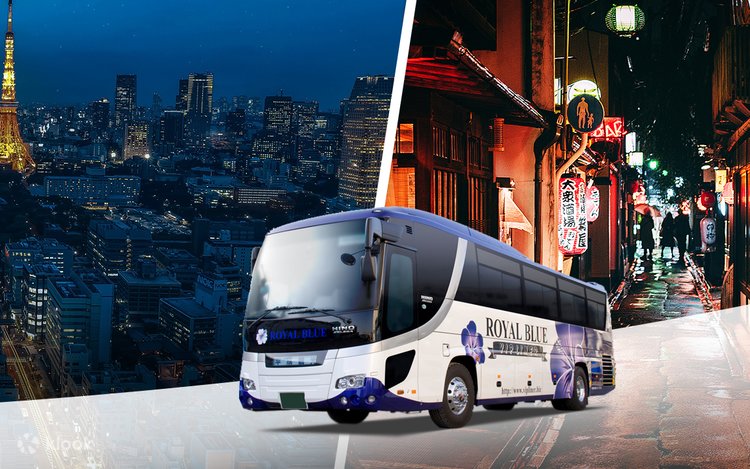
1. Quick Answer
A night bus (夜行バス, yakō bus) is the cheapest way to travel between Tokyo and Osaka with a proper seat. According to 2026 comparison sites, one-way fares are usually around ¥4,000 to ¥10,000. Prices are lowest on off-peak weekdays and highest on Friday nights, the night before holidays and over the year-end period. The trip takes about 8 hours: buses leave between the evening and around 2 a.m. and arrive the next morning. Compared with the Nozomi Shinkansen (¥14,720 one way for a reserved seat, about 2.5 hours), you save half the fare or more, plus a night's hotel.
The biggest decision is the seat type. Four-across seats are cheapest but cramped. Three-across independent seats or curtained seats cost a few thousand yen more but make sleeping much easier. If it's your first night bus, choose a three-across seat on a bus with a toilet.
We checked these details on October 30, 2026, against the sources listed at the end. Night bus fares vary by date and by departure, so check the live price on the booking site.
2. When Does a Night Bus Make Sense?
A night bus suits you if:
- You want to save on both transport and accommodation.
- You can sleep sitting up, or can live with one night of light sleep.
- You want to arrive early in the morning and have a full day to explore.
- You are traveling alone or as a pair with compact luggage.
Choose something else if you struggle to sleep upright, are traveling with small children, get motion sick, or need to work first thing the next morning. In that case the Shinkansen or a budget domestic flight is a better fit. If you have plenty of time and prefer to travel by day, the Seishun 18 Kippu is another option.
| Tokyo – Osaka option | One-way cost | Time | Notes |
|---|---|---|---|
| Night bus | about ¥4,000–¥10,000 | about 8 hours | Also saves a night's hotel |
| Nozomi Shinkansen (reserved, regular season) | ¥14,720 | about 2.5 hours | Fast, frequent |
| Local trains on the Seishun 18 Kippu | one ticket day (about ¥2,410–¥3,334) | about 8–9 hours | Only during sales seasons |
3. Night Bus Seat Types
Four-Across Seats (4列シート)
The cheapest option, laid out like a regular coach: two seats on each side of the aisle. They recline, but you sit right next to your neighbor. Some buses offer “spacious four-across” seats with more legroom. These suit younger travelers, easy sleepers, or people traveling with someone they know.
Three-Across Independent Seats (3列独立シート)
Each row has only three seats separated by aisles. Nobody sits right next to you, the seats recline further, and there is often a privacy curtain. This is the best balance between price and sleep.
Premium and Partitioned Seats
Some operators offer shell-type seats or curtained private pods that recline almost flat. They are the most expensive, sometimes close to Shinkansen prices on peak dates, but still cheaper once you count the hotel night you save.
Facilities such as toilets, charging ports, blankets and the number of rest stops vary by operator and by bus. Read the trip description on the booking site carefully before you pay.
4. Popular Operators on the Tokyo – Osaka Route
Many companies run this route. These are names you'll see often. The “from” prices are the lowest fares LIVE JAPAN recorded; actual daily fares will differ.
| Operator | What stands out | Typical price |
|---|---|---|
| JR Bus (Dream, Seishun Eco Dream) | Long-established and safety-focused. Most buses leave from the Tokyo Station Yaesu South Exit or the Shinjuku area, and many stop at the JR bus terminal at Osaka Station. Budget four-across buses and premium buses with curtains and toilets. | from about ¥2,800 |
| WILLER EXPRESS | Its own seat designs such as Relax and ReBorn, and its own Umeda (Osaka) terminal with a lounge and powder room. | ReBorn seats from about ¥9,780 |
| VIP Liner | Curtained seats with outlets and pillows; some buses have toilets and Wi-Fi. Often departs from Busta Shinjuku. | from about ¥3,600 |
| Sakura Kanko | Relax three-across seats reclining to about 140 degrees. | from about ¥4,000 |
| Orion Bus | Several classes, from standard up to PRIVATE TRIPLE. | from about ¥2,100 |
JR Bus or WILLER? A 2026 comparison suggests JR Bus for first-timers because its stops at major stations are easy to find and it has a long track record. WILLER offers more seat types and focuses on comfort. Both run early-booking discounts and periodic sales.
5. Pick-Up and Drop-Off Points
- Busta Shinjuku (バスタ新宿): the large highway bus terminal on the 4th floor above Shinjuku Station. Many night buses leave from here.
- Tokyo Station, Yaesu South Exit: the main JR Bus stop.
- Osaka Umeda: the JR bus terminal at Osaka Station, WILLER's own terminal and stops around Umeda.
- Osaka Namba and Kyoto: many buses also stop at Namba or Kyoto Station. If you are staying in Kyoto, look for a bus that stops there rather than going to Osaka and back.
Arrive 15 to 20 minutes before departure. Stops around big stations can be hard to find at night, especially the first time. Screenshot the stop map from your confirmation email so you don't depend on a connection when you're in a hurry.
6. How to Book, Step by Step
- Search: use a comparison site such as Bus Hikaku Navi (バス比較なび) or the English-language kosokubus.com. Filter by date, departure, arrival and seat type.
- Compare the full picture: fare, arrival time (arriving at 5:30 a.m. can be awkward), drop-off point near your hotel, and whether there is a toilet.
- Book early: prices usually rise as the date approaches and seats sell out. Some operators offer early-booking fares; some sell last-minute deals.
- Pay: most booking sites take credit cards; some allow payment at convenience stores. Read the cancellation terms, as fees usually increase closer to departure.
- Keep your ticket: many operators use e-tickets or QR codes. Save the confirmation email and screenshot the ticket code.
Women-only seating: many operators (JR Bus, VIP Liner, Sakura Kanko, Orion, WILLER) offer seats or seat allocation for women only. If you are a woman traveling alone, choose this option when booking.
7. How to Sleep Well and Arrive Fresh
- Bring an eye mask, earplugs and a neck pillow. The cabin lights go off after the first hour, but highway lights still leak past the curtains.
- Eat a light dinner and use the restroom before boarding. Buses stop at highway service areas a few times, but you can't always get off at night.
- Dress in layers. Cabin temperature is unpredictable: sometimes cold, sometimes warm.
- Keep essentials with you. Large suitcases go in the hold under the bus, and you can't reach them during the trip. Put medicine, chargers, water and a toothbrush in a small bag.
- Be considerate. No phone calls or loud talking; mute your phone and dim the screen.
- Plan your morning. Buses usually arrive between 6 and 7:30 a.m., before hotel check-in. Leave your luggage in a station locker, freshen up at a bathhouse or spa with a morning plan, have breakfast and start sightseeing. In Osaka, some spas offer morning plans; LIVE JAPAN cites a 5 to 10 a.m. plan for ¥1,600 near Umeda.
8. Sample Plan: Thursday Night to Osaka
- 10:30 p.m. – Arrive at Busta Shinjuku and buy water and a snack.
- 11:00 p.m. – The bus leaves. Sleep after the first rest stop.
- Around 7:00 a.m. – Arrive in Osaka Umeda. Leave your suitcase at Osaka Station.
- 8:00 a.m. – Freshen up at a spa with a morning plan and have breakfast.
- 10:00 a.m. – Start sightseeing. In the evening, try the street food of Dotonbori, then check in to your hotel.
Thursday night departures are often cheaper than Friday night, and you still get all of Friday in Osaka.
9. Real Trip Cost: Night Bus vs Shinkansen
A fair comparison includes the hotel night the bus replaces and what you do on arrival. The figures below are illustrative for one adult going from Tokyo to Osaka; bus fares vary daily, and hotel prices depend on area and season.
| Item | Night bus | Shinkansen (evening departure) |
|---|---|---|
| Transport | about ¥4,000–¥10,000 | ¥14,720 (Nozomi, reserved, regular season) |
| Hotel night in Osaka | not needed | one extra night |
| Morning bath and luggage locker | about ¥1,600 (example spa plan) + locker | not needed |
| Arrival | around 6–7:30 a.m., a little tired | the night before, rested |
In most cases the night bus saves the most money when hotel prices are high, for example on weekends or around events. On a cheap weekday, the gap shrinks, and the comfort of the Shinkansen may be worth it.
What Happens on Board
- Boarding: staff check your name or QR code, and large bags go into the hold. Note the bus number and your seat number.
- Departure briefing: the driver explains rest stops, seat belt rules and lights-out, usually in Japanese only. Rules are similar on most buses: wear your seat belt, keep the curtain closed after lights-out and don't recline suddenly.
- Rest stops: buses stop at highway service areas. In the evening you can usually get off briefly; late at night, some stops are for driver changes only. Always note the departure time announced, as buses don't wait.
- Arrival: the lights come on shortly before the first stop. Collect your luggage from the hold yourself and check you haven't left anything behind, especially chargers and earphones.
Common Mistakes
- Going to the wrong stop: Shinjuku alone has several bus stops. Use the exact address and map in your confirmation email.
- Booking the wrong date: a bus leaving at 00:30 on the 15th departs on the night of the 14th. Read the departure date carefully.
- Underestimating the morning: arriving at 6 a.m. with nowhere to go is the hardest part. Plan lockers, a bath and breakfast in advance.
10. Your Phone and Mobile Data on a Night Bus
On a night bus, your phone does most of the work: showing a QR ticket, finding the stop inside a big station at night, receiving delay emails if snow or an accident slows the highway, and finding lockers or breakfast as soon as you get off. On-board Wi-Fi, where available, is often weak and drops in tunnels and mountains. Fully charge your phone before boarding, because not every bus has outlets. Our list of essential apps for traveling in Japan covers navigation and translation.
Need mobile data during your Japan trip? Compare HD Telecom's available eSIM and Wi-Fi options, and check device compatibility before choosing a plan. For longer stays, HD Telecom offers Monthly Data eSIMs (your phone must support eSIM) and Monthly Pocket WiFi rentals (one device for the whole group). Check each plan's data allowance, the speed after the allowance runs out and the terms on the product page. Short-term visitors can read our guide to travel eSIMs for 5–14 day trips.
11. FAQ
Are night buses in Japan safe?
Major operators follow Japan's rules on driver working and rest hours, and long overnight routes usually have two drivers who take turns. For peace of mind, choose an operator with clear information and public reviews on the booking site.
Can I bring a large suitcase?
Usually yes; large suitcases go in the hold. The number and maximum size allowed vary by operator, so check the conditions on the booking site, especially if you have two suitcases.
Can I book without speaking Japanese?
Yes. Sites such as kosokubus.com and WILLER's English site let you book in English. Drivers usually speak only Japanese, but boarding is simple: show your ticket or QR code and give your name.
Is there a toilet on board?
It depends on the bus. Many three-across and premium buses have one; cheaper four-across buses often don't and rely on rest stops. Look for “トイレ付” (toilet on board) when booking.
Is a night bus a good idea over New Year?
Yes, if you book early, but fares are higher and buses can be delayed by traffic or snow. See our guide to New Year in Japan for closures and holiday dates.
12. Conclusion
A Tokyo – Osaka night bus saves you both the fare and a hotel night, in exchange for a night of sleeping in a seat. Pick a three-across seat for your first trip, book early for a weekday, bring what you need to sleep, and plan your arrival morning. Keep your phone charged and connected so you can find your stop, follow delay updates and get your bearings when you arrive.
Sources (checked October 30, 2026)
Related products
Find your plan with HD TELECOM
SIM, eSIM and Pocket WiFi — genuine quality, clear pricing, 24/7 support.
JR Regional Passes 2026: JR EAST PASS, Tokyo Wide, Kansai, Kyushu, Hokkaido – Which to Choose?
Budget Domestic Flights in Japan: Peach, Jetstar Japan, the 7 kg Rule and Real Costs
Seishun 18 Kippu Winter 2026–27: Prices, Rules and Sample Itineraries
First-Time Skiing in Japan: Resorts Near Tokyo, Gear Rentals, Costs, and Safety Tips