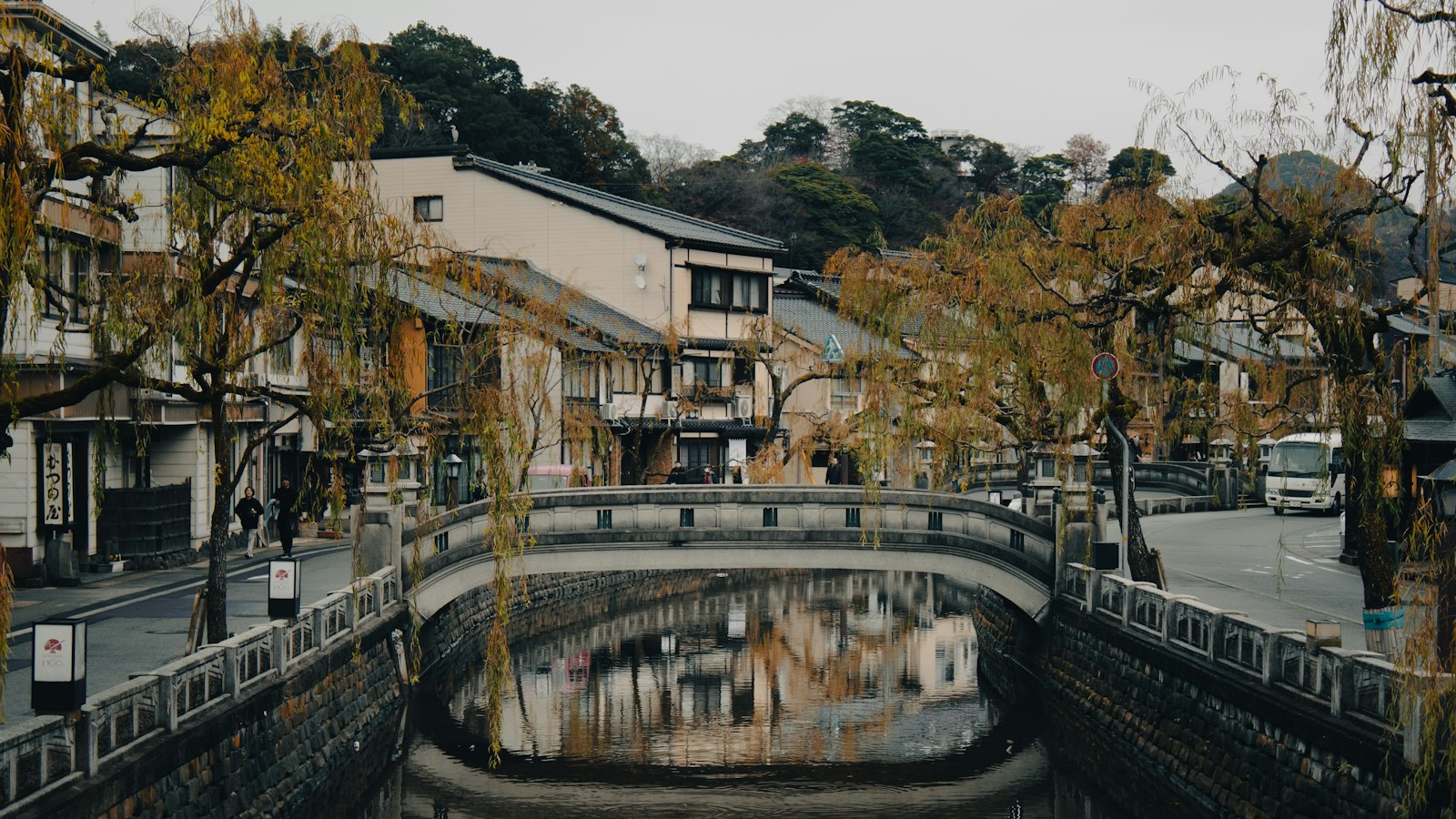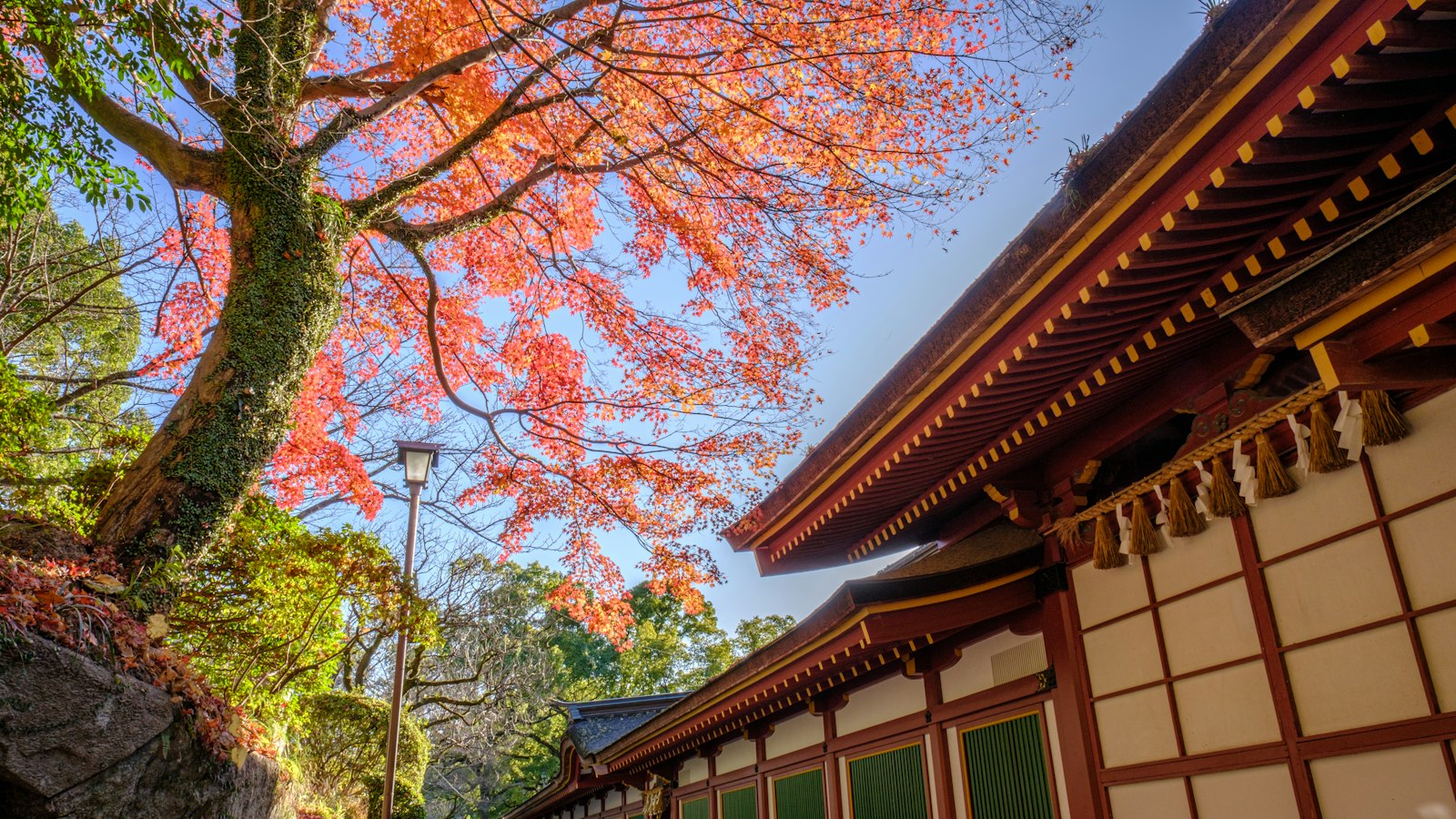

Walking the Nakasendo from Magome to Tsumago in Autumn
November 12, 2026
1. Quick Answer
The Magome–Tsumago section of the old Nakasendo road (Kiso Valley, between Gifu and Nagano prefectures) is about 8 km and takes 2.5–3 hours at a relaxed pace, crossing Magome Pass at about 790–800 m. Autumn is best from around late October to mid-November, when the forest along the trail turns gold and red.
- Which way: Magome to Tsumago, since you climb first and then mostly descend.
- Luggage forwarding: the tourist information centers in Magome and Tsumago forward bags for ¥1,000 per item; drop off 8:30–11:30, collect 13:00–17:00 the same day; runs March 20 to November 30.
- Access: from Nagoya, the Shinano limited express to Nakatsugawa takes about 50 minutes, then a bus of about 30 minutes (around ¥570) to Magome.
You don't need hiking experience, but you do need good walking shoes and a plan for bus times, because autumn days are short.
We checked these details on November 12, 2026, against the sources listed at the end. Bus schedules, prices and luggage services can change; check the Magome and Tsumago tourism sites and the bus operator before you go.
2. What Is the Nakasendo?
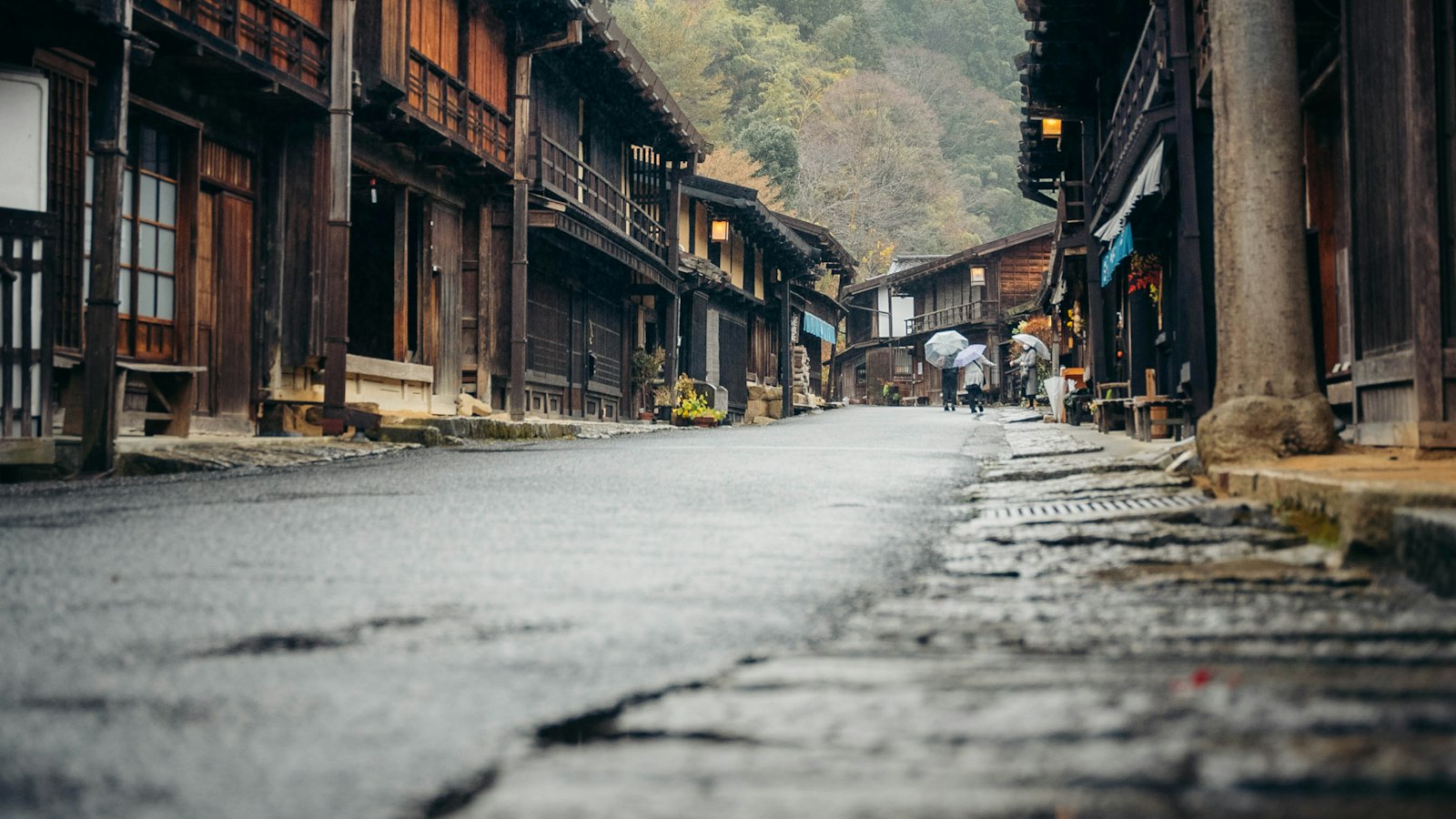
The Nakasendo was one of five main highways of the Edo period, linking Edo (Tokyo) with Kyoto through the mountains. Along it were post towns (shukuba) for travelers and feudal lords' processions. Magome-juku and Tsumago-juku are the best preserved: stone-paved streets, wooden houses and old inns. In Tsumago, power lines are hidden from the main street to keep its historic look.
The trail between them runs through cedar forest, past waterfalls, terraced fields and small hamlets. It's one of Japan's most accessible historic walks for international visitors, with bilingual signs throughout.
3. Why Walk It in Autumn?
- Foliage: maples and broadleaf trees change color from around late October to mid-November.
- Cool weather: comfortable for hours of walking, with far less sweat than in summer.
- Drying persimmons: many houses in the valley hang persimmons (hoshigaki) to dry under their eaves.
- Seasonal treats: kuri kinton chestnut sweets (Nakatsugawa is famous for them) and gohei-mochi (grilled rice cakes with walnut or sesame sauce).
Note: luggage forwarding usually stops from December to mid-March, and in winter the paths can be icy. For 2026, late November is the last convenient window.
4. Trail Facts
| Item | Details |
|---|---|
| Distance | About 8 km |
| Time | 2.5–3 hours at a relaxed pace, not counting photo and food stops |
| High point | Magome Pass, about 790–800 m (around 200 m of climbing from Magome, about 400 m of descent to Tsumago) |
| Difficulty | Easy to moderate; stone paving can be slippery in rain |
| Fees | No trail fee |
| Toilets | In Magome, at Magome Pass, at the rest house on the way and in Tsumago (NEEDS VERIFICATION of autumn availability) |
| Bear bells | Bells hang along the trail; ring them as you pass to make noise |
5. Stage by Stage: Magome to Tsumago
Magome-juku (km 0)
The post town lies along a long stone slope lined with shops, restaurants and inns. It has a memorial hall for the novelist Shimazaki Toson, who was born here and set his historical novel Before the Dawn in the Kiso Valley. Walk up from the bottom of the slope and stop at the viewpoint above town to see Mount Ena on clear days.
Up to Magome Pass (around km 2–3)
The route alternates between paved road and forest trail, with a gentle but steady climb. At the pass there's a small teahouse and signposts. This is where you cross from Gifu Prefecture into Nagano Prefecture.
Otaki and Metaki Falls (around km 4)
The “male” and “female” waterfalls sit a short detour from the trail. In autumn they're framed by red leaves, making them a lovely rest stop.
The Rest House on the Way (around km 5)
An old wooden farmhouse with an irori hearth where volunteers have traditionally offered walkers free tea, with a donation box. Many walkers remember it as the highlight. Be polite, take off your shoes where indicated and leave a small donation if you wish – NEEDS VERIFICATION of opening hours.
O-tsumago and Tsumago-juku (km 8)
The last stretch passes the hamlet of O-tsumago with its wooden houses and fields, then descends into Tsumago. Visit the Waki-honjin Okuya (a former inn for officials, admission charged) and walk the main street in the late afternoon once tour groups have left.
6. Getting to Magome and Leaving Tsumago
| Leg | How | Time / price (approx.) |
|---|---|---|
| Nagoya – Nakatsugawa | JR Chuo Line, Shinano limited express | about 50 min |
| Nakatsugawa – Magome | Kitaena Kotsu local bus | about 30 min, around ¥570, not covered by the JR Pass |
| Tsumago – Nagiso Station | Bus or taxi | bus around ¥300; taxi around ¥2,000 |
| Nagiso – Nagoya or Matsumoto | JR Chuo Line (a few Shinano trains stop at Nagiso) | Most journeys need a change to a local train at Nakatsugawa |
Buses are infrequent and can't be reserved, so check timetables before you go. From Tokyo, take the Shinkansen to Nagoya (see our Shinkansen guide) or go via Matsumoto on the Chuo Line. If you have a JR regional pass, check whether the Chuo Line between Nagoya and Nakatsugawa is covered.
7. Luggage Forwarding: Walk Light
The tourist information centers in both towns forward bags to the other town the same day:
- Price: ¥1,000 per item.
- Drop-off: 8:30–11:30 in your starting town.
- Collection: 13:00–17:00 in the other town.
- Season: daily from March 20 to November 30; no service in winter.
- Out of hours: a separate service costs ¥4,500 per trip for up to three items, plus ¥1,000 per extra item (per our source).
If you're on a longer trip, you can send big suitcases straight to your next hotel by takkyubin and carry only a daypack (see our guide to luggage storage and forwarding in Japan).
8. Staying Overnight in a Post Town
Many walkers spend a night in Tsumago or Magome at a family-run minshuku or ryokan with Japanese dinner and breakfast. In the evening, once the day-trippers leave, the old streets are quiet and beautiful under lantern light.
- Rooms are limited; in autumn, book weeks or even months ahead.
- Some inns are cash-only and have fixed check-in and dinner times.
- Baths are often shared; ask in advance if you need a private bathroom.
9. What to Eat Along the Way
- Gohei-mochi: grilled rice cakes on skewers with a sweet sauce, sold in both towns.
- Kuri kinton: chestnut sweets, an autumn specialty of the Nakatsugawa area.
- Kiso soba: mountain buckwheat noodles, with new-crop soba in autumn.
- Snacks: bring water and snacks, as there are few places to buy food mid-trail.
For more seasonal dishes, see our guide to autumn food in Japan.
10. Suggested Plans
Option 1: Day Trip from Nagoya
- Early train from Nagoya to Nakatsugawa, bus to Magome, drop off luggage before 11:30.
- Explore Magome, then walk to Tsumago (about 3 hours with breaks).
- Late lunch in Tsumago, collect luggage, bus to Nagiso and train back to Nagoya.
Option 2: Stay One Night (Recommended)
- Day 1: arrive in Magome in the afternoon, stay at a minshuku and stroll the town in the evening.
- Day 2: walk early while the trail is quiet, reach Tsumago before noon, then continue to Matsumoto or return to Nagoya.
11. Safety and Preparation
- Bears: the Kiso area has black bears. Ring the bells along the trail, consider carrying your own, avoid walking alone at dusk and read warning notices at the information centers.
- Early sunset: in November the sun sets around 16:30–17:00; start walking before 13:00.
- Shoes and clothing: shoes with good grip, layers and a light rain jacket.
- Water and cash: there are a few vending machines, but not many.
- No littering: carry your trash until you find a suitable bin.
12. Your Phone and Mobile Data on the Trail
Mobile signal is generally available on the trail but can be weak in some forested stretches – NEEDS VERIFICATION by carrier. Download offline maps, screenshot bus timetables and taxi numbers, and fully charge your phone or bring a power bank. In the post towns you'll want data for train times, weather forecasts and translating signs.
Need mobile data during your Japan trip? Compare HD Telecom's available eSIM and Wi-Fi options, and check device compatibility before choosing a plan. Visitors can read our guide to travel eSIMs for 5–14 day trips and our list of essential apps for Japan. For longer stays, see HD Telecom's Monthly Data eSIMs (your phone must support eSIM) and Monthly Pocket WiFi rentals, and check each plan's data allowance, the speed after the allowance runs out, coverage and the terms on the product page.
13. Packing Checklist
- Walking shoes or trail runners with good grip
- Layers: a light fleece or sweater and a windproof jacket
- A compact rain jacket or folding umbrella
- Water (at least 500 ml–1 L) and snacks
- Cash in small notes and coins for buses, donations and food
- A small trash bag
- A charged phone, offline maps and a power bank
- A bear bell if you'd like your own
- A small towel and hand sanitizer
14. Common Mistakes to Avoid
- Missing the luggage drop-off deadline. Drop-off closes at 11:30. If you arrive later, you'll have to carry your bags or use a different service.
- Starting too late. With sunset around 16:30–17:00 in November and the walk taking about three hours with breaks, start by 13:00 at the latest.
- Not checking return buses. Buses from Tsumago to Nagiso and from Magome to Nakatsugawa run only a few times an hour or less. Missing one can mean a long wait or an expensive taxi.
- Assuming the JR Pass covers everything. Local buses aren't covered, and limited expresses need seat reservations or extra tickets depending on your pass.
- Booking accommodation at the last minute. Post-town inns have few rooms, and autumn is popular.
- Wearing new shoes. Break in your shoes before the trip to avoid blisters on the stone paving.
15. Extending Your Kiso Valley Trip
- Narai-juku: another long, well-preserved post town further north on the Chuo Line, with lacquerware shops and a quieter atmosphere. It works well as a half-day stop on the way to Matsumoto.
- Kiso-Fukushima: a former checkpoint town with old streets and soba restaurants.
- Matsumoto: home to Matsumoto Castle, one of Japan's original castle keeps, and a good base for the Japanese Alps.
- Nakatsugawa: the gateway town, with chestnut-sweet shops that are especially busy in autumn.
Combining Magome–Tsumago with Narai and Matsumoto makes a relaxed two- or three-day route between Nagoya and Nagano.
16. FAQ
Can non-hikers do this walk?
Yes. There are slopes, but no technical sections. Walk slowly, rest often and wear good shoes.
Should I walk from Tsumago to Magome instead?
You can, but you'll climb more. Most walkers go Magome to Tsumago.
Is it suitable for children?
Children used to walking usually manage fine; allow extra time and bring snacks. Strollers aren't suitable because of stone steps.
Can I walk it in December?
You can, but luggage forwarding has stopped, paths may be icy and days are very short. Check the weather and trail conditions.
Do I need a guide?
No; bilingual signs are clear. A guide can add historical depth if you want it.
Can I visit Magome and Tsumago without walking the trail?
Yes. A few buses a day link the two towns, so you can visit both by bus. Check the timetable carefully, as services are limited.
Is the trail open every day in autumn?
Generally yes, but heavy rain, bear sightings or maintenance can cause temporary closures. Ask at the tourist information center before you set off.
17. Conclusion
Walking the Nakasendo from Magome to Tsumago in autumn lets you experience Edo-period Japan among colorful forests in about half a day. Go between late October and mid-November, drop off your luggage before 11:30, start early, ring the bear bells along the way, and keep your phone charged and connected to check return buses.
Sources (checked November 12, 2026)
Related products
Find your plan with HD TELECOM
SIM, eSIM and Pocket WiFi — genuine quality, clear pricing, 24/7 support.