

Luggage in Japan: Coin Lockers, Baggage Counters and Takkyubin Forwarding
November 3, 2026
1. Quick Answer
Traveling Japan with a big suitcase is harder than you'd expect: station stairs, packed rush-hour trains and oversized-baggage rules on the Shinkansen. Three services let you travel “hands-free”:
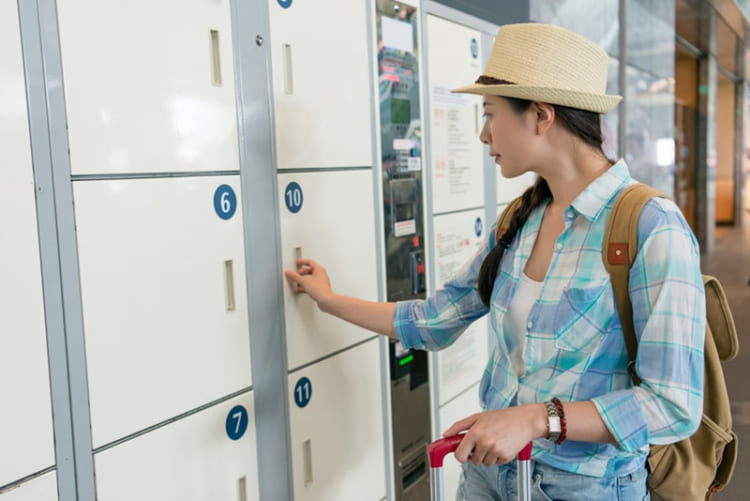
- Coin lockers: for a few hours or a day. At Tokyo Station, prices are typically about ¥400–¥800 a day depending on size. Large lockers are scarce and often full by late morning.
- Staffed baggage counters: take oversized bags for about ¥500–¥2,000, and many offer same-day delivery to your hotel.
- Luggage forwarding (takkyubin): send bags from your hotel, a convenience store or the airport, usually arriving the next day. Same-region prices run about ¥1,230–¥3,020 by size, a little more for long routes such as Tokyo – Kyoto.
On the Tokaido, Sanyo and Kyushu Shinkansen, luggage over 160 cm in total dimensions requires a reserved seat with an oversized baggage area. Without one you'll be charged ¥1,000 on board. Bags over 250 cm aren't allowed at all.
We checked these details on November 3, 2026, against the sources listed at the end. Locker and forwarding prices vary by location and over time; check the price list on site or use the carrier's online estimator.
2. Which Option for Which Situation?
| Situation | Best option |
|---|---|
| Morning check-out, evening flight, want a full day out | Leave bags at the hotel (usually free) or a locker near the airport line |
| Arriving in Tokyo early on a night bus | Station locker or baggage counter |
| Changing cities by Shinkansen with a big suitcase | Forward the bag to your next hotel and travel light |
| Just landed and want to sightsee straight away | Send the suitcase from the airport to your hotel |
| Ski trip with a board bag | Forward it to your hotel or resort in advance |
3. Station Coin Lockers: Sizes, Prices and How to Use Them
Most big stations have banks of lockers in three sizes: small (fits a backpack), medium (cabin suitcase) and large (some medium checked suitcases). A 2026 guide to Tokyo Station lists typical prices of ¥400–¥800 in the Yaesu area and ¥400–¥700 in the Marunouchi area. The new Yaesu locker area (opened March 2026) has 283 units, but only 9 extra-large ones.
How to Use One
- Find a free locker (green light, or a screen showing “空き”).
- Put your bag in, close the door and select the locker number on the screen.
- Pay: newer lockers accept IC cards (Suica, PASMO), PayPay and credit cards; older ones may take only ¥100 coins.
- Keep the receipt or PIN and photograph the locker location. Tokyo Station is huge and easy to get lost in.
When Lockers Are Full
- Fees are charged per calendar day, usually switching around 2 a.m. Drop at 11 p.m. and collect at 8 a.m. and you pay for two days.
- Lockers near main exits fill first. Try deeper basement levels or quieter exits (at Tokyo Station: the Nihonbashi side and the B3–B4 Keiyo and Sobu/Yokosuka concourses).
- Some locker banks show live availability or accept online reservations.
- If your bag won't fit in a large locker, don't waste time searching; go to a staffed counter.
4. Baggage Counters and Same-Day Hotel Delivery
Big stations have staffed baggage counters. Examples at Tokyo Station, according to a 2026 guide:
| Counter | Location | Hours | Typical price |
|---|---|---|---|
| Sagawa Express TOKYO SERVICE CENTER | Yaesu, outside the gates | 7:00–21:00 | from ¥1,000 |
| JR EAST Travel Service Center | Marunouchi North, outside the gates | 8:30–19:30 | from ¥800 |
| Gransta Cloakroom | B1, inside the gates | 8:30–21:00 | ¥500–¥2,000 |
| Shinkansen South Transfer Gate counter | 1F, inside the gates | 9:00–21:00 | ¥500–¥2,000 |
| Yamato Transport Tokyo Station branch | Marunouchi North, outside the gates | 10:00–20:00 | ¥500–¥2,000 |
Many counters offer same-day delivery to your hotel: drop your bag in the morning (some counters need it by 15:00), and it arrives at a partner hotel in Tokyo's 23 wards or Urayasu around 6–7 p.m. Look for the Japan Tourism Agency's “Hands-Free Travel” logo, which marks certified counters for travelers.
5. Takkyubin: Sending Bags Between Cities
Takkyubin (宅急便) is Japan's door-to-door delivery service. Travelers use it to send suitcases from one hotel to the next while riding the Shinkansen with just a daypack.
Typical Prices (Same Region, Yamato, per a September 2026 guide)
| Size (total cm) | Example | Price |
|---|---|---|
| 80 | 20-inch carry-on, up to 5 kg | about ¥1,230 |
| 100 | 24-inch suitcase, up to 10 kg | about ¥1,530 |
| 120 | 26-inch suitcase, up to 15 kg | about ¥2,040 |
| 140 | 28-inch suitcase, up to 20 kg | about ¥2,630 |
| 160 | Extra-large suitcase or ski bag, up to 25 kg | about ¥3,020 |
Sending between distant regions (for example Kanto to Kansai) usually costs a few hundred yen more. Dropping bags at Narita or Haneda counters may add a counter fee of about ¥660. Use the carrier's online estimator for an exact price.
How to Send a Bag
- Where: your hotel front desk (easiest), convenience stores (7-Eleven, FamilyMart) or carrier counters at airports. Some convenience stores don't accept items over size 160.
- Fill in the slip: the receiving hotel's address and phone number, your name (exactly as on your booking) and the delivery date. Hotel staff often help.
- Pay and keep the 12-digit tracking number to follow the delivery online.
- Tell the receiving hotel you're sending luggage ahead, especially if it arrives before your check-in date.
Delivery Times
- Tokyo to Kyoto, Osaka or Nagoya: usually next day.
- Sending to the airport before a flight: send at least two days ahead and check the airport counter's collection hours.
- Golden Week, Obon and New Year: send about three days ahead.
6. The Shinkansen and Oversized Luggage
Since May 20, 2020, on the Tokaido, Sanyo and Kyushu Shinkansen:
- Luggage with total dimensions over 160 cm counts as oversized.
- You must reserve a seat with an oversized baggage area in advance (free, but limited).
- If you board with oversized luggage without a reservation, you pay ¥1,000 and follow staff instructions.
- Luggage over 250 cm isn't allowed on board.
A standard large checked suitcase (28–30 inches) often exceeds 160 cm. The easy fix is to forward it, or book the right seat when you buy your ticket. See our guide to riding the Shinkansen between Tokyo, Kyoto and Osaka.
7. Sample Plan: Hands-Free from Tokyo to Kyoto
- Evening of day 3 in Tokyo: ask your hotel to send your suitcase to your Kyoto hotel (delivery date day 4 or day 5).
- Morning of day 4: check out with just a backpack, take the Shinkansen and stop in Nagoya or Hakone on the way without worrying about luggage.
- Evening of day 4 or midday day 5: your suitcase is waiting at your Kyoto hotel.
- Departure day: send your suitcase from the hotel to Kansai Airport at least two days ahead, or take it on the HARUKA train, which has luggage space.
8. Common Mistakes
- Forgetting where your locker is: always photograph the locker number and nearby signs.
- Missing locker closing hours: some locker areas inside stations close overnight with the station. Check before leaving bags overnight.
- Wrong recipient name: hotels may refuse a bag if the name doesn't match the booking.
- Packing essentials in a forwarded bag: keep your passport, medicine, chargers and tax-free goods you need to show customs with you.
- Sending restricted items: some items, such as power banks or aerosols, may be restricted for shipping; ask staff when sending.
9. Airports, Ski Trips and Departure Day
Arriving: Sending Bags from the Airport
Narita and Haneda have delivery counters in the arrivals halls where you can send suitcases to your hotel and head into the city with just a daypack. This works especially well if you land in the morning and want to sightsee before check-in, or if you'd otherwise ride packed rush-hour trains. Keep in mind:
- Bags usually arrive the next day unless the counter offers same-day delivery to your area and you meet its cut-off time.
- Pack a small overnight bag with toiletries, chargers, medicine and a change of clothes.
- Write your hotel's name, address and phone number exactly as on your booking confirmation; screenshots help at the counter.
Departing: Sending Bags to the Airport
On your last day, you can send suitcases from your hotel to the airport and collect them at the airline counter area before check-in. Send at least two days ahead (more during holidays), and confirm the airport counter's opening hours match your flight time. For early-morning flights, check whether the counter is open when you arrive.
If you've bought tax-free goods, don't send them ahead in your suitcase. They must stay with you until you've completed the customs refund procedure at the airport.
Ski and Snowboard Trips
Ski bags and boot bags are bulky and awkward on trains. Forwarding them to your hotel or resort a few days ahead is common practice in Japan. Check the size limit (a long ski bag may exceed standard sizes), label everything clearly, and confirm that the hotel accepts luggage before your arrival. On the return, many resort hotels can send equipment back to the airport. See our guide to skiing in Japan for the first time for more on planning.
Quick Checklist
| Before sending | Done? |
|---|---|
| Passport, wallet, phone and charger with you | ☐ |
| Medicine and one night's essentials with you | ☐ |
| Tax-free goods with you (not in the forwarded bag) | ☐ |
| Recipient name matches the hotel booking | ☐ |
| Delivery date and hotel confirmed | ☐ |
| Tracking number saved on your phone | ☐ |
10. Your Phone and Mobile Data When Traveling Hands-Free
Traveling hands-free means relying on your phone more: checking locker availability, tracking deliveries, receiving notices when your bag arrives and opening digital lockers with a PIN. Losing your connection just as you need to open a locker or check a delivery can cost time. Save tracking numbers and receipt photos on your phone, and make sure you have reliable data all day.
Need mobile data during your Japan trip? Compare HD Telecom's available eSIM and Wi-Fi options, and check device compatibility before choosing a plan. Visitors can read our guide to travel eSIMs for 5–14 day trips. For longer stays, see HD Telecom's Monthly Data eSIMs (your phone must support eSIM) and Monthly Pocket WiFi rentals, and check each plan's data allowance, the speed after the allowance runs out and the terms on the product page. If you're shopping a lot, also read our guide to tax-free shopping from November 2026, since tax-free goods must stay with you for the airport check.
11. FAQ
Will my hotel store my luggage for free?
Most hotels store bags for free before check-in and after check-out on the same day. Ask at the front desk.
Can I leave a bag in a locker overnight?
Usually yes, charged per day. But some locker areas close at night and have a maximum number of days; check the signs at the locker.
Can I take a 28-inch suitcase on the Shinkansen?
Yes, but it likely exceeds 160 cm, so you'll need a seat with an oversized baggage area on the Tokaido, Sanyo or Kyushu Shinkansen.
Will a bag sent from the airport arrive the same day?
Some services offer same-day delivery to central Tokyo if you drop off before a cut-off time. Otherwise it usually arrives the next day, so keep what you need for the first night with you.
Can I use takkyubin without speaking Japanese?
Yes. Hotel front desks and counters with the “Hands-Free Travel” logo are used to helping visitors and often fill in the slip for you.
12. Conclusion
Lockers for a few hours, staffed counters for oversized bags and takkyubin when you change cities: combine the three and traveling Japan gets much easier. Send your suitcase a day ahead when taking the Shinkansen, reserve an oversized-baggage seat if you keep a big bag, keep essentials with you, and stay connected so you can track your luggage.
Sources (checked November 3, 2026)
Related products
Find your plan with HD TELECOM
SIM, eSIM and Pocket WiFi — genuine quality, clear pricing, 24/7 support.
Okinawa in Winter: Whale Watching in Kerama, Japan's Earliest Cherry Blossoms and a 4-Day Plan
Shirakawa-go Winter Light-Up 2027: Dates, Tickets, Tours from Takayama and Tips
Tax-Free Shopping in Japan from November 2026: The New Refund System Explained
Narita and Haneda to Central Tokyo: Trains, Buses and Taxis Compared