

Which SIM Should International Students Use in Japan? Complete A-Z Guide
September 3, 2026
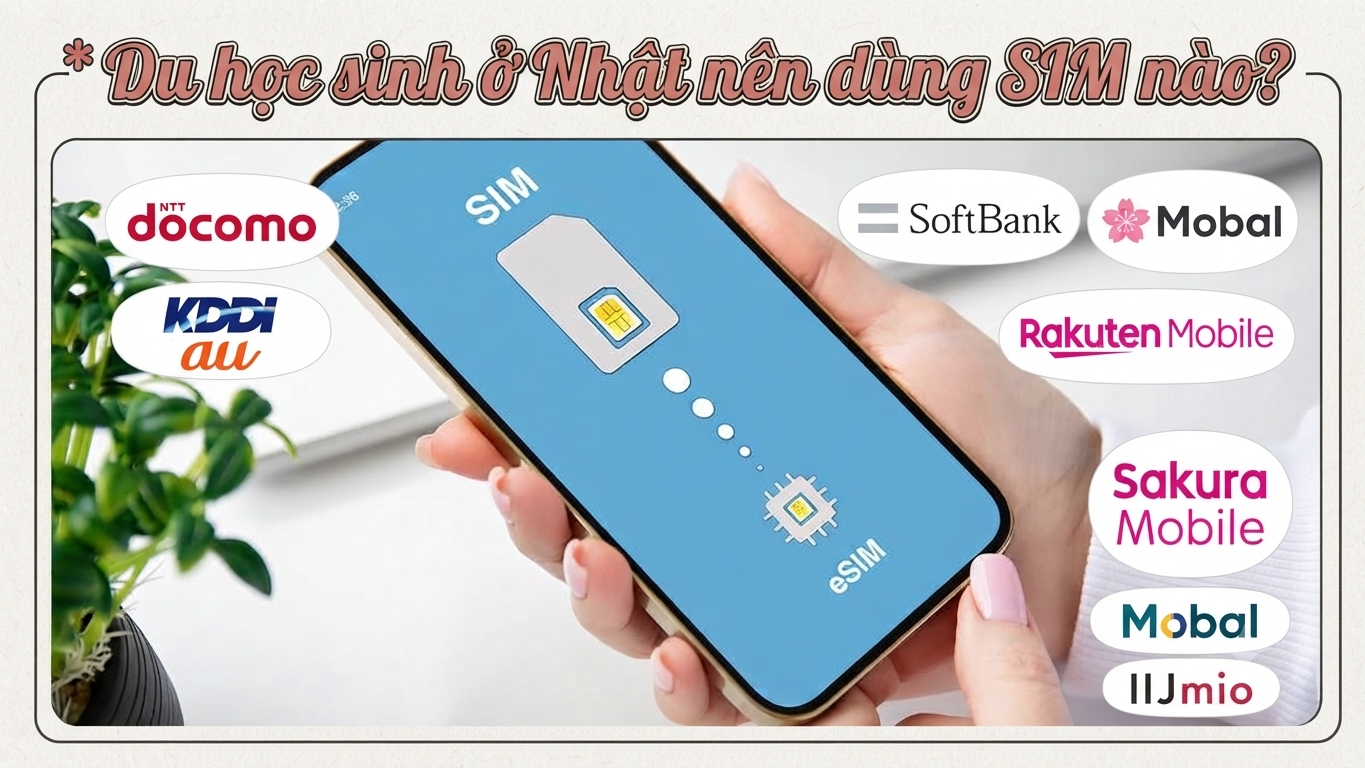
Quick Answer
Most international students in Japan only need a monthly data SIM with about 10–20GB and make free calls via LINE, Zalo, or Messenger — this is usually much cheaper than a contract with major carriers. Only choose a voice SIM (with a Japanese phone number) if you need it for part-time jobs (baito), opening a bank account, signing a rental contract, or registering for services that require a Japanese phone number. If your phone supports eSIM, choose eSIM to receive and use it the same day without waiting for delivery. If you share a place with others or need it for a laptop too, a portable WiFi router will be more suitable.
Who this article is for
This article is written for those in the following situations:
- International students who have just arrived in Japan, just received their residence card (在留カード), and need internet right away to contact their school, housing, or family.
- Students currently using a SIM but finding the bill too high (5,000–8,000 yen/month) and wanting to switch to a more affordable plan.
- You're about to start a part-time job and the employer requires a "Japanese phone number," and you're not sure if your current SIM meets that requirement.
- You're about to enter a vocational school or university and need a plan better suited for online learning and group assignments.
- You live in a dormitory or share house and are deciding between a large-data SIM or a shared portable WiFi router.
This article focuses on one question: which type of SIM should international students choose, and how. For setup instructions or payment methods, see the support page.
Cases where this does NOT apply
This guide is not suitable if you fall into the following groups:
- Tourists or short-term visitors to Japan (under 90 days, no residence card): you should buy a short-term travel SIM/eSIM instead of registering for a monthly plan, since monthly plans require identity verification via a residence card.
- People who haven't received their residence card yet: if you just landed and don't have your residence card in hand yet (in some cases the card is mailed to your address later), you won't be able to register for a long-term SIM immediately. A temporary solution is a portable WiFi router or a short-term travel eSIM.
- People using a locked phone (SIM lock): phones purchased on installment overseas or locked Japanese phones won't accept SIMs from other carriers. You need to unlock it first.
- People who need to buy a phone on installment with a 24-month contract: this is the model used by major carriers (docomo, au, SoftBank), which is completely different from budget SIMs.
- People returning home within 1–2 months: don't sign up for a 12-month prepaid plan, as unused portions are non-refundable.
Steps to follow: choosing the right SIM in 6 steps
-
Step 1 — Calculate how many GB you need per month. Don't guess. Go to your phone's settings and check the mobile data usage statistics for the last 30 days. If you've just arrived in Japan and don't have this data yet, use the estimation table in the Cost section below.
-
Step 2 — Answer the question: do you need a Japanese phone number? Choose a voice SIM if you: apply for part-time jobs (employers call for interviews), open a Japanese bank account, sign a rental contract, register for e-wallets/delivery services, or handle procedures at the city office requiring a contact number. If you only need internet for studying and communicating via LINE, a data SIM is enough.
-
Step 3 — Check your phone. Three things to check: (a) whether the device is unlocked; (b) whether the device supports eSIM (iPhone XS and later, Google Pixel 3 and later, many newer Samsung models); (c) whether a phone bought overseas can pick up Japanese frequency bands. If unsure, take a screenshot of your device info and ask support staff before ordering.
-
Step 4 — Choose the format: physical SIM, eSIM, or portable WiFi. See the comparison table below to decide.
-
Step 5 — Prepare documents and register. Register online at the products page, choose a plan, then upload a photo of your residence card as instructed. The name on your registration must match your residence card exactly (including the order of last name and first name).
-
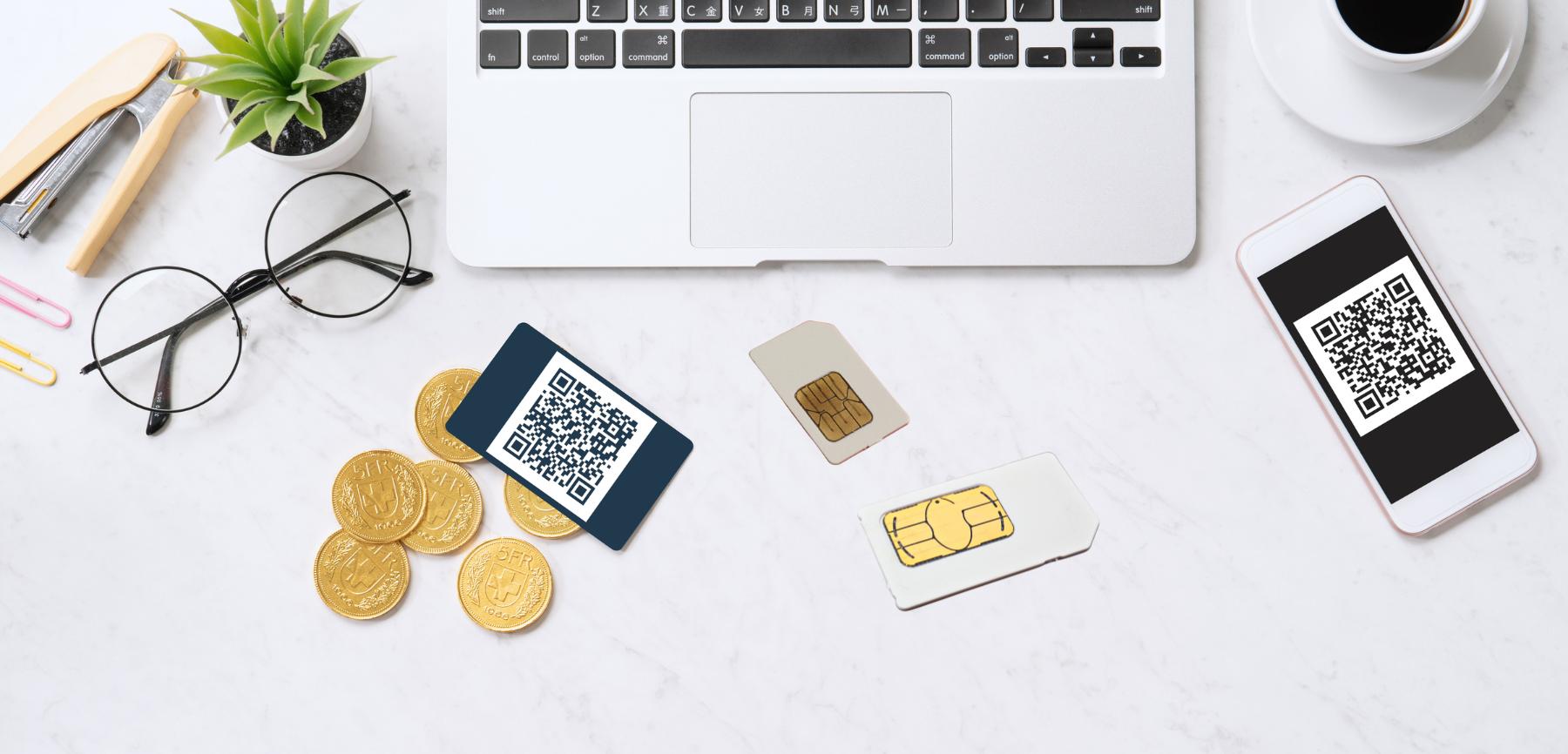
Step 6 — Receive the SIM, set it up, and test it. For physical SIMs: insert the SIM and configure the APN settings according to the instructions. For eSIM: scan the QR code while connected to WiFi. After setup, try opening a website and making a test LINE call to make sure everything works before you leave a WiFi area.
Comparison table of 4 options for international students
| Type | Includes a Japanese phone number? | Best for | Advantages | Limitations |
|---|---|---|---|---|
| Monthly data SIM | No | Most international students, people who only need internet + LINE | Cheapest, flexible monthly plan changes, simple procedures | Can't receive calls from a regular phone number |
| 12-month prepaid SIM | No | Those staying in Japan for at least 1 year who want the best price | Cheaper per month overall, pay once and don't worry about it monthly | No refund for unused portion if you return home early |
| Monthly eSIM | No | Those who need internet right away, people who just landed, devices supporting eSIM | Receive QR code via email, use immediately, no need to wait for shipping | Only works with unlocked devices that support eSIM |
| Voice SIM | Yes | Those doing part-time jobs, opening bank accounts, signing rental contracts | Has a Japanese number to receive calls and verification SMS | Higher price than data SIM, requires more thorough identity verification |
| Portable WiFi | No | Share houses without internet, use for laptop, share with roommates | Multiple devices can share it, can replace fixed-line internet | Must carry an extra device, needs charging |
So which one should you specifically choose?
- Just arrived in Japan, not sure how much you'll use: choose a monthly data SIM or eSIM with a medium capacity (10–20GB). After 1–2 months of actual usage data, adjust up or down.
- About to apply for part-time jobs: choose a voice SIM. Many shops and staffing agencies still call directly by phone instead of messaging on LINE. Not having a Japanese number means missing opportunities.
- Living in a dorm with strong WiFi: choose a low-capacity plan (3–7GB) to save money, since you'll mainly use WiFi at home and school.
- Renting a place without internet, have a laptop, study online: choose a portable WiFi router, or a large-capacity data SIM and use it as a hotspot.
- Planning to stay in Japan for 2–4 years for vocational school/university: the 12-month prepaid plan is the most cost-effective option per month.
Documents needed
Under Japanese regulations, all mobile subscriptions require identity verification (本人確認) before activation. So you need to prepare:
- Residence card (在留カード) — required. Take clear photos of both the front and back, without glare, without covering any corner. The card must be valid.
- Passport — required in some cases to cross-check your name.
- Delivery address in Japan — written correctly in the Japanese format, including building name and room number. An incorrect address is the most common cause of delayed SIM delivery.
- Email and a contact number (this can be a LINE ID or a roommate's number if you don't have one yet).
- Payment method: credit/debit card, bank transfer, or convenience store payment depending on the plan. See details on the support page.
- Student ID — not required everywhere, but it's good to have a photo ready in case it's needed.
Important note: a My Number card is usually not required to purchase a data SIM. If anyone asks you to hand over the original residence card or My Number card, be careful — you only need to provide a photo through the official registration channel.
Cost: how much should international students spend on their phone plan each month?
A reasonable amount for an international student is about 1,500–3,500 yen/month for a data SIM, and about 2,500–4,500 yen/month if you also need calling features. If you're currently paying over 5,000 yen/month just to use your phone, you're almost certainly overpaying.
Reference price ranges in Japan's budget SIM market
| Service type | Reference price range | Notes |
|---|---|---|
| Monthly data SIM (3–7GB) | about 1,200–2,200 yen/month | Suitable for people who have WiFi at home |
| Monthly data SIM (10–20GB) | about 2,000–3,500 yen/month | The most popular choice among international students |
| Large-capacity data SIM (30GB+) | about 3,500–5,000 yen/month | Used as a replacement for fixed-line internet |
| 12-month prepaid SIM | paid once, usually 10–25% cheaper per month overall | Only suitable if you're certain you'll stay in Japan for a full year |
| Voice SIM | about 2,500–4,500 yen/month | Outgoing call charges billed separately or by minute packages |
| Portable WiFi | about 3,000–5,000 yen/month | Shared across multiple devices, can split cost with roommates |
| SIM issuance fee / initial fee | 0–3,300 yen | Depends on current promotions |
This is a general reference price range so you can gauge whether you're being overcharged. For exact pricing of each plan, data capacity, and current promotions, check directly on the products page.
Estimating data usage so you don't overbuy
- LINE chatting, maps, dictionary lookups, browsing photos on social media: about 2–4GB/month.
- Plus listening to music and watching short videos daily on the train: about 7–12GB/month.
- Watching YouTube regularly, video calls back to Vietnam: about 15–25GB/month.
- Online learning, hotspotting for a laptop, watching movies: 30GB/month or more, or switch to portable WiFi.
3 ways to really save money
- Turn on WiFi at school and at home whenever possible; this alone usually reduces data usage by 30–50%.
- Lower video quality to 480p when watching on your phone while out.
- Call back to Vietnam using LINE/Zalo/Messenger over WiFi instead of international calls via phone number — the difference is huge.
Timeframe and processing time
- eSIM: the fastest option. After registering and passing document verification, you'll usually receive the QR code within a few hours to 1 business day. This is a good choice for those who just landed.
- Physical SIM: usually received within 1–3 business days domestically in Japan, depending on the region and timing (weekends, Obon holiday, New Year will be slower).
- Portable WiFi: similar to physical SIM since the device needs to be delivered.
- Document verification: if the residence card photo is blurry or the name doesn't match, you'll be asked to resubmit — usually adding 1 more day. Taking careful photos the first time saves the most time.
- Contract duration: monthly plans are flexible month-to-month; the 12-month prepaid plan is fixed for 12 months. When your residence card expires, the service may be suspended until you update it with a new card — proactively send your renewed card to support.
Where to register / where to go
You have three options:
- Register online — the most convenient. Choose a plan on the products page, or go directly to Monthly Data SIM or Monthly eSIM. Everything is done in Vietnamese.
- Visit the HD TELECOM store in Shin-Okubo, Tokyo — if you want your device checked, set up on the spot, and to ask questions directly in Vietnamese. Great for those who just arrived and aren't used to the process yet.
- Get online support — if you're not sure whether your device supports eSIM, or don't know which data capacity to choose, ask beforehand via the support page instead of buying first and finding out it doesn't work.
For procedures related to your residence card, extending your status of residence, or registering your address, go to the city/ward office (市役所・区役所) and the Immigration Services Agency — a SIM cannot replace these procedures.
Common mistakes international students make when choosing a SIM
- Buying a travel SIM and using it long-term. Travel SIMs expire after 8–30 days and can't be renewed like monthly plans, ending up much more expensive.
- Choosing a data SIM and then applying for a part-time job later. Once the employer asks for a Japanese phone number, you have to register all over again. If you plan to do a part-time job, plan ahead.
- Using a SIM registered under someone else's name. Many students ask a senior to register under their name. When you need to change plans, file a complaint, or when that person returns home, you lose the number and can't do anything about it. You also can't safely use that number for bank verification.
- Not setting up the APN. Inserting the SIM without configuring the APN means the phone won't have internet even though the SIM works fine. This is the most commonly asked-about "issue."
- Device is still locked. Phones brought from Vietnam or bought secondhand may be locked. Check before ordering.
- Registering a name that doesn't match the residence card. For example, if the card says "NGUYEN VAN A" but you register as "Nguyen A Van," verification will be rejected.
- Forgetting to pay the monthly bill. This leads to service suspension and possibly a reactivation fee. Set a reminder or use auto-payment.
- Returning home without canceling the contract. Monthly plans keep charging. Before leaving Japan, contact support to cancel properly.
- Buying a 12-month plan with only 3 months left in Japan. The unused portion is non-refundable.
- Choosing too much data "just to be safe." Many students buy 50GB but actually use only 8GB because both home and school have WiFi.
Frequently Asked Questions
I just arrived in Japan and don't have a bank account yet — can I still buy a SIM?
Yes. You can pay by credit/debit card, bank transfer, or other methods depending on the plan. See payment methods on the support page.
Can I get a part-time job with a data SIM that has no phone number?
It's still possible, but there's a clear disadvantage. Many employers call directly to schedule interviews and will skip you if they can't reach you. If you're planning to work part-time, choose a voice SIM.
What's the difference between eSIM and a regular SIM? Which is better for international students?
The service content is the same; the difference is how you receive it. eSIM is a QR code sent via email, usable the same day, with no risk of losing the SIM card. A regular SIM is a physical card that requires delivery time but works with any unlocked device. If your device supports eSIM, it's more convenient.
How much data should an international student use per month?
10–20GB/month is the most common. If you have good WiFi at both home and school, 5–7GB is enough. If you're hotspotting to a laptop for online learning, plan for 30GB or more, or use portable WiFi.
What's the cheapest way to call back to Vietnam?
Call via apps (LINE, Zalo, Messenger, WhatsApp) using WiFi or data. Making international calls via phone number is many times more expensive.
My residence card is about to expire — will my SIM be cut off?
It may be suspended if you don't update your card. After renewing your status of residence, send a photo of your new residence card to support to update your record.
I live in a share house with 3 people — is it okay to share one portable WiFi router?
It's fine if the three of you mainly use it for studying, chatting, and normal video watching, and can split the monthly cost. But if all three watch high-quality video at the same time, speed will drop — in that case, each person having their own data SIM would be more comfortable.
References
- Ministry of Internal Affairs and Communications of Japan (総務省 / MIC) — regulations on identity verification when signing mobile phone contracts (携帯電話不正利用防止法): soumu.go.jp
- Immigration Services Agency of Japan (出入国在留管理庁 / ISA) — regulations on residence cards (在留カード) and status of residence periods: isa.go.jp
- HD TELECOM's product information and pricing page: /san-pham
- Guides on payment, APN setup, and customer support: /ho-tro
The prices in this article are general reference ranges for Japan's budget SIM market, not an official quote. Regulations on documents and registration conditions may change according to carrier policies and Japanese law — please check with the relevant authority or support team before making a decision.
Source verification date
The content and sources in this article were verified on May 12, 2025. (Note to editors: please update this date and cross-check actual pricing on the products page before publishing.)
Need help choosing the right plan?
If after reading you're still not sure which one to choose, here's a quick summary: if you need internet for studying and communication, check out the Monthly Data SIM; if you need internet today and your device supports eSIM, check out the Monthly eSIM; if your home has no internet, check out Portable WiFi; and if you're sure you'll stay in Japan for a full year, the 12-month prepaid plan is the most cost-effective option.
You can also message HD TELECOM through the support page for advice in Vietnamese, or visit the store in Shin-Okubo (Tokyo) so staff can check your device and help with setup. If you'd like to read more guides on life and procedures in Japan, visit our blog.
Related products
Find your plan with HD TELECOM
SIM, eSIM and Pocket WiFi — genuine quality, clear pricing, 24/7 support.
How Should Newcomers to Japan Prepare a SIM, WiFi, and Phone Number?
What's the Difference Between Data SIM and Voice SIM? Detailed Comparison 2025
How Do Physical SIMs and eSIMs Differ? A Detailed Comparison in Japan
Should You Choose SIM, eSIM, or Pocket WiFi When Coming to Japan? A Detailed Comparison