
What's the Difference Between Data SIM and Voice SIM? Detailed Comparison 2025
September 3, 2026
Quick Answer
Data-only SIM provides internet connection (4G/5G) only — you can browse the web, use LINE, Zalo, Messenger, Google Maps normally, but you don't get a Japanese phone number for voice calls and usually can't receive SMS messages. Voice SIM comes with everything: a real Japanese phone number (starting with 090/080/070), the ability to make and receive voice calls, receive SMS verification codes (OTP) from banks, convenience store apps, government offices, and employers.
In short: if you only need internet, a data-only SIM is cheaper and sufficient. If you need to apply for part-time jobs (baito), open a bank account, register for Japanese services requiring OTP, or need to be reached by school/company, you need a voice SIM.
Many people who've lived in Japan long-term choose a middle-ground solution: using a data SIM for large data allowance, while keeping a cheap voice number just for receiving SMS.
Who this article is for
This article is for foreigners living, studying, and working in Japan, specifically:
- International students who just arrived in Japan, unsure which type of SIM to buy in their first week.
- Technical intern trainees, specified skilled workers, engineers who just changed companies or moved residences and need to re-register their SIM.
- People currently using a data SIM but keep running into problems: not receiving OTP codes, unable to fill in a phone number when applying for baito, unable to open a bank account.
- People wanting to save money, considering switching from a major carrier's voice SIM (docomo, au, SoftBank) to a cheap SIM.
- People about to return to their home country or staying in Japan short-term (3–12 months), wanting to know which SIM type is more flexible to cancel.
Cases where this does NOT apply
This article is not suitable if you belong to the following groups:
- Short-term tourists (under 90 days) without a residence card (在留カード). You cannot register for a long-term voice SIM in Japan; you can only use data-only travel SIM/eSIM or pocket WiFi.
- You're looking for a way to keep your old Vietnamese phone number. That's a roaming matter with Vietnamese carriers, unrelated to Japanese SIMs.
- You need internet for multiple devices or the whole household to share. In that case, you should look at monthly pocket WiFi or fixed-line internet, rather than choosing between two SIM types.
- Your device is network-locked (SIM lock). Devices purchased on installment from Japanese carriers are sometimes locked; you need to unlock it first before considering switching SIMs.
- You need a fixed-line phone number (starting with 03, 06, etc.) for a business. That's a different service, not a mobile SIM.
What's the difference between data SIM and voice SIM? Comparison table
Below is a comparison table of the criteria that real users care about most:
| Criteria | Data SIM (data-only SIM) | Voice SIM (音声SIM) |
|---|---|---|
| 4G/5G internet access | Yes | Yes |
| Japanese phone number (090/080/070) | No | Yes |
| Regular voice calls (calling 110, 119, calling companies) | No | Yes |
| Receiving SMS verification codes (OTP) | Usually not (some types have an optional SMS add-on) | Yes |
| Calling via LINE, Zalo, Messenger, WhatsApp | Yes (requires network) | Yes |
| Registering LINE for the first time | Difficult — LINE requires a number that can receive SMS | Easy |
| Usable for baito applications, written on resume (履歴書) | Not usable | Usable |
| Opening bank accounts, registering cards, e-wallets | Usually rejected | Accepted |
| Required documents for registration | Simple, some types only need a passport | Requires a valid residence card, strict identity verification |
| Reference monthly price | Cheaper, usually around 1,000–3,000 yen depending on data allowance | About 700–1,200 yen higher than a data plan with the same allowance |
| Contract commitment / cancellation fee | Flexible, easy to stop | May have minimum term conditions depending on the provider |
| Number portability (MNP) when switching carriers | Not applicable | Yes |
The biggest difference: SMS verification
Many people think "I only call via LINE, never make voice calls, so I'll just buy a data SIM to save money." That's only half right. The real issue in Japan isn't voice calls — it's SMS messages containing verification codes. Many services in Japan require OTP to be sent via SMS:
- Opening and using banking apps (Yucho, MUFG, SMBC, Rakuten Bank, etc.)
- E-wallets and payment apps: PayPay, Rakuten Pay, d払い
- Buying flight tickets, booking hotels, registering for Amazon, Mercari
- Registering a LINE account for the first time or restoring LINE when changing phones
- Certain online administrative procedures, booking appointments at city offices
If your SIM can't receive SMS, you'll get stuck at the very first step with no way to proceed except borrowing someone else's number — this is very risky because your account will be tied to that person's number.
Second difference: where a phone number is mandatory
In Japan, the "電話番号" (phone number) field appears in almost every document: baito job applications, rental contracts, insurance registrations, hospital records, school applications. Japanese employers still tend to call directly to schedule interviews, rather than messaging strangers on LINE. Without a voice number, your chances of being rejected right from the first round are very high.
Third difference: emergency calls
Data-only SIMs cannot call 110 (police) or 119 (fire, ambulance). This is a point many people overlook, but it's the most critical one during emergencies: traffic accidents, house fires, sudden illness at night, earthquakes. If you live alone, this is a very compelling reason to keep a voice number.
Fourth difference: cost
Data SIMs are cheaper because carriers don't have to issue a phone number or maintain voice infrastructure for you. The actual difference is usually around 700–1,200 yen/month for the same data allowance. Over a year, that's about 8,000–14,000 yen difference — not small, but also not as large as the cost you'd lose if you failed to get a part-time job due to lacking a phone number.
Steps to choose the right SIM type for you
Follow these steps in order, it takes about 5 minutes:
- Answer this question yourself: do you need to receive SMS? If you'll be opening a bank account, applying for baito, registering for PayPay, or setting up a new LINE account — the answer is YES. Choose a voice SIM.
- Check whether you already have a Japanese phone number. If your company/school has already issued you a number, or you already have a cheap voice SIM, then your second SIM only needs to be a data SIM to add more capacity.
- Estimate your monthly data usage. Go to your phone's settings (iPhone: Settings → Cellular; Android: Settings → Network → Data usage) to check how many GB you used last month. If you watch a lot of video or make many video calls, choose a plan of 20GB or more.
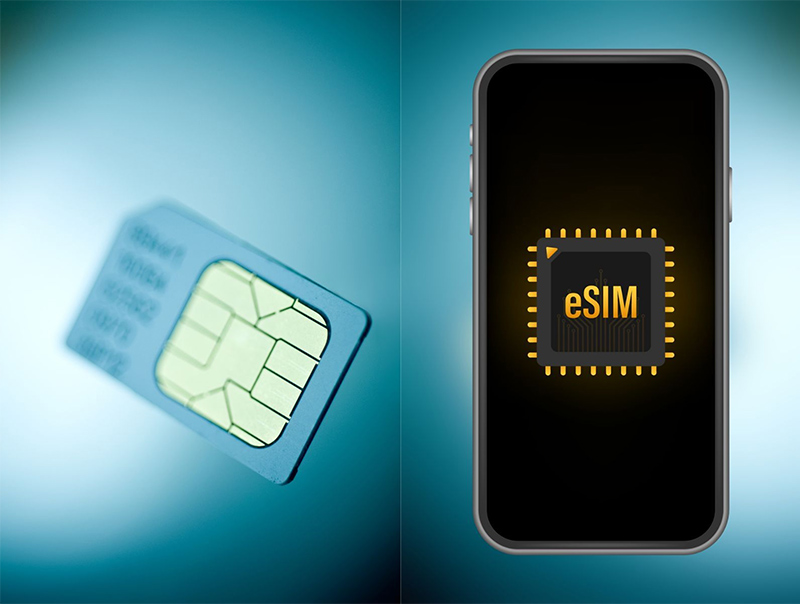
- Check your device: does it use a physical SIM or eSIM? iPhone XS and above, and most recent Android models, support eSIM. eSIM is received via email, scan the QR code and it's ready to use immediately, no need to wait for shipping — see Monthly eSIM.
- Check whether your device is network-locked. If the device was purchased on installment from docomo/au/SoftBank, ask your previous carrier about unlocking (SIMロック解除) first.
- Determine how much longer you'll stay in Japan. Staying long-term and want to pay once for peace of mind: consider a 12-month prepaid SIM. Staying short-term or unsure: choose a monthly plan.
- Prepare documents and register. For data SIM, see Monthly data SIM.
- Activate and test on the same day. Try making a call, try receiving an SMS (for example by logging back into an account that requires OTP) to make sure everything works before you need it urgently.
Quick suggestions by situation
| Who you are | Recommendation |
|---|---|
| New international student, will work baito | Voice SIM (mandatory for job applications, opening a bank account) |
| Already have a company-issued number, only lacking data | High-data SIM or eSIM |
| In Japan under 3 months, has a residence card | Monthly data SIM, flexible to cancel |
| Living alone, worried about emergencies | Voice SIM (can call 110/119) |
| Dual-SIM device, wants to optimize cost | Small voice SIM plan + large data SIM plan |
| Needs internet for laptop, tablet, roommate | Pocket WiFi |
Documents to prepare
Document requirements differ clearly between the two SIM types. The reason is that in Japan, issuing phone numbers is governed by the Act on Prevention of Unauthorized Use of Mobile Phones (携帯電話不正利用防止法), which requires providers to verify the identity of the contract holder.
For voice SIM
- A valid residence card (在留カード) — mandatory, both sides photographed clearly.
- Passport (some places require it for cross-checking).
- Current residential address in Japan, matching the back of the residence card.
- Payment method: credit card, debit card, or bank transfer (furikomi) depending on the provider.
- Contact email that's still active (to receive activation information, invoices).
- If porting your old number (MNP): MNP code (MNP予約番号) obtained from your current carrier, usually valid for 15 days.
For data SIM
- Usually only requires a passport or residence card, a lighter process.
- Address to receive the SIM (if physical SIM) or email (if eSIM).
- Payment method.
Important note: if your residence card is about to expire, renew it first before registering for a long-term voice SIM. Providers usually limit the contract term to match your residence card's validity, and may require you to resubmit a new card upon renewal.
Costs
The figures below are common reference rates in Japan's cheap SIM (MVNO) market, not official quotes. For specific pricing of each plan, please check the products page.
| Expense item | Data SIM | Voice SIM |
|---|---|---|
| Initial registration fee | May apply, usually a few thousand yen | Usually around 3,300 yen (common MVNO rate) |
| Monthly fee (small plan ~3–5GB) | About 900–1,500 yen | About 1,600–2,400 yen |
| Monthly fee (~20GB plan) | About 1,900–2,900 yen | About 2,600–3,900 yen |
| Voice call rate | Not applicable | Common rate is about 22 yen/30 seconds if not on a call plan |
| Unlimited call plan (kakehoudai) | Not available | Optional, usually 500–1,800 yen/month depending on duration |
| Number portability fee (MNP) | Not applicable | Most carriers now waive this fee |
| Contract cancellation fee | Usually none | Varies by provider, read the terms carefully |
Practical money-saving tip: if you rarely make voice calls but still need a phone number to receive SMS and to write on documents, choose a voice SIM with the smallest data plan, then add a large-capacity data SIM or eSIM for your internet needs. A dual-SIM phone will run both simultaneously. Total cost is usually lower than buying one large-capacity voice plan.
Timeframes and processing time
- eSIM: fastest. After your application is approved, you receive a QR code via email and install it within minutes. Usually within the same business day.
- Physical SIM (data): usually 1–3 business days for delivery within Japan, depending on the region. Remote areas like Hokkaido, Okinawa may take longer.
- Voice SIM: slightly longer because identity must be verified as required by regulations. Typically 1–2 business days for application review, plus delivery time. If the residence card photo is blurry or the information doesn't match, the application will be returned and you'll have to resubmit from scratch.
- Number porting (MNP): the MNP code has an expiry (usually 15 days), and you need at least about 10 days of remaining validity when submitting. Your old number will stop working once the new SIM is activated.
- Contract term: monthly plans auto-renew each month; 12-month prepaid plans have a fixed term, and you'll need to renew or buy a new one once it expires.
Advice: don't wait until the last day. If you have an upcoming baito interview, bank procedures to complete, or your old SIM is about to expire, register at least a week in advance.
Where to register / where to do it
You can register for a SIM in Japan through the following methods:
- Register online — the most convenient option for foreigners since Vietnamese-language support is available, no Japanese needed. See the product list to choose the right plan.
- HD TELECOM store in Shin-Okubo, Tokyo — if you want direct support from Vietnamese-speaking staff, device checks, and on-site setup.
- Major carrier stores (docomo, au, SoftBank) — procedures in Japanese, higher prices, usually with long contract commitments.
- Airport counters — only recommended as a temporary solution for the first few days, expensive and mostly offer travel data SIMs only.
If you're unsure about payment methods, bank transfers, or activation instructions, check the support page.
Common mistakes
These are the misunderstandings that cost users the most time and unnecessary money:
- Buying a data SIM only to discover later they can't apply for baito. This is the number one common mistake among international students. Employers who can't reach you by phone will skip your application.
- Thinking that "being able to call on LINE means having a phone number". LINE only works over the internet and cannot replace a real phone number for administrative procedures or receiving OTP.
- Using a friend's number to receive OTP. Later, when you move, have a falling out, or return to your home country — your bank account and e-wallet will get locked because you can't re-verify. Absolutely avoid this.
- Photographing the residence card without the back side, or with glare. The address is on the back; missing it will get your application returned.
- The address on the residence card doesn't match your current address. When you move, you must complete an address change procedure at the city/ward office within 14 days; if not updated, your voice SIM registration may be rejected.
- Not checking whether the device is network-locked. Inserting the SIM and getting no signal, thinking the SIM is defective.
- Cancelling the old SIM before the new one is activated. You'll lose contact for several days and may permanently lose your old number. Always activate the new SIM first before cancelling the old one.
- Forgetting that the MNP code has expired. An expired code must be requested again from scratch, taking a few more days.
- Choosing a plan with too little data and buying extra data every month. Buying extra data piecemeal is always more expensive than upgrading the plan.
- Returning to your home country without cancelling the contract. Fees keep accruing, and outstanding debt may affect you if you register for services again upon returning to Japan.
Frequently Asked Questions
Can a data SIM receive SMS messages?
Most pure data SIMs cannot. Some providers offer a "data SIM with SMS" option (SMS付きデータSIM) with a small extra monthly fee, which can receive SMS but still cannot make voice calls and doesn't have a 090/080/070 number usable for documents. If you need both SMS and an official phone number, choose a voice SIM.
Can I register for LINE using a data SIM?
Very difficult if this is the first time creating an account, since LINE requires a phone number that can receive SMS for verification. If you already have a LINE account from Vietnam, you can continue using it with a data SIM, but if you change phones or get logged out, you'll run into trouble because you can't re-verify.
Can I use both a data SIM and a voice SIM on one device?
Yes, if your device supports dual SIM or physical SIM + eSIM. This is a common setup among Vietnamese people in Japan: a small voice plan to receive SMS and calls, plus a large-capacity data eSIM for browsing.
Can a data SIM call 110 or 119 in an emergency?
No. Data-only SIMs cannot make emergency calls. If you live alone, this is a very good reason to keep at least one voice number at home.
I'm currently using a data SIM and want to switch to a voice SIM — can I keep my old number?
No, because a data SIM doesn't have a voice phone number to keep in the first place. You'll receive a new number. Number portability (MNP) only applies when switching from one voice number to another voice number.
Can I register for a voice SIM without a residence card?
In principle, no, because identity verification when signing a phone number contract is a legal requirement in Japan. If you're only staying short-term or haven't received your residence card yet, use a data SIM or pocket WiFi in the meantime.
Which type is cheaper in the long run?
Data SIM is cheaper in pure fee terms, by about 700–1,200 yen/month. But if lacking a phone number prevents you from getting a part-time job or opening a bank account, that "savings" isn't worth it.
How do I call Vietnam using a data SIM?
Call via apps: LINE, Zalo, Messenger, WhatsApp, Viber — completely normal, just needs network connection. This is how nearly all Vietnamese people in Japan call home, even those with voice SIMs, because traditional international voice calls are very expensive.
I'm about to return to my home country, which type should I choose?
If you only have a few months left, a monthly plan is more flexible since it's easy to stop. Whichever type you choose, remember to complete the cancellation procedure before leaving Japan to avoid being charged further.
References
- Ministry of Internal Affairs and Communications of Japan (総務省 / MIC) — regulations on identity verification when signing mobile phone contracts under the Act on Prevention of Unauthorized Use of Mobile Phones (携帯電話不正利用防止法): soumu.go.jp
- Ministry of Internal Affairs and Communications of Japan — information on the number portability system (MNP, 番号ポータビリティ).
- Immigration Services Agency of Japan (出入国在留管理庁) — regulations on residence cards and the obligation to report address changes: moj.go.jp/isa
- HD TELECOM's service information and pricing page: product list.
The prices, registration fees, and contract terms mentioned in this article are common market reference rates and may vary by provider and over time. For procedures related to residence cards and registered addresses, you should check with your local administrative office (市役所/区役所) or the Immigration Services Agency for accurate information for your specific case.
Source review date
This article's content was reviewed and updated on May 15, 2025. Telecommunications regulations and pricing in Japan may change; please confirm the latest information on the product page or contact us directly before registering.
Still not sure which type to choose?
If you're still undecided after reading this, the simplest way is to answer one question: do you need to receive SMS messages and calls from Japanese people? If yes, choose a voice SIM; if no, a data SIM is sufficient and more economical.
HD TELECOM has a Vietnamese-speaking support team in Shin-Okubo, Tokyo. You can preview your options at Monthly data SIM, Monthly eSIM, or Pocket WiFi. If you need to ask more about documents, payment, or activation, visit the support page — better to ask first before registering, there's no rush.
Read more guides for Vietnamese people in Japan on the blog page.
Related products
Find your plan with HD TELECOM
SIM, eSIM and Pocket WiFi — genuine quality, clear pricing, 24/7 support.