

Your First Kaiseki Meal in Japan: Course Order, Etiquette, Prices and Autumn Dishes
November 14, 2026
1. Quick Answer
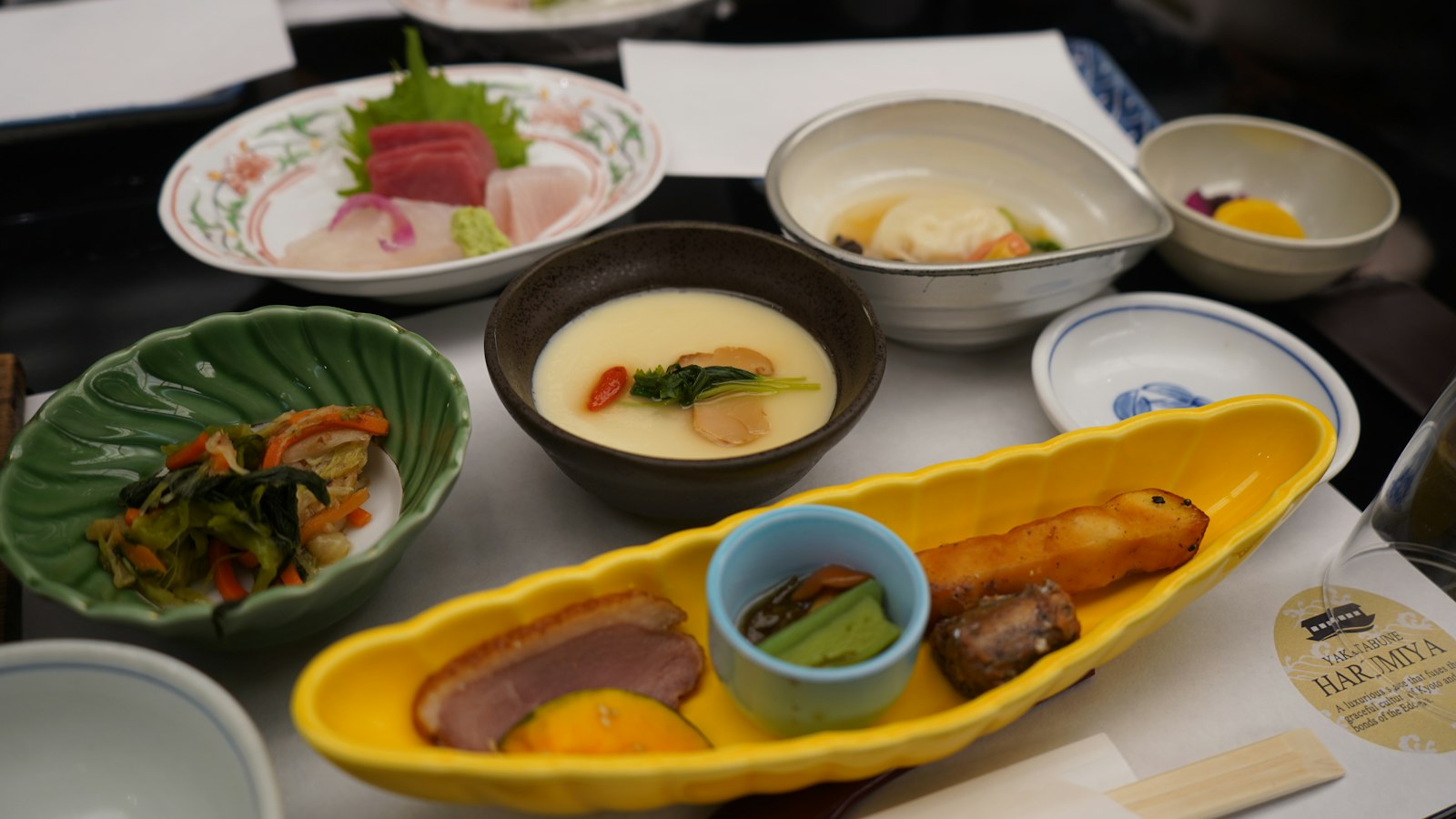
Kaiseki is a seasonal Japanese multi-course meal in which each small dish is presented like a work of art. Autumn is one of the most beautiful kaiseki seasons, with maple-leaf garnishes, mushrooms, chestnuts, sanma and persimmons.
- Typical course order: appetizer (sakizuke) → seasonal platter (hassun) → clear soup (owan) → sashimi (mukozuke) → grilled dish (yakimono) → simmered dish (takiawase/nimono) → fried or steamed dish → rice, miso soup and pickles → dessert.
- Price: kaiseki restaurant dinners usually cost from about ¥10,000 to over ¥30,000 per person; lunch is generally cheaper; ryokan dinners often include kaiseki.
- Key manners: use chopsticks correctly, lift bowls when eating, try not to leave much food, and mention allergies when you book.
We checked these details on November 14, 2026, against the sources listed at the end. Course order and prices vary by restaurant; check the menu when you reserve.
2. What Is Kaiseki? 懐石 vs 会席
Two Japanese words are both read “kaiseki”:
- 懐石 (cha-kaiseki): a light meal served before a tea ceremony, rooted in the tea tradition, simple and seasonal.
- 会席 (kaiseki ryori): a multi-course banquet common at restaurants and ryokan, usually served with drinks.
For travelers, “kaiseki” usually means the second: a sequence of small seasonal dishes moving from light to rich and ending with rice and dessert. Both share a respect for ingredients at their peak (shun), seasonal tableware and presentation that evokes nature.
3. The Course Order
| Course | Japanese | Description |
|---|---|---|
| Appetizer | 先付 sakizuke | A small opener, such as tofu in yuzu broth |
| Seasonal platter | 八寸 hassun | Several small bites expressing the season, such as crab and persimmon |
| Clear soup | 椀物 owan / suimono | Clear dashi broth, often with fish or mushrooms |
| Sashimi | 向付 mukozuke | Seasonal raw fish |
| Grilled dish | 焼物 yakimono | Grilled fish, such as salt-grilled sanma or ayu |
| Simmered dish | 炊合 takiawase / 煮物 nimono | Vegetables and protein simmered separately, then arranged together |
| Fried / steamed dish | 揚物 agemono / 蒸物 mushimono | Tempura, chawanmushi |
| Vinegared dish | 酢の物 sunomono | Refreshes the palate before the final course |
| Rice, soup and pickles | 食事 shokuji | Rice (in autumn, perhaps mushroom or chestnut rice), miso soup and pickles |
| Dessert | 水菓子 mizugashi | Seasonal fruit or a light sweet |
Not every restaurant serves every course; meals typically have between seven and more than ten dishes.
4. What Makes Autumn Kaiseki Special?
- Matsutake mushrooms: in dobin-mushi broth or mushroom rice, especially in Kyoto.
- Chestnuts and root vegetables: chestnut rice and simmered taro.
- Sanma, salmon and salmon roe.
- Persimmons and pears: in the hassun or dessert.
- Decoration: maple and ginkgo leaves, rice stalks and warm-toned tableware.
See more autumn dishes in our guide to autumn food in Japan.
5. Prices and Where to Eat
| Format | Typical price | Notes |
|---|---|---|
| Kaiseki lunch (smaller set) | lower than dinner – NEEDS VERIFICATION per restaurant | A budget-friendly way to try it |
| Kaiseki restaurant dinner | about ¥10,000–30,000 or more | Famous Kyoto restaurants can cost more |
| Ryokan with dinner | included in the room rate | Usually 会席-style kaiseki |
| Hotel or department-store restaurant floors | mid-range | Easy to book, often with English menus |
Prices usually exclude drinks; some places add a service charge or private-room fee. Ask when you book.
6. Making a Reservation
- Kaiseki restaurants usually require reservations, and some accept bookings only through hotels or booking sites.
- Mention allergies and dietary restrictions when you book, not when you sit down; chefs prepare ingredients in advance.
- Arrive on time; being late can disrupt the courses, and some places cancel late bookings.
- Some places charge cancellation fees; read the policy carefully.
7. Dining Etiquette
- Dress: smart-casual; avoid flip-flops and shorts at high-end restaurants. In tatami rooms, wear clean socks, as you'll remove your shoes.
- Perfume: keep it light, as strong scents interfere with the food.
- Lidded bowls: hold the bowl with one hand, lift the lid with the other and place it upside-up beside the bowl; replace it when finished.
- Lifting bowls: it's fine to lift small bowls and soup bowls toward your mouth and sip soup directly.
- Chopsticks: don't stick them upright in rice, pass food chopstick to chopstick or point with them. Rest them on the chopstick rest.
- Sashimi: dip one side lightly in soy sauce; at formal places, put wasabi on the fish rather than mixing it into the soy sauce.
- Drinks: in Japan people usually pour for each other rather than for themselves; lift your glass slightly when someone pours.
- Photos: ask first, be quick and don't use flash.
- Try to finish your food; if you can't eat something, tell the staff politely.
8. Kaiseki at a Ryokan
At a ryokan, kaiseki dinner is usually served in your room or a private dining room at a set time (for example, 18:00 or 19:00). You can wear the ryokan's yukata. Breakfast is typically a Japanese set with grilled fish, rice and miso soup. If you're planning a hot-spring stay, see our guide to onsen with autumn leaves in Japan.
9. Vegetarian Diets, Allergies and Children
- Many dishes use fish-based dashi; vegetarians need to say so clearly when booking. Some restaurants offer shojin ryori (Buddhist vegetarian) menus.
- Common allergens include shellfish, eggs, wheat, buckwheat and soy. Carry a card in Japanese.
- Children: some high-end restaurants don't accept young children; ask first. Ryokan often have children's menus.
10. Useful Japanese Phrases
| Japanese | Reading | Meaning |
|---|---|---|
| いただきます | itadakimasu | Said before eating |
| ごちそうさまでした | gochisousama deshita | Thank you, after eating |
| アレルギーがあります | arerugii ga arimasu | I have an allergy |
| これは何ですか | kore wa nan desu ka | What is this? |
| おいしいです | oishii desu | It's delicious |
11. Common Mistakes to Avoid
- Mentioning allergies only after the food arrives.
- Arriving late and disrupting the pace of service.
- Eating too fast or ordering extras at set-menu restaurants.
- Putting a lid face down on the table or scratching lacquerware.
- Not reading the cancellation policy.
12. Options by Budget
- Budget: a small kaiseki lunch set in Kyoto, or a kaiseki-style bento from a department store.
- Mid-range: hotel kaiseki restaurants and mid-range ryokan dinners.
- Splurge: renowned kaiseki restaurants in Kyoto or Tokyo, booked weeks ahead.
13. Your Phone and Mobile Data
You'll need data to book tables, translate menus and allergy information, find restaurants hidden down side streets and call a taxi after dinner. During the meal, keep your phone on silent and use it sparingly. Free Wi-Fi on the move is unreliable (see our guide to free Wi-Fi in Japan).
Need mobile data during your Japan trip? Compare HD Telecom's available eSIM and Wi-Fi options, and check device compatibility before choosing a plan. Visitors can read our guide to travel eSIMs for 5–14 day trips. For longer stays, see HD Telecom's Monthly Data eSIMs (your phone must support eSIM) and Monthly Pocket WiFi rentals, and check each plan's data allowance, the speed after the allowance runs out and the terms on the product page.
14. Where to Try Kaiseki
- Kyoto: the home of refined kaiseki, with many restaurants in Gion, Higashiyama and around Nanzenji. Lunch sets are a good way to try famous restaurants at lower prices.
- Tokyo: kaiseki restaurants in Ginza, Akasaka and Kagurazaka, plus hotel restaurants with English menus.
- Onsen towns: ryokan in Hakone, Kinosaki, Kanazawa's Kaga onsen and elsewhere serve kaiseki dinners as part of the stay.
- Department-store restaurant floors: accessible prices and easy reservations.
Popular restaurants book up weeks ahead in autumn, especially in Kyoto during foliage season.
15. Understanding the Seasonal Details
Part of the joy of kaiseki is noticing small seasonal touches. In autumn, a dish might be served on a plate shaped like a gourd or a maple leaf, garnished with a single red leaf or a sprig of pine, or presented in a bowl decorated with chrysanthemums. The chef may also choose ingredients that symbolize the time of year, such as chestnuts for harvest or ginkgo nuts for late autumn. Don't hesitate to ask “これは何ですか?” about a dish or decoration; staff are usually happy to explain.
16. Planning a Kaiseki Meal on a Trip
- Choose one special kaiseki meal rather than several; it's a long, rich experience.
- Lunch is often better value and leaves the evening free.
- Avoid booking kaiseki on the same day as a long travel day; you'll want to enjoy it rested.
- If staying at a ryokan with dinner, you don't need to book another kaiseki that day.
17. Tableware and Presentation
In kaiseki, the dishes and bowls are as important as the food. Chefs choose lacquerware, porcelain and pottery to match the season and the ingredient: warm earthy colors and rustic ceramics in autumn, lighter glass and blue-and-white porcelain in summer. Handle tableware gently, don't stack dishes when finished, and avoid wearing large rings or bracelets that could scratch lacquer. If you're curious about a beautiful dish, you can ask where it was made; some restaurants use pieces by well-known potters.
18. Kaiseki vs Other Japanese Set Meals
| Meal | What it is | Typical setting |
|---|---|---|
| Kaiseki | Seasonal multi-course meal, served course by course | Restaurants, ryokan |
| Teishoku | Everyday set meal: main, rice, soup, pickles | Casual restaurants |
| Bento | Boxed meal | Takeaway, trains |
| Shojin ryori | Buddhist vegetarian cuisine | Temples, specialist restaurants |
19. FAQ
How long does a kaiseki meal take?
Usually 1.5–3 hours, depending on the number of courses and the pace.
Should I tip?
No. Japan has no tipping culture; some places include a service charge on the bill.
What if I don't eat raw fish?
Say so when booking; many restaurants will replace sashimi with a cooked dish.
Do I have to kneel on tatami?
No. You can sit cross-legged, and many places have low chairs or Western-style tables. Ask when booking if sitting on the floor is difficult.
How is kaiseki different from sushi omakase?
Sushi omakase focuses on sushi chosen by the chef; kaiseki is a varied sequence of dishes organized by technique (grilled, simmered, fried) and season.
Can I order drinks separately?
Yes. Sake, beer, tea and soft drinks are usually ordered separately, and some restaurants offer sake pairings. Ask the staff to recommend a sake that suits the season.
Is kaiseki suitable for a first visit to Japan?
Yes. Even a modest lunch set gives you a good sense of Japanese seasonal cooking. Choose a restaurant with an English menu if you're nervous about ordering.
What should I do if I don't like a dish?
It's fine to leave a little. Don't make a fuss; if there's an ingredient you can't eat at all, tell the staff quietly so they can let the kitchen know.
Is kaiseki healthy?
Generally yes: many small portions of fish, vegetables and rice, with little heavy oil. Fried courses and sake add up, though, so pace yourself.
Can I ask for less food?
Some restaurants offer shorter courses or smaller portions if you ask when booking. It's better than leaving lots of food.
What's the difference between lunch and dinner kaiseki?
Lunch usually has fewer courses and simpler ingredients, at a much lower price. Dinner is longer and more elaborate, often with premium ingredients like matsutake or high-grade fish.
Can I bring my own wine or sake?
Usually not. Some restaurants allow it for a corkage fee, but ask in advance; bringing drinks without permission is considered rude.
What should I wear to a ryokan kaiseki dinner?
The ryokan's yukata is fine for in-room or ryokan dining. For restaurants outside the ryokan, wear your own clothes.
How far ahead should I book?
For famous restaurants in Kyoto during autumn, book several weeks or even months ahead. Hotel and department-store restaurants can often be booked a few days before.
Can I eat kaiseki alone?
Yes. Many restaurants welcome solo diners, especially at counter seats where you can watch the chef. Some require a minimum of two people, so check when booking.
20. Conclusion
Kaiseki is a way to taste Japan's autumn one small dish at a time. Choose lunch if you're on a budget, book ahead and mention allergies when you reserve, dress smartly, follow a few simple rules for bowls and chopsticks, and take your time over each course. Keep your phone connected to book and translate menus, then put it away when the meal begins.
Sources (checked November 14, 2026)
Related products
Find your plan with HD TELECOM
SIM, eSIM and Pocket WiFi — genuine quality, clear pricing, 24/7 support.
Sapporo Food in Late Autumn: Miso Ramen, Jingisukan, Soup Curry and Nijo Market
Depachika: Japan's Department-Store Food Halls – What to Buy and When to Save
Nishiki Market and Kyoto Autumn Food: What to Eat, Rules and Yudofu
Autumn Fruit Picking in Japan: Apples, Mikan and Persimmons – Where and How Much