

Power Bank Regulations on Flights in Japan (2026): In-Flight Ban, 2-Unit Limit, and How to Calculate Wh
November 7, 2026
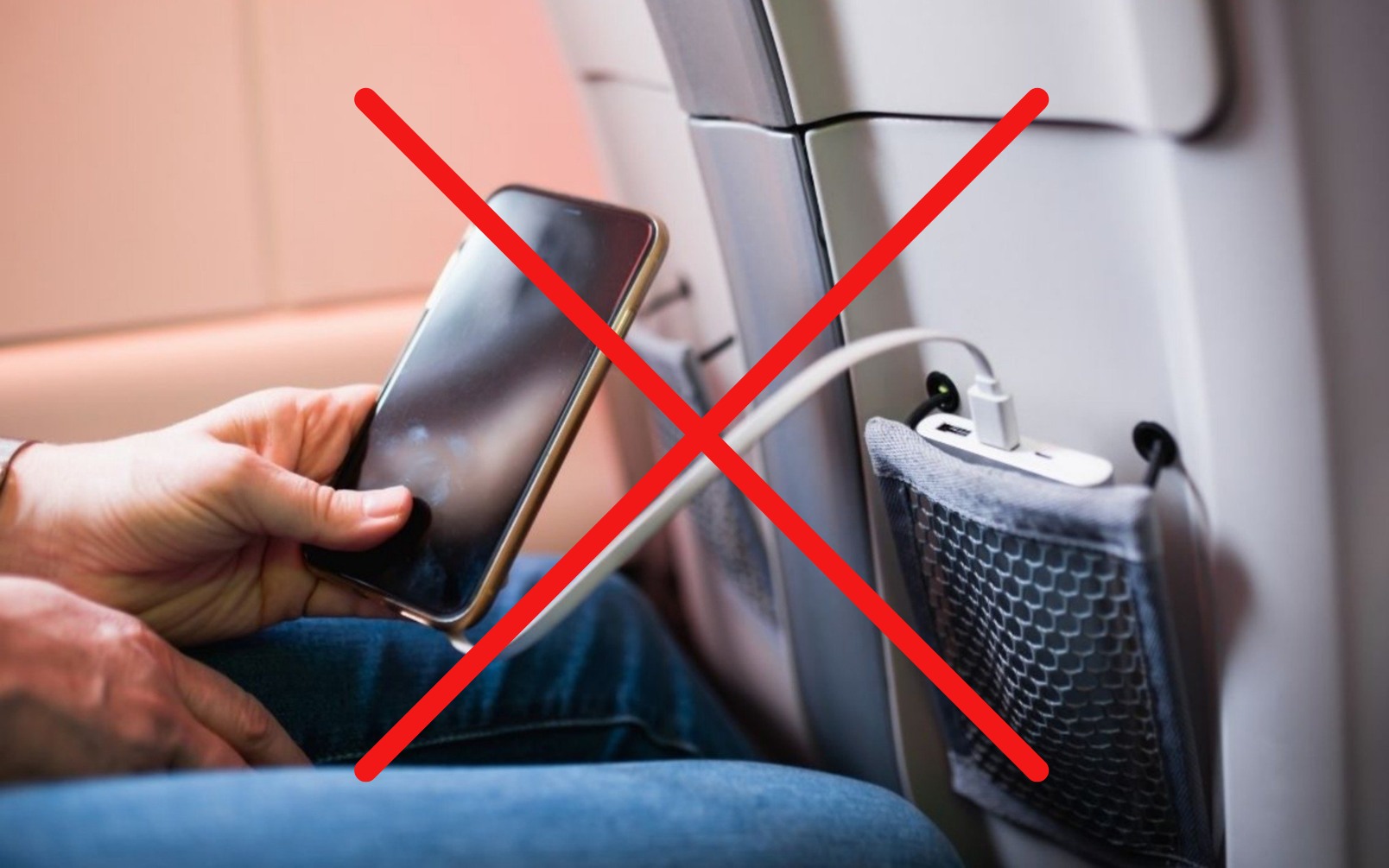
Quick Answer: Starting April 24, 2026, flights in Japan will implement new regulations regarding power banks (モバイルバッテリー) mandated by the Ministry of Land, Infrastructure, Transport and Tourism (MLIT): (1) You cannot use power banks to charge phones or other devices on board, nor can you charge the power bank itself using in-seat power outlets or USB ports; (2) A maximum of 2 power banks per person is allowed in carry-on baggage; (3) The maximum capacity is 160Wh; (4) Do not store them in overhead bins — keep them in the seatback pocket, under the seat, or on your person; (5) Strictly prohibited in checked baggage. You can still charge your phone directly using the aircraft's in-seat power outlets or USB ports (if available). Violating certain rules may result in penalties under the Civil Aeronautics Act. These rules only apply to airplanes — on local trains, Shinkansen bullet trains, and buses, you can continue using power banks normally.
The article below breaks down each regulation, explains how to convert mAh printed on your charger to Wh, covers key notes for Pocket WiFi and other devices, and provides a pre-airport checklist — especially useful if you are preparing to fly back to Vietnam for Tet.
Why Japan Is Tightening Power Bank Regulations
Power banks use lithium-ion batteries that can overheat and catch fire when subjected to impacts, damage, or poor manufacturing quality. On an aircraft, a fire inside an overhead bin is extremely difficult to detect and extinguish in time. The fire aboard an Air Busan flight at Gimhae Airport (South Korea) in January 2025, believed to have started from a power bank in an overhead compartment, was one of the incidents that prompted many countries and airlines to reassess their policies.
In Japan, MLIT required passengers to keep power banks in visible locations rather than in overhead bins starting in July 2025. By April 2026, the policy was elevated to ban in-flight usage and restrict quantities, aligning with updated standards from the International Civil Aviation Organization (ICAO).
Summary of Regulations Effective April 24, 2026
| Category | Regulation |
|---|---|
| Charging devices with a power bank on board | Not allowed |
| Charging the power bank using in-seat outlets/USB ports | Not allowed |
| Charging a phone directly via in-seat outlets/USB ports | Allowed (if available on the aircraft) |
| Quantity | Maximum of 2 power banks per person in carry-on baggage |
| Capacity | Maximum 160Wh; over 160Wh is strictly prohibited |
| Between 100Wh and 160Wh | Usually requires airline approval — check in advance |
| Storage location | Seatback pocket, under the seat, on your person; do not store in overhead bins |
| Checked baggage | Strictly prohibited |
| Sodium-ion batteries | Completely prohibited, both in carry-on and checked baggage |
These regulations apply to domestic flights within Japan and international flights departing from or arriving in Japan operated by airlines subject to these rules. Individual airlines may also have their own additional rules — for instance, some foreign carriers have already banned in-flight power bank use. When flying internationally, be sure to check the regulations of both your airline and destination country.
Penalties
Under Japan's Civil Aeronautics Act, violations such as exceeding the allowed quantity or capacity limit, charging a power bank on board, placing power banks in checked baggage, or failing to insulate battery terminals can result in imprisonment for up to 2 years or fines of up to 1 million yen. In practice, more common consequences include confiscation at security checkpoints, denied boarding, or missed flights. Always strictly follow the flight crew's instructions.
How to Calculate Wh from mAh
Power banks usually display their capacity in mAh (milliampere-hours) and voltage in V. Aviation regulations, however, use Wh (watt-hours). The formula is:
Wh = mAh × V ÷ 1,000
For most power banks, the nominal battery voltage is 3.6V or 3.7V. Here is an example calculation using 3.7V:
| Capacity printed on charger | Approximate Wh | Allowed on board |
|---|---|---|
| 5,000 mAh | Approx. 18.5Wh | Allowed (counts toward the 2-unit limit) |
| 10,000 mAh | Approx. 37Wh | Allowed |
| 20,000 mAh | Approx. 74Wh | Allowed |
| 27,000 mAh | Approx. 100Wh | Allowed, right at the 100Wh threshold |
| 30,000 – 43,000 mAh | Approx. 111–160Wh | Usually requires airline approval |
| Over approx. 43,000 mAh | Over 160Wh | Not allowed |
Tip: Many power banks have the Wh rating printed directly on the casing. If your power bank does not clearly display its capacity, security personnel may not allow you to take it on board — always carry one with clear labeling.
What About Pocket WiFi, Laptops, and Other Devices?
- Pocket WiFi: These are devices with built-in lithium-ion batteries rather than external power banks, so they are generally allowed on board like smartphones. You should carry them in your hand luggage, powered off or set to the appropriate mode as instructed by the airline. If you use a separate power bank to recharge your Pocket WiFi, that power bank must follow the rules detailed above.
- Laptops, tablets, and cameras: Built-in batteries are usually permitted on board; spare removable batteries have separate regulations.
- E-cigarettes: Permitted in carry-on baggage only and strictly prohibited from use during the flight.
- Devices with damaged, swollen, or heavily dropped batteries: Do not bring them on board.
Specific guidelines for each device type may vary by airline, so please check the carrier's “dangerous goods” page before traveling.
Pre-Airport Checklist (Especially for Trips Back to Vietnam for Tet)
- Count your power banks: Maximum 2 units per person. If you have more, leave the extras at home.
- Check capacity: Read the Wh or mAh printed on the casing; leave behind any charger without clear labeling.
- Inspect physical condition: Do not bring swollen, cracked, unusually hot, or dropped power banks.
- Do not pack them in checked luggage. Remove all power banks and spare batteries from your suitcase before checking it in.
- Protect battery terminals: Place each power bank in a separate pouch or cover the ports with electrical tape if needed to prevent contact with metal objects.
- Fully charge your phone before boarding, since you cannot use a power bank during the flight.
- Download movies, music, and maps in advance for your journey and arrival.
- Check policies of your airline and arrival airport, especially when traveling internationally or making transit stops.
Common Scenarios at Security Checkpoints
“I have 3 power banks.” You will need to surrender or leave one behind. Some airports offer storage or postal mailing services, but there is not always enough time before boarding. It is best to bring only 2 units right from home.
“My power bank is in my checked bag.” If detected by X-ray scanners, you may be called back to open your suitcase, or your luggage may be delayed. Double-check side compartments, toiletry bags, and camera cases in your suitcase before checking it in.
“My charger has no capacity label.” Officers may confiscate it because the Wh rating cannot be verified. If you purchased a cheap power bank online, inspect the label before departure.
“I want to use my power bank on the plane because my phone battery is low.” This is not permitted. Ask a flight attendant if your seat has a power outlet or USB port, or close background apps and enable battery-saver mode.
“The power bank in my pocket gets hot during the flight.” Notify a flight attendant immediately. Do not attempt to handle it alone, do not cover it, and do not place it inside another bag.
International Flights: Japan – Vietnam and Transit
When traveling between Japan and Vietnam, you must follow the strictest set of rules among Japanese regulations, Vietnamese regulations, your airline's policies, and transit airport rules (if applicable). Many carriers across Asia have already implemented their own policies restricting in-flight power bank usage. The safest approach is:
- Bring at most 2 clearly labeled power banks under 100Wh.
- Do not use power banks at any point during the flight, even if the airline does not make an announcement.
- Review the airline's “dangerous goods” or “lithium batteries” page a few days before departure, as policies are subject to updates.
On Trains, Shinkansen, and Buses
The ban on power bank usage currently applies exclusively to airplanes. On local trains, Shinkansen bullet trains, and buses in Japan, you can still charge your phone using a power bank as usual. Many newer Shinkansen models also feature in-seat power outlets. Even so, make sure to:
- Avoid charging devices with power banks kept inside sealed bags, under pillows, or in hot environments.
- Stop usage immediately and alert the staff if you notice excessive heat, strange odors, or smoke coming from your charger.
Safe Purchasing and Disposal of Power Banks in Japan
Purchasing Tips
- Look for the PSE mark — the mandatory electrical safety certification mark for power banks sold in Japan.
- Buy from reputable electronics stores and trusted retailers; be cautious with excessively cheap, unbranded products.
- Choose an appropriate capacity: for most users, 10,000 mAh (approx. 37Wh) is plenty for day-to-day use and fully compliant with airline rules.
Usage Guidelines
- Never charge power banks overnight on a bed or near flammable materials.
- Do not leave them inside vehicles exposed to direct sunlight.
- According to data from the National Institute of Technology and Evaluation (NITE) in Japan, incidents involving power banks have increased in recent years — treat them as sensitive devices requiring careful handling.
Disposal Guidelines
Never throw power banks into regular household trash. Lithium-ion batteries can easily spark fires in garbage trucks. Many electronics retailers provide dedicated battery recycling bins; additionally, refer to your local municipality's waste sorting guidelines. Swollen or damaged power banks may require specialized disposal — consult local stores or municipal offices for guidance.
Staying Connected During Flights and Upon Arrival
Since you cannot use power banks in flight, you should:
- Fully charge your phone and electronic devices before boarding.
- Pre-download flight tickets, boarding passes, and destination airport maps.
- Plan your connectivity options for the moment you land.
If you live in Japan long-term, HD Telecom provides monthly data SIMs, eSIMs, and Pocket WiFi operating on SoftBank or Rakuten Mobile networks, with flexible plans featuring minimum contract terms (typically 6 months, or starting from 2 months for the Rakuten 300GB plan). An eSIM eliminates the need to carry extra devices or battery packs, while Pocket WiFi is ideal if you need connectivity across multiple gadgets. Check out our Pocket WiFi setup guide and Pocket WiFi vs. Data SIM comparison to find the best option for your needs.
Frequently Asked Questions
When does the in-flight power bank ban take effect in Japan?
Starting April 24, 2026. You may still bring power banks on board (maximum 2 units, up to 160Wh), but you cannot use them to charge devices during the flight.
Can I bring a 20,000 mAh power bank on the plane?
Yes. At 3.7V, 20,000 mAh is equivalent to approximately 74Wh, which is well below the 100Wh threshold. It counts toward your 2-unit personal allowance.
Can I charge my phone using the in-seat outlet on the aircraft?
Yes, provided the aircraft has in-seat power outlets or USB ports. Only the use of power banks and recharging the power bank itself are prohibited.
Is a Pocket WiFi counted as a power bank?
A Pocket WiFi is an independent device with a built-in battery and is generally treated like a mobile phone. Please follow crew instructions regarding turning off the device or enabling airplane mode.
Does this regulation apply on Shinkansen trains?
No. This rule currently applies only to flights. On trains and buses, you can continue using power banks normally.
Conclusion
Japan's updated power bank regulations are straightforward: bring a maximum of 2 units, stay under 160Wh, keep them on your person, never check them in, and do not use them during the flight. Prior to every trip — especially when heading back to Vietnam for Tet — count your units, inspect their condition and labels, and fully charge your smartphone before boarding. Spending just a few minutes preparing will help you avoid confiscations, prevent travel disruptions, and most importantly, ensure a safe flight for everyone.
Related products
Find your plan with HD TELECOM
SIM, eSIM and Pocket WiFi — genuine quality, clear pricing, 24/7 support.
Staying Warm During Winter in Japan: Heattech, Kairo, Kotatsu, and Tips to Save on Gas and Electricity
Using Your Phone During Earthquakes and Disasters in Japan: Alerts, 171, 00000JAPAN Wi-Fi, and Battery Saving Tips
SMS and Call Scams in Japan: How to Spot Them, Stay Safe, and What to Do If You've Been Scammed
10 Common SIM Errors in Japan and How to Fix Them Yourself in 5 Minutes