
Pocket WiFi or Data SIM: Which One Should You Choose When Living in Japan?
August 9, 2026
In Vietnam, few people use pocket WiFi routers, so many who move to Japan are quite confused when they see a coworker pull a small box out of their pocket so the whole group can get online. Pocket WiFi and data SIMs solve the same problem—getting your devices connected to the internet—but how they fit into your daily life is quite different. This article will help you choose right from the start, saving you the trouble of switching back and forth later.
1. Quick breakdown: What are they?
- Data SIM: A SIM card (or eSIM) inserted directly into your phone. Your phone gets internet access automatically, and if you want to share connection with a laptop, you turn on mobile hotspot (tethering) from your phone.
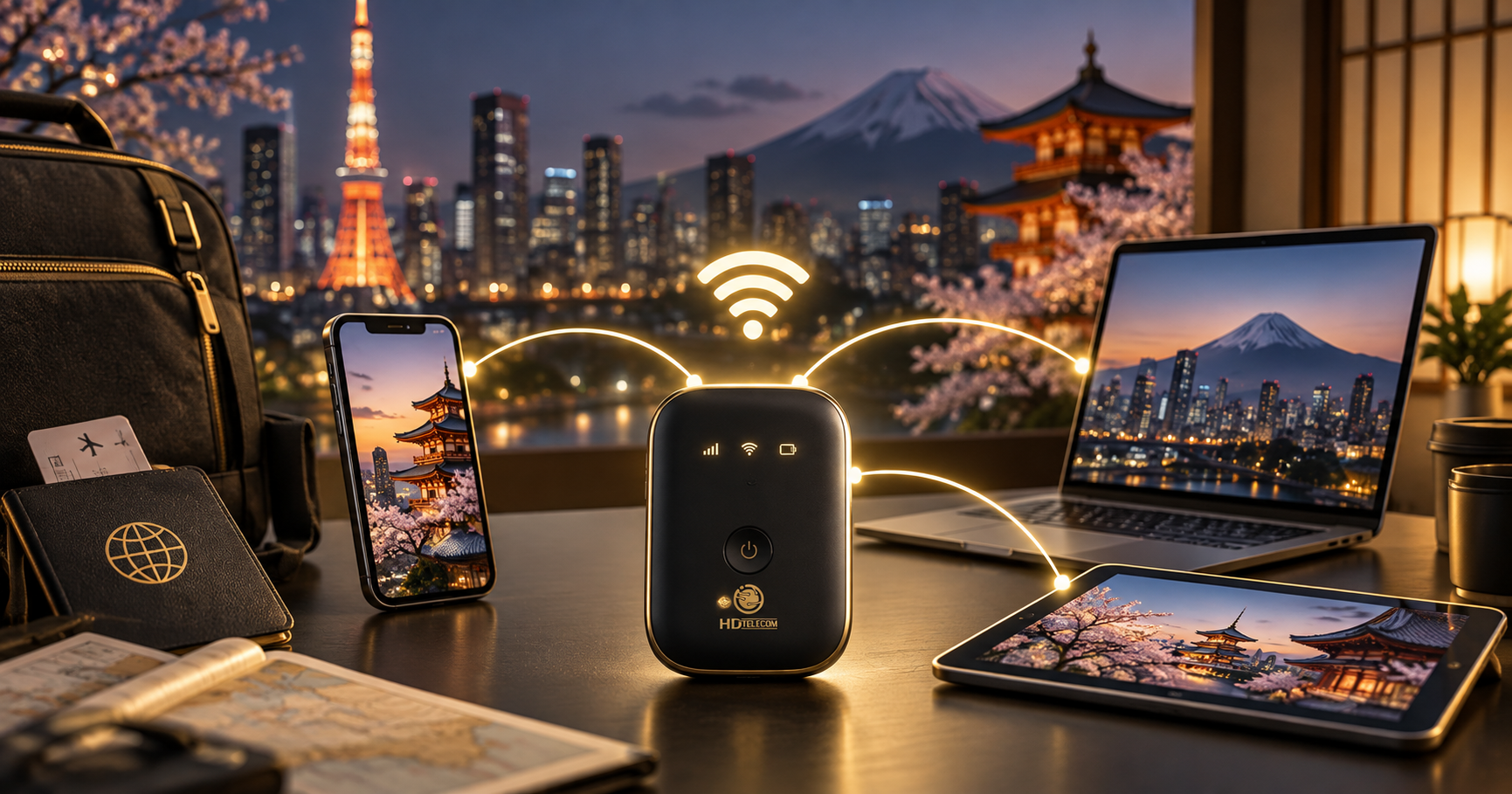
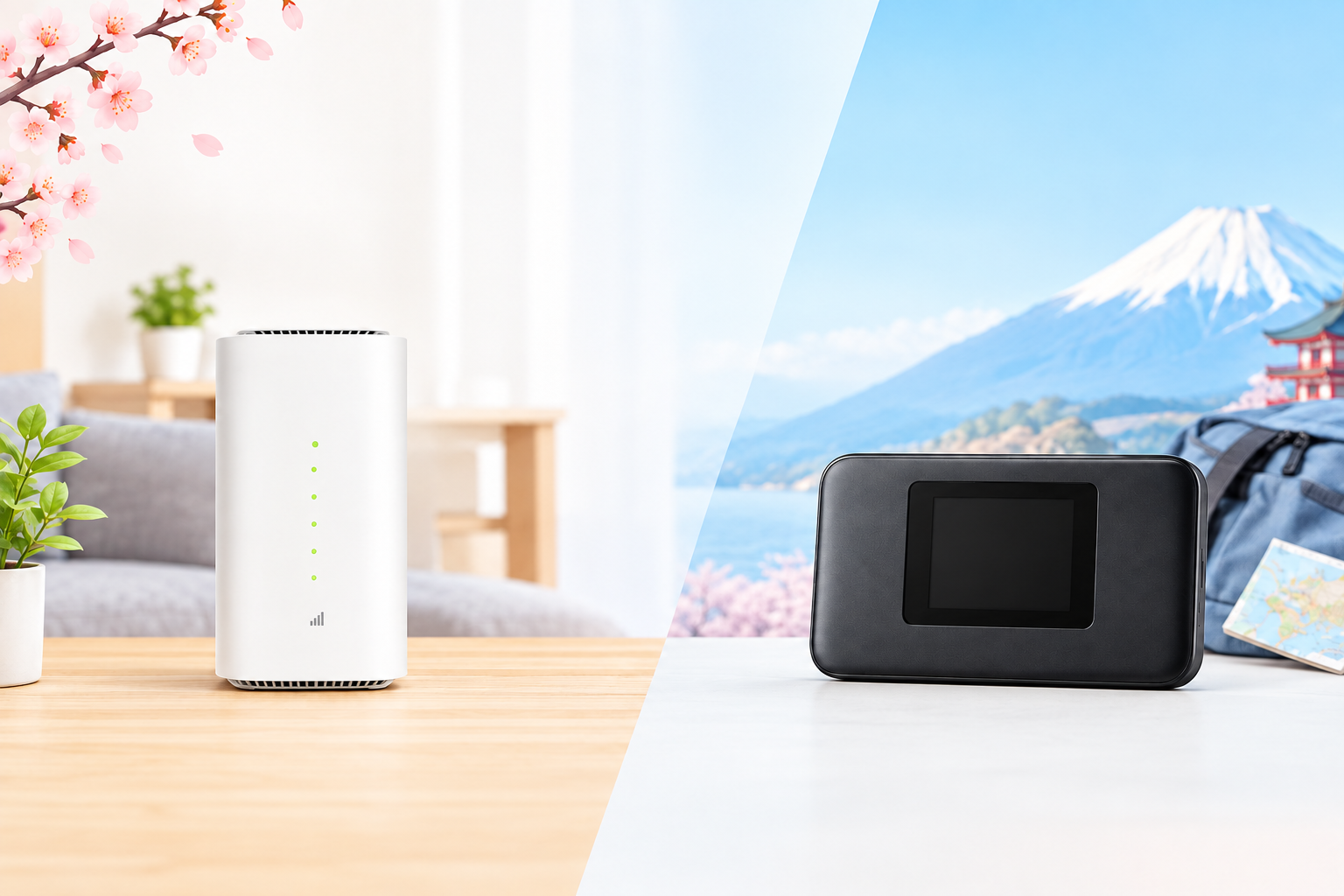
- Pocket WiFi: A separate palm-sized device with a SIM pre-installed inside. It broadcasts a WiFi signal to surrounding devices—phones, laptops, tablets, and gaming consoles can all connect just like home WiFi.
2. 7-point practical comparison
| Criteria | Data SIM | Pocket WiFi |
|---|---|---|
| Device to carry | Nothing extra—it stays in your phone | 1 extra device + 1 charger you must remember to bring |
| Simultaneous devices | Phone + a few devices via tethering (drains phone battery) | Usually 10–16 devices, some models even more |
| Battery life | Uses your phone's battery; tethering for long periods drains it fast | Dedicated battery lasting 8–12 hours; if it dies, the whole group loses internet |
| Data plan sizes | Options ranging from 3GB to unlimited | Usually large plans like 50–100GB or unlimited |
| Estimated price/month | From around ¥1,000 (small plans) | Around ¥3,000–5,000 including device rental/purchase fee |
| Who can share it? | Mainly just you | Roommates in a dorm, an entire family |
| When going out | Internet is always with you | If you take it with you, people at home lose internet access |
3. Four user profiles—which one are you?
① International student living alone, school and cafes have WiFi
On-the-go data needs are limited to maps, messaging, and social media. A 10–20GB data SIM is the answer—affordable, compact, with no extra device to carry. Pocket WiFi would be overkill in this case.
② Technical trainees sharing a room (3–4 people), no internet at home
This is where Pocket WiFi truly shines: one unlimited device shared among everyone, costing each person only around ¥1,000/month while allowing everyone to comfortably watch movies and make calls in the evening. Each person should still have a small-plan data SIM for mobile data on the road.
③ Families with young children, settled long-term
If fiber optic installation is allowed, fiber internet or home WiFi (a plug-in home router) is more stable than Pocket WiFi for family needs. Pocket WiFi is ideal for transition periods—right after moving in while waiting for fiber installation—since it arrives in 1–3 days with no installation required.
④ Mobile workers: site visits, frequent travel across prefectures, online meetings on the move
Laptop + tablet + phone all need internet everywhere: a high-data Pocket WiFi plan is far more convenient than turning your phone into a boiling hot hotspot that drains its battery mid-meeting.
4. Things few people tell you about Pocket WiFi
- "Unlimited" usually has a Fair Usage Policy: using too much data in a single day/month may trigger temporary speed throttling. Read the terms carefully, don't just look at the word "unlimited".
- Charging requires discipline: forget to charge it and the next morning everyone is "offline". Get into the habit of charging it overnight like your phone.
- Deposits/Device fees apply: renting involves a rental fee; buying outright costs more upfront but is cheaper in the long run. Make sure to ask about replacement costs if the device is lost or damaged.
- Signal in concrete buildings: just like cell phones, if the signal is weak in a spot, the router's connection will be weak too. Placing the unit near a window will noticeably improve signal.
- Return the device upon cancellation: rented devices must be returned with all original accessories and packaging, otherwise fees will be charged—keep the original box from day one.
5. Combining both—what smart planners do
You don't have to pick just one. A popular combo among the Vietnamese community:
- Small data SIM plan (3–5GB) in your phone: guarantees internet on the road at a very low cost.
- Unlimited Pocket WiFi / Home WiFi at home: video call, stream movies, and study online without worrying about counting gigabytes.
The total cost per person is often still lower than a single unlimited SIM plan, yet delivers a better experience in both scenarios.
6. Frequently Asked Questions
Do I need a Residence Card for Pocket WiFi?
Renting/buying a Pocket WiFi with a data plan usually involves simpler procedures than voice SIMs; many providers only require personal ID and a delivery address. At HD TELECOM, you can order online and pay upon delivery.
Can I bring the Pocket WiFi router back to Vietnam for Tet holiday?
Most domestic Japanese data plans do not work overseas. For Vietnam trips, use a local Vietnamese SIM for cost efficiency; leave the WiFi router in Japan or keep it turned off.
Can phone tethering replace a Pocket WiFi?
For occasional use, yes. For daily primary internet access on a laptop, it's not recommended: it degrades phone battery health quickly, overheats the device, and many SIM plans have dedicated caps on tethering data.
Conclusion
Rule of thumb: single + frequently on the move → Data SIM; multiple people/devices sharing → Pocket WiFi; long-term home stability → Fiber optic / Home WiFi. If you describe your living situation, number of users, and streaming/calling habits to us, HD TELECOM will recommend the most cost-effective setup—message us in Vietnamese, and we'll reply in Vietnamese.
Related products
Find your plan with HD TELECOM
SIM, eSIM and Pocket WiFi — genuine quality, clear pricing, 24/7 support.