
Pocket WiFi in Japan: who is it for, what to know before renting
August 9, 2026
Hello, if you have just arrived in Japan or have been here for a while and are struggling with internet issues, this article is for you. Living in Japan without internet is like being "disconnected from the world," from checking train schedules, studying, and working to calling family back home in Vietnam.
Among internet solutions in Japan, Pocket WiFi is always a top popular choice for the Vietnamese community. However, not everyone fully understands the pros and cons of this type of device to use it most effectively and economically. Below is a practical, detailed perspective from the experiences of those who came before to help you have a comprehensive view before making a decision.
1. What is Pocket WiFi and how does it work?
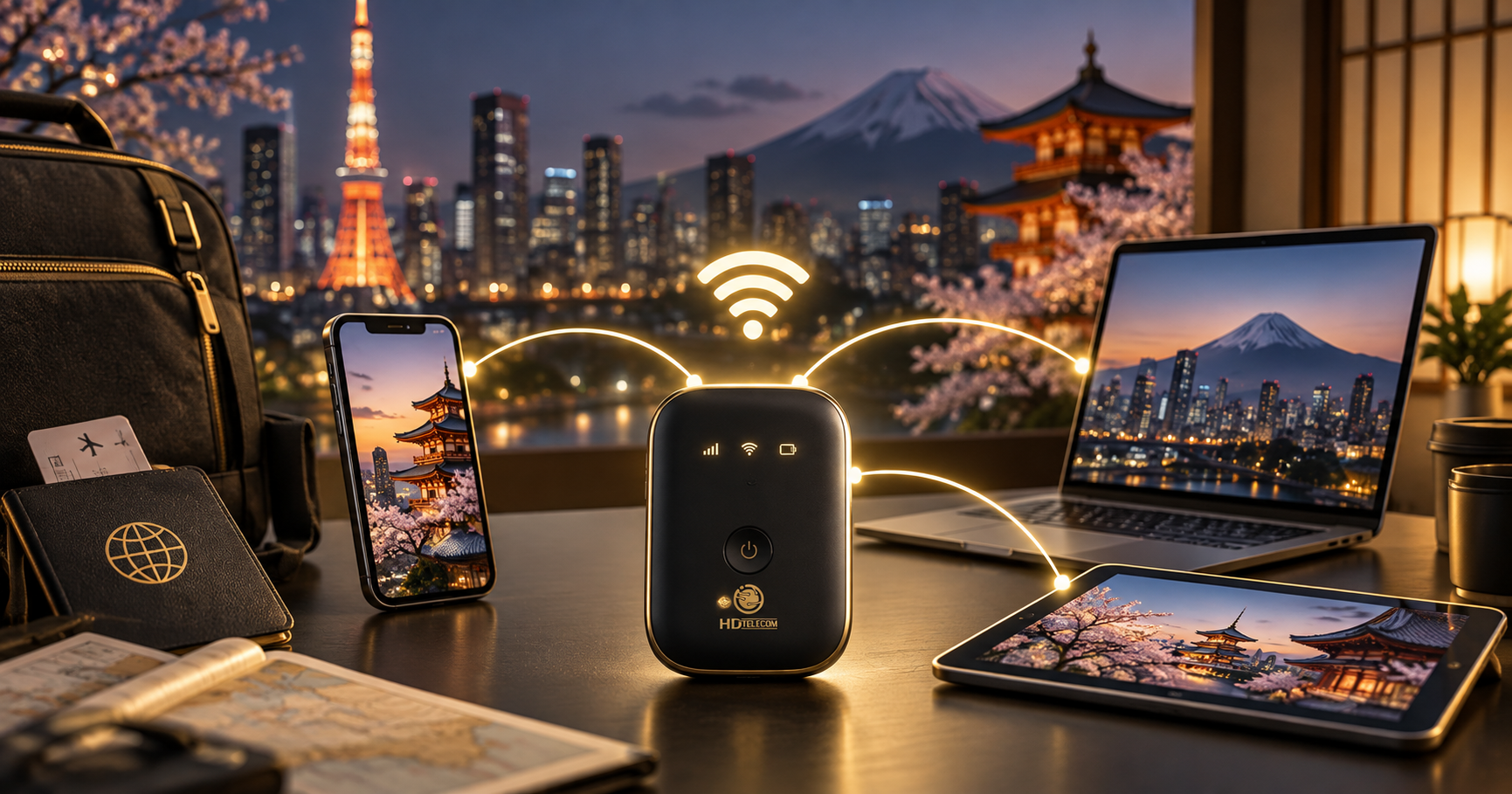
Pocket WiFi (often called Pocket WiFi or Wi-Fiルーター) is actually a compact internet transmitter device, about the size of a mobile phone or a thick bank card. Inside this device is a traditional data SIM.
How it works is quite simple:
- The device captures mobile signals (transmission towers of telecom carriers) through the inserted SIM.
- Then, the machine automatically converts that mobile data into local WiFi signals to broadcast around.
- You can use your phone, laptop, tablet, or gaming console to connect to this WiFi gateway to access the internet.
The most convenient point is that you can neatly put the device in your handbag, backpack, or pocket and carry it with you anywhere across Japan.
2. Who should choose to use Pocket WiFi?
Although convenient, Pocket WiFi is not a perfect option for everyone. Based on actual living conditions in Japan, this device is especially suitable for the following groups:
- People living in shared houses, sharehouses: When living with many people, sharing a common network often leads to lag during peak hours. Getting a pocket WiFi set yourself helps you take charge of a private, secure network source.
- People who haven't or cannot install fiber optic: The procedure for registering fixed internet (Hikari) in Japan is quite complicated, requiring the landlord's permission to drill walls/run cables, and the waiting time for technicians to come for installation can range from a few weeks to a few months. If you need immediate internet, Pocket WiFi is an instant lifesaving solution.
- People who move around or change houses frequently: Are you an international student, trainee, freelancer, or someone whose job frequently changes locations? Using Pocket WiFi helps you avoid expensive fixed network contract cancellation fees and line relocation fees every time you move.
- Families or small groups of friends: If the main needs are surfing the web, watching movies, making video calls to Vietnam, and sharing the connection for 2 - 4 devices simultaneously both at home and when going out, this solution is very flexible and economical.
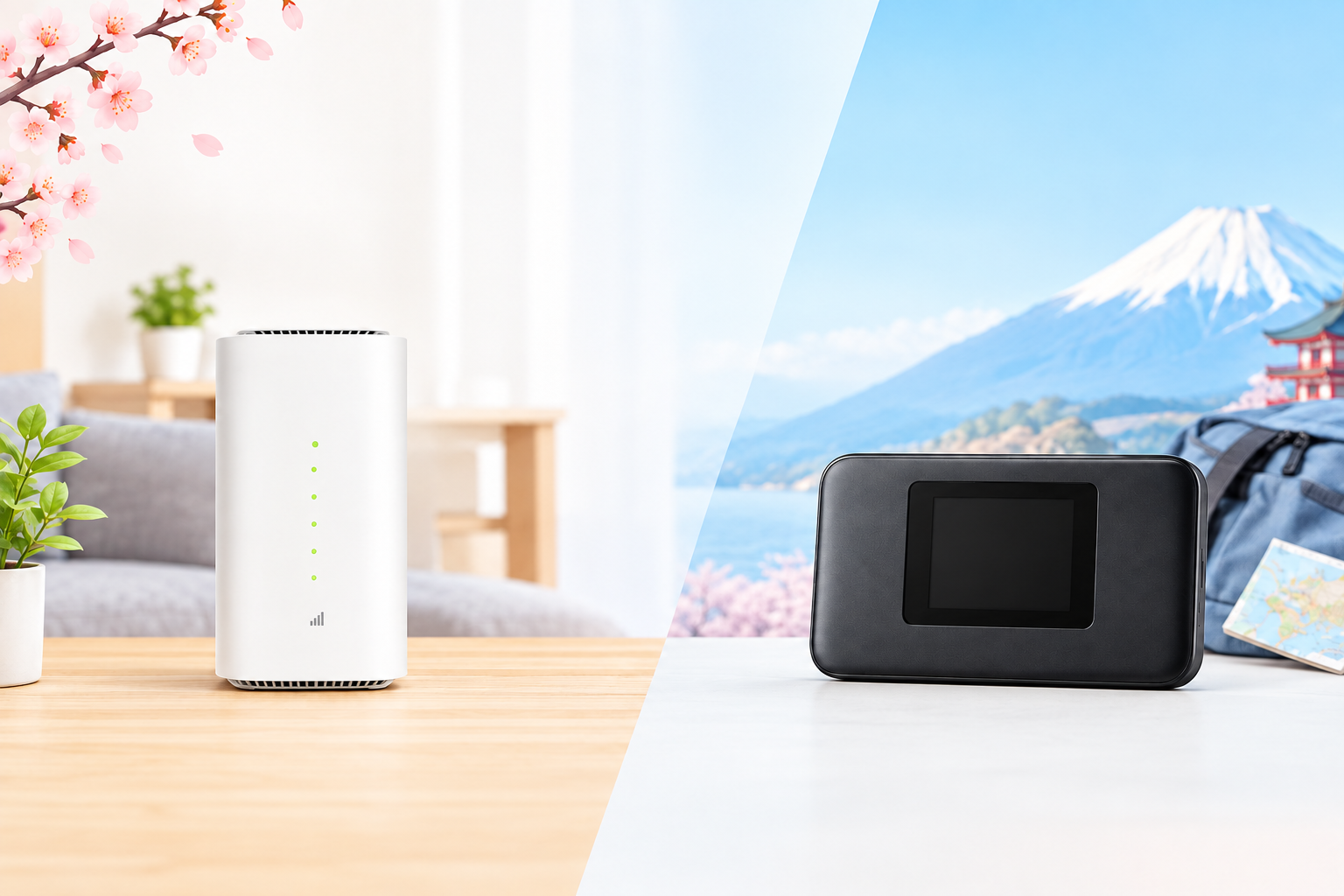
3. Comparison Table: Pocket WiFi / Data SIM / Fixed Fiber Optic
To help you easily visualize and make the right choice for your needs, please refer to the comparison table below:
| Criteria | Pocket WiFi | Mobile Data SIM | Fixed Fiber Optic (Hikari) |
|---|---|---|---|
| Convenience & Mobility | Very high. Easy to carry around, usable at home and on the street. | Highest. Used directly on the phone, no extra device needed. | Not mobile. Only used fixed at home. |
| Installation & Construction | No installation required. Turn on the machine and use it immediately. | No installation required. Insert the SIM into the machine and set up APN. | Complex. Need to schedule technicians for construction, wall drilling/cable wiring. |
| Speed & Stability | Fair. Depends on surrounding mobile signals. | Fair. Depends on phone configuration and area signals. | Very high and extremely stable. Not affected by weather. |
| For Multiple Devices | Good. Connects multiple phones, laptops, and tablets simultaneously. | Limited. Turning on Hotspot from the phone drains the battery quickly and overheats the device. | Extremely good. Meets the needs of dozens of devices simultaneously. |
| Registration Procedure | Simple, fast. | Simple. | Requires many documents, landlord's consent (Manshon/Rental house). |
4. Things you "must know" before renting or buying a Pocket WiFi
Many Vietnamese people newly arriving in Japan who did not research carefully have had unsatisfactory experiences. Here are the facts you must fully grasp:
The device operates on a battery, must be charged daily
As a mobile device, Pocket WiFi has limited battery capacity. Continuous usage time usually lasts from a few hours to about half a day depending on connection frequency and battery age. If you go out all day, carrying a power bank is almost mandatory.
The word "Unlimited" actually always has a threshold
Network carriers in Japan often advertise "unlimited data" packages. However, in reality, there is always a Fair Usage Policy (FUP). If you use too much data in a short period of time (e.g., downloading large games continuously, watching 4K videos all day), the system may automatically throttle the speed down to a lower level for a period of time to ensure bandwidth for other users.
Financial responsibility if the device is lost or damaged
Most Pocket WiFi devices you use are on a rental basis. Accompanying the router are accessories like charging cables, chargers, and boxes. If you drop it, break it, get it wet, damage it, or lose the device, the provider will charge a relatively large penalty fee depending on the contract terms.
Signals in reinforced concrete buildings may be reduced
Pocket WiFi receives signals from outdoor transmission towers. When you are in thick concrete buildings (Manshon), boarding rooms located in basements, blind spots, or rooms with closed doors, the incoming mobile signal may be weakened. This results in indoor network speeds potentially being slower than when you stand outdoors.
Returning the device upon contract termination
When you no longer need to use the service or switch services, you are obligated to return all machinery and accessories to the provider on time. If you return them late or missing components, you may also be charged additional incurred costs.
5. Pocket WiFi solution from HD TELECOM
Understanding the difficulties regarding language barriers, complicated administrative procedures, and strict credit card requirements of traditional Japanese network carriers, HD TELECOM brings an optimal pocket WiFi solution exclusively for the Vietnamese community.
HD TELECOM offers flexible pocket WiFi service packages with many outstanding advantages:
- Reasonable pricing: Monthly plans range FROM ¥4,500/month, helping you easily balance your income and expenses.
- No cumbersome installation: Receive the device and you can use it immediately, wasting no time waiting for technicians to drill or run wires in the house.
- Nationwide delivery across Japan: Whether you are in Tokyo, Osaka, or distant provinces like Hokkaido or Okinawa, the device will be delivered right to your home address.
- Flexible COD payment: You can completely pay in cash upon receipt (COD). This thoroughly solves difficulties for those newly arrived in Japan who haven't had time to open a credit card or domestic bank account.
- Technical support in Vietnamese: The customer care team consults, guides installation, and handles troubleshooting entirely in Vietnamese, completely eliminating language barriers.
- No long-term contract binding: No requirement to sign a 2-3 year contract like traditional carriers, minimizing the risk of penalty fees when you have to return home unexpectedly or change personal plans.
HD TELECOM operates as a Mobile Virtual Network Operator (MVNO), under the legal entity 株式会社ベトナム物産, holding a legal telecommunications service business registration code in Japan: A-06-22505. This ensures clear legal compliance, reputation, and absolute peace of mind for customers throughout the service usage process.
6. Frequently Asked Questions (FAQ)
Do I need a Japanese credit card to use Pocket WiFi?
Not necessarily. With HD TELECOM's service, you can choose COD payment (paying cash directly to the delivery staff upon receiving the device), which is very convenient for newcomers to Japan.
Can I take the Pocket WiFi when traveling to other provinces in Japan?
Yes. The service covers the entire territory of Japan. Anywhere with mobile signals from the infrastructure carrier, you can pick up WiFi to use.
What should I do if I lose the Pocket WiFi device?
If you encounter loss or damage, you need to contact customer support immediately to report the device lock and process compensation/device replacement according to the agreed contract terms.
How do I return the device when I no longer need it?
You just need to pack the device, charging cable, and included accessories into the box and send it via postal mail or express delivery services (like Yamato, Sagawa) to the provider's address as instructed.
When connecting multiple devices at the same time, will the network slow down?
Yes. The bandwidth of the device will be shared equally among the connected machines. If you use 3-4 devices simultaneously to watch HD videos or download large files, the speed on each machine will decrease compared to connecting only a single machine.
7. Conclusion
Pocket WiFi is an extremely convenient, flexible network solution that well meets the internet connection needs of the majority of Vietnamese people living, studying, and working in Japan. Understanding the operating mechanism as well as notes on batteries, bandwidth limits, or device maintenance procedures will help you avoid unnecessary troubles.
If you are looking for a simple service, fast procedures, Vietnamese support, and convenient cash payment, consider service options from reputable providers to always stay connected in the Land of the Rising Sun.
*Note: Rates, policies, and service terms mentioned in the article are subject to change at any time. You should check and reconfirm information directly with the service provider before deciding to register.
Related products
Find your plan with HD TELECOM
SIM, eSIM and Pocket WiFi — genuine quality, clear pricing, 24/7 support.