
Staying in Japan for 2–6 months? Which SIM plan saves you the most?
September 4, 2026
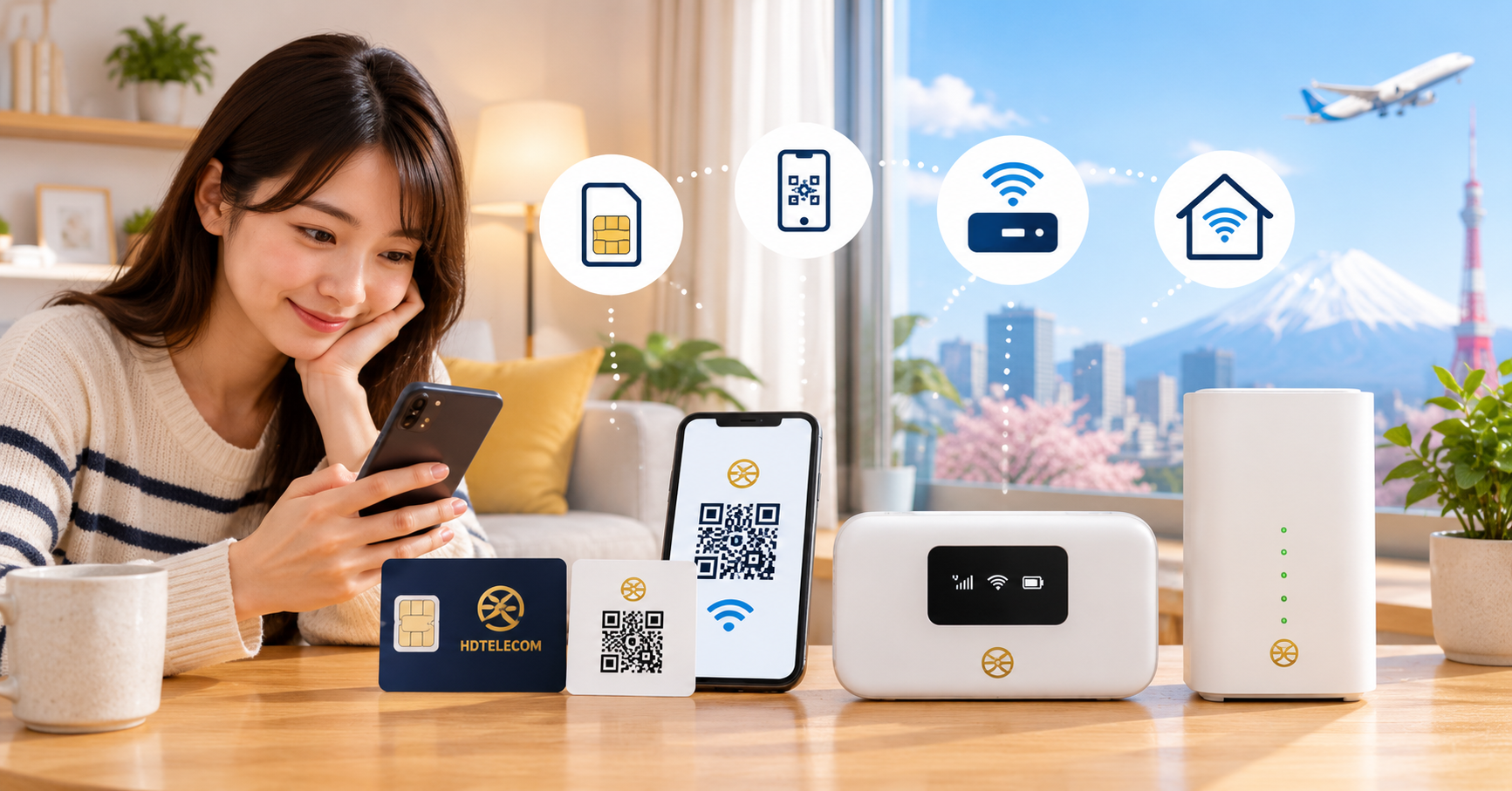
Quick Answer
If you're in Japan for 2 to 6 months, the most sensible choice in most cases is a data SIM (or eSIM) billed monthly, with no long-term contract commitment — you pay for as many months as you use, and when you return home, you simply cancel with no termination fee. You should only choose a voice SIM with a 090/080/070 number if you genuinely need a Japanese phone number for part-time work (baito), opening a bank account, signing a housing contract, or receiving calls from your school/company. On the other hand, a 30–90 day prepaid travel SIM is only worth it if you're staying under 2 months and don't want to deal with any paperwork.
In short: 2–3 months, just need internet → eSIM or monthly data SIM. 4–6 months, formal work/study → monthly data SIM, consider adding a voice SIM. Traveling in a group, multiple devices → pocket WiFi.
Who this article is for
This article is for foreigners who will be in Japan for a short or medium period, without a definite plan to stay long-term:
- Technical intern trainees and specified skilled workers in their early days in Japan, still waiting to settle into housing and paperwork.
- International students on short-term courses, 3–6 month language programs, or exchange students for one semester.
- Business travelers on extended trips, engineers on 3–6 month onsite projects.
- People visiting children or relatives for a few months.
- New working holiday participants who don't yet know how long they'll stay in Japan.
- People whose contract with their previous carrier just ended and need a "bridge" plan for a few months before switching to a long-term plan.
What these groups have in common: they don't want to sign a 2-year contract, don't want to pay early termination fees, and need stable signal from the moment they step off the plane.
Cases where this does NOT apply
You should read a different article if you fall into these cases:
- Staying in Japan under 30 days (pure tourism): a prepaid travel SIM or daily eSIM will be cheaper and more convenient — you don't need to read the monthly comparison section.
- Already planning to stay in Japan over 1 year: you should check out the 12-month prepaid SIM plan or a long-term monthly plan, as it works out much cheaper than buying short-term plans repeatedly.
- Haven't entered Japan yet and don't have a confirmed flight schedule: don't activate your SIM/eSIM early, since many plans start counting days from activation, not from your actual arrival in Japan.
- Want to keep a Japanese phone number long-term even after returning home: this is a different matter that depends on each carrier's policy — you should ask their support team directly.
- Phone is SIM-locked or doesn't support Japanese frequency bands: no plan will work for you until you sort out your device first.
Steps to take: choosing the right short-term SIM plan for your needs
Follow these 6 steps in order — it takes about 10 minutes to reach a decision.
- Determine exactly how many months you'll be in Japan. Take your entry date and expected departure date. If the gap is 2–3 months, prioritize a flexible monthly plan. If it's 5–6 months with a possibility of extension, choose a monthly plan that can transition smoothly into a long-term plan without needing to swap SIMs.
- Answer the question: do you need a Japanese phone number? You need one if: attending baito interviews, registering for a bank account, signing a housing contract, registering for domestic services requiring SMS verification, or if your school/company requires a contact number. You don't need one if: you mainly use LINE, Zalo, Messenger, Google Maps, and occasional public WiFi.
- Estimate your monthly data usage. See the suggestions below. Don't buy a 50GB plan if you're mostly staying in a dorm with WiFi.
- Check your device: physical SIM or eSIM? If your device supports eSIM, choose eSIM to receive the QR code via email and activate as soon as your plane lands, without waiting for shipping. For older devices, budget Android phones, or low-end phones bought in Vietnam, go with a physical SIM to be safe.
- Check the documents you currently have. If you have a Residence Card (在留カード), nearly all options are open to you, including a voice SIM. If you don't have one yet (just landed at the airport, or on a short-term visa), you can only use a data SIM/eSIM for now.
- Place your order and choose a pickup location. Receive it at the airport, have it shipped to your dorm/hotel address, or pick it up directly at the office. If you choose eSIM, you only need an email address. See all options at the product page.
Quick comparison of 4 options for people staying 2–6 months
| Option | Best for | Pros | Cons |
|---|---|---|---|
| Monthly data SIM | Staying 2–6 months, need stable internet, not ready to commit long-term | Pay monthly, cancel when returning home, easy to increase/decrease data | No 090/080 number for regular voice calls |
| Monthly eSIM | Newer devices, need to use it right after landing | No shipping wait, receive QR via email, keep your home country SIM in the other slot | Older phones don't support it; switching phones requires requesting a new profile |
| Voice SIM | Working, opening a bank account, signing a housing contract | Get a Japanese phone number, receive SMS verification for domestic services | Requires a Residence Card; longer processing time; may have minimum contract period conditions |
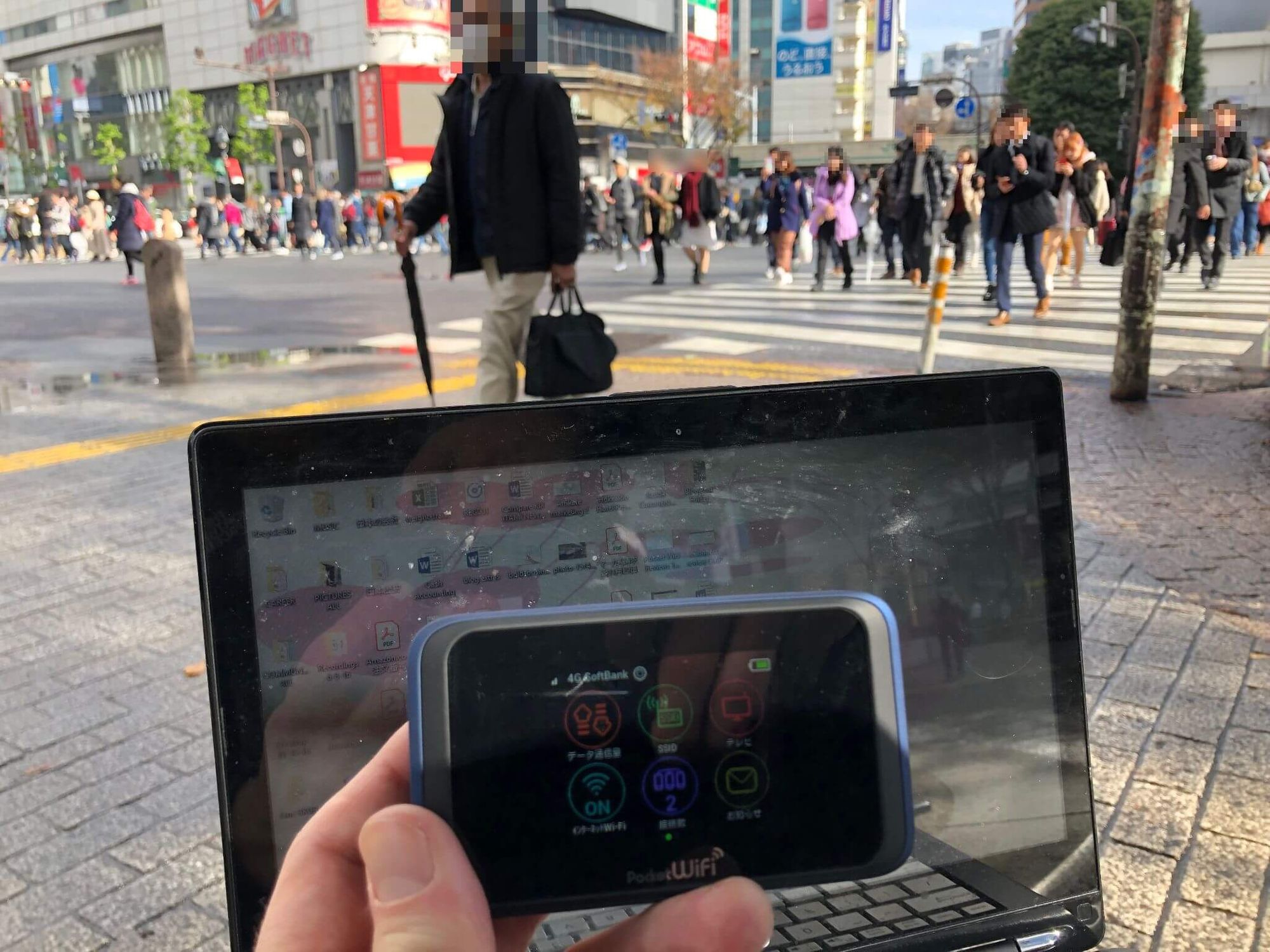
| Pocket WiFi | Traveling in groups, families, multiple devices, working on a laptop | Shareable across 3–5 devices, no need to mess with phone settings | Must be charged and carried as an extra device; you'll be charged if lost |
How many GB do you need per month?
| Usage type | Suggested data amount | Notes |
|---|---|---|
| Mainly LINE, Zalo, email, map lookups | 3–5GB/month | Enough if your dorm/company has WiFi |
| Social media, short videos, video calling home a few times a week | 10–20GB/month | Most common amount for international students |
| Watching YouTube/Netflix on the go, hotspotting for a laptop | 30–50GB/month or unlimited | Consider pocket WiFi if you use a laptop a lot |
| Family of 3–4 sharing | Pocket WiFi | Cheaper than buying 4 separate SIMs |
Documents to prepare
Required documents vary depending on the service type. This is the point where most newcomers get stuck.
Data SIM / eSIM (internet only)
- Passport (photo of the information page).
- An active contact email — especially important for eSIM since the QR code is sent via email.
- Delivery address in Japan if choosing a physical SIM (hotel, dorm, friend's place, airport counter).
- Payment information (card, bank transfer, or other method — see the support page).
Voice SIM (with a Japanese phone number)
- A valid Residence Card (在留カード) — mandatory. This is a requirement under identity verification regulations for signing telecom contracts in Japan, not a policy specific to any single company.
- Passport.
- Residential address in Japan.
- A payment method in your own name (credit card, Japanese bank account, or a method accepted by the provider).
- Clear photos of your documents — not blurry, not cropped at the corners, no glare — this is the most common reason applications get rejected.
If you've just entered the country and your Residence Card is still in the process of address registration at the city hall, the practical solution is: use a data SIM/eSIM for the first 1–2 weeks, then register for a voice SIM once you have your Residence Card and address.
Costs
Below is a reference price range in the Japanese market for foreign users, to help you estimate your budget. For the official price of each plan, please check the product page, as prices may change depending on the timing and promotions.
| Type | Reference cost range | Easily overlooked fees |
|---|---|---|
| Monthly data SIM 10–20GB | About 2,000–4,000 yen/month | Initial SIM issuance fee, shipping fee |
| Monthly eSIM 10–20GB | Similar to physical SIM, usually no shipping fee | Profile re-issuance fee if you switch/lose your device |
| Voice SIM | Base fee + data plan, usually from about 2,500 yen/month and up | Per-minute call charges beyond the plan, initial registration fee |
| Pocket WiFi | About 3,500–5,500 yen/month | Device deposit, compensation fee if lost/damaged, return shipping fee |
| 30–90 day prepaid travel SIM | One-time payment, usually higher cost/GB than a monthly plan | Unused portion is forfeited when it expires, no refunds |
The 4-month math: which type should you buy?
Suppose you're in Japan for exactly 4 months and need about 20GB/month:
- Buying a 60-day travel SIM twice: convenient, no paperwork, but the total cost is usually higher and you have to swap SIMs and reconfigure once in between.
- Buying a monthly plan, using it for 4 months then canceling: lower cost per month, your number and settings stay the same the whole time, and you get support in Vietnamese if issues arise. This is the optimal option in most cases.
- Buying a 12-month plan: cheapest per month, but you're paying for 8 months you won't use — only worthwhile if there's a high chance you'll extend your stay.
Simple rule of thumb: under 2 months, choose prepaid; 2–6 months, choose monthly; over 8–9 months, choose an annual plan.
Validity period and processing time
- eSIM: fastest option. After completing your order and payment confirmation, the QR code is usually sent via email within a few hours to 1 business day. Once activated, you have internet immediately, as long as your device can connect to WiFi to download the profile.
- Physical data SIM: domestic shipping within Japan usually takes 1–3 business days depending on the region; remote islands and mountainous areas may take longer. Insert the SIM, set up the APN according to the included instructions, and you're good to go.
- Voice SIM: takes longer due to document verification. It usually takes a few business days from when your application is valid. If document photos are blurry or information is missing, the processing time will be extended.
- Pocket WiFi: ready to use as soon as you receive it — just turn it on and enter the password printed on the device.
- Plan duration: monthly plans are typically billed on a monthly cycle and auto-renew until you cancel. Before returning home, be sure to cancel at least 1 cycle in advance, or according to the notice period stated in the terms, to avoid being charged for an extra month.
Where to register and receive your SIM
You have the following options:
- Order online before flying: the most recommended method. Choose eSIM to receive it via email, or choose a physical SIM and arrange to receive it at your address in Japan.
- Pick up at an airport counter or post office near your residence: suitable if you don't have a fixed address yet. Ask beforehand which pickup method is available.
- Visit the HD TELECOM office in Shin-Okubo, Tokyo in person: suitable if you're in Tokyo and want hands-on setup guidance, especially helpful for older individuals or those with various generations of Android devices. The Shin-Okubo area is also convenient if you want to combine it with shopping for Asian goods.
- Have someone you know receive it for you: this is fine, but for a voice SIM, the person signing the contract must still be you, using your own documents.
Information on payment methods, bank transfers, and setup instructions is compiled on the support page.
Common mistakes
1. Activating the eSIM too early
Many people receive the QR code and scan it right away while still in Vietnam. With plans that count days from activation, you end up losing a few days for nothing. Read the instructions carefully: you can scan the code in advance, but only activate the plan once you've arrived in Japan.
2. Buying a 12-month plan even though you're only staying 3 months because it seems "cheaper"
It's cheaper per month, but the total cost is much higher. Only choose an annual plan when you're fairly certain you'll be staying.
3. Forgetting to cancel before returning home
Monthly plans usually auto-renew. If you go home without canceling, you'll still be charged. Set a reminder on your phone at least 2 weeks before your flight date.
4. Phone is SIM-locked or doesn't support the right frequency bands
Phones bought on installment plans overseas, or carrier-locked phones, won't accept a Japanese SIM. Before buying a plan, check whether your phone is unlocked (SIM-free) and whether it supports the frequency bands used in Japan.
5. Not setting up the APN and thinking the SIM is broken
This is the most common issue with physical SIMs. If you insert the SIM without setting up the APN, your phone will show signal but won't connect to the internet. Follow the instruction sheet included with the SIM, or message the support team for step-by-step guidance in Vietnamese.
6. Registering a voice SIM using someone else's documents
Absolutely do not do this. Telecom contracts in Japan require identity verification matching the person signing; using someone else's documents can lead to contract cancellation and legal trouble for both parties.
7. Choosing a data plan that's too small and getting throttled mid-month
Running out of data usually results in reduced speed rather than a complete cutoff, but the remaining speed is very slow, making video calls difficult. If you find the first month's data insufficient, upgrade your plan starting the next cycle instead of enduring it for all 4 months.
8. Not keeping the original SIM and SIM tray
When returning your SIM or needing to reinsert your home country's SIM upon returning, losing the tray is a hassle. Keep it in a small pouch inside your passport.
Frequently asked questions
Staying in Japan for 3 months — should I buy a travel SIM or a monthly SIM?
Monthly. From around the 2-month mark onward, monthly plans are usually cheaper per GB and you don't have to swap SIMs midway.
Can I buy a SIM without a Residence Card?
You can buy a data SIM/eSIM for internet only. However, a voice SIM with a Japanese phone number requires a Residence Card due to identity verification regulations for telecom contracts.
Can I make calls with a data SIM?
You can't make regular voice calls to 090/080 numbers, but you can still make voice and video calls via LINE, Zalo, Messenger, WhatsApp, and Google Meet normally. For most international students and newcomers, this is sufficient.
Will I be penalized if I return home earlier than planned?
With a flexible monthly plan, you just need to cancel according to the notice period stated in the terms, usually with no cancellation fee. With a voice contract that has a minimum term, fees may apply — be sure to ask about these conditions before signing.
I'm currently on a short-term plan — can I switch to a long-term plan?
Yes. If after a few months you decide to stay longer, you can switch to the 12-month prepaid plan. Ask the support team about how to switch to avoid any service interruption between plans.
Is eSIM as good as a physical SIM?
Signal quality is the same since both run on the same carrier infrastructure. The difference lies in setup: eSIM is faster, no shipping wait, and lets you keep your home SIM in the other slot; but if you frequently switch devices or use an older phone, a physical SIM is more convenient.
Traveling with a family of 4 — what's the cheapest option?
Usually a single pocket WiFi device shared by the whole family, plus one separate SIM for anyone who often splits off from the group. This is cheaper than buying 4 separate data SIMs.
Will keeping my old Zalo/LINE number cause any issues?
LINE and Zalo accounts are tied to the registered account and aren't lost when you switch SIMs. However, if you need to receive an OTP code on your old number, keep your home country SIM active and enable SMS roaming for the first few days, or use a dual-SIM phone.
References
- Japan's Ministry of Internal Affairs and Communications (総務省 / MIC) — regulations on identity verification when signing mobile phone service contracts (携帯電話不正利用防止法): soumu.go.jp
- Japan's Immigration Services Agency (出入国在留管理庁) — information on the Residence Card (在留カード): isa.go.jp
- Information page of your local city hall/ward office (市役所・区役所) — address registration procedures, related to completing telecom contract applications.
- Official pricing and terms of service from HD TELECOM at the product page and support page.
The prices mentioned in this article are market reference ranges, not official quotes. Document and contract regulations may change, so you should double-check with the service provider or relevant authority before making a decision.
Source verification date
This article's content was last checked and cross-referenced in June 2025. The editorial team reviews pricing benchmarks and document regulations every 6 months. If you notice any information that's no longer accurate, please let us know so we can update it.
Need more advice?
If you're still torn between a monthly data SIM, eSIM, or pocket WiFi, the fastest way is to tell us three things: how long you'll be in Japan, whether you need a Japanese phone number, and roughly how many GB you use per month. HD TELECOM's Vietnamese-speaking support team in Shin-Okubo will suggest the right plan for you, without pushing you to buy more than you need.
Check out popular options for short-term stays: monthly data SIM, monthly eSIM, monthly pocket WiFi. More guides for newcomers are available on our blog page.
Related products
Find your plan with HD TELECOM
SIM, eSIM and Pocket WiFi — genuine quality, clear pricing, 24/7 support.